Sign In
By signing in or creating an account, you agree with Associated Broadcasting Company's Terms & Conditions and Privacy Policy.
By signing in or creating an account, you agree with Associated Broadcasting Company's Terms & Conditions and Privacy Policy.
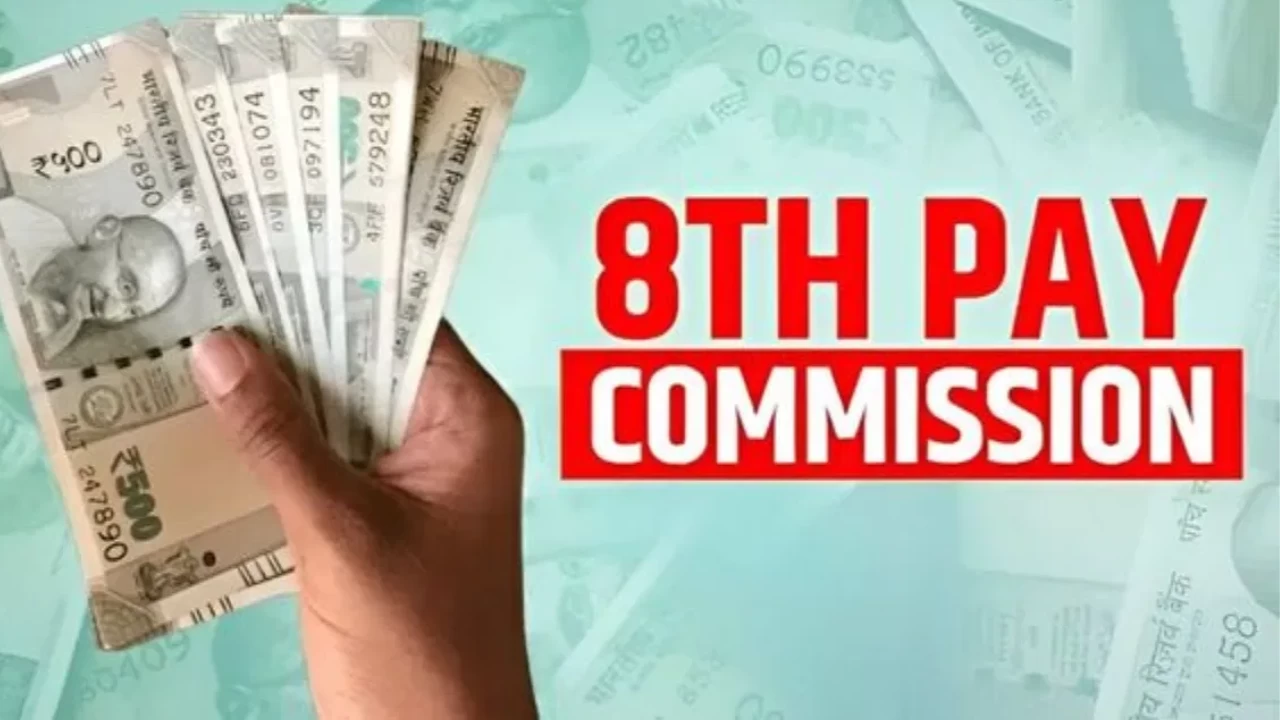


New Delhi: The term of the Seventh Pay Commission is about to end. As the date of 31st December 2025 is approaching, the discussion between the central employees and the pensioners regarding the Eighth Pay Commission (8th Pay Commission) has intensified. The eyes of about 1.19 crore families of the country are on what decision the government takes next year. The biggest question is, if the fitment factor is fixed at 2.15, how much will the amount in hand increase at the end of the month?
The whole game of increment will depend on the 'fitment factor'. If the proposed 2.15 formula is implemented, then there will be a big jump in the basic salary of employees of all levels. If we talk about level-1 i.e. peons or initial level employees, their basic salary now is Rs 18,000. After the new commission, it will more than double directly to Rs 38,700.
At the same time, if we talk about higher officials i.e. Level-18, then the difference here is even more shocking. Currently, the top officials who are getting a basic salary of Rs 2.50 lakh, their new basic salary can reach Rs 5,37,500. Similarly, the salary of officers from level 10 to level 12 is also expected to reach between Rs 1.25 million and Rs 1.5 million. This increase will not only provide financial security, but will also bring about a big change in the standard of living.
| Grade | Current Basic Pay | Estimated Basic Pay |
|---|---|---|
| Level 1 | ₹ 18,000 | ₹ 38,700.00 |
| Level 2 | ₹ 19,900 | ₹ 42,785.00 |
| Level 3 | ₹ 21,700 | ₹ 46,655.00 |
| Level 4 | ₹ 25,500 | ₹ 54,825.00 |
| Level 5 | ₹ 29,200 | ₹ 62,780.00 |
| Level 6 | ₹ 35,400 | ₹ 76,110.00 |
| Level 7 | ₹ 44,900 | ₹ 96,535.00 |
| Level 8 | ₹ 47,600 | ₹ 102,340.00 |
| Level 9 | ₹ 53,100 | ₹ 114,165.00 |
| Level 10 | ₹ 56,100 | ₹ 120,615.00 |
| Level 11 | ₹ 67,700 | ₹ 145,555.00 |
| Level 12 | ₹ 78,800 | ₹ 169,420.00 |
| Level 13 | ₹ 118,500 | ₹ 254,775.00 |
| Level 13 | ₹ 131,100 | ₹ 281,865.00 |
| Level 14 | ₹ 144,200 | ₹ 310,030.00 |
| Level 15 | ₹ 182,200 | ₹ 391,730.00 |
| Level 16 | ₹ 205,400 | ₹ 441,610.00 |
| Level 17 | ₹ 225,000 | ₹ 483,750.00 |
| Level 18 | ₹ 250,000 | ₹ 537,500.00 |
The entire responsibility of increasing salary is on this 'fitment factor'. In simple terms, it is a multiplier (coefficient). The new salary is decided by multiplying your existing basic salary by this number. For example, if one's basic pay is Rs 50,000 and the fitment factor is 2.15, then multiplying 50,000 by 2.15 will result in a new salary of Rs 1,07,500.
But this factor is not fixed in the air. In its determination, many economic aspects such as inflation rate (Inflation), cost of living (Cost of Living) and the state of the government exchequer are considered. Experts say that keeping in mind the salary and market benchmarks of the private sector, the government makes the final seal.
Technically, the term of the 7th Pay Commission ends on 31 December 2025. This means that the new rates are likely to come into effect from 1 January 2026. However, it often takes time for government processes and recommendations to be approved. History testifies that it may take up to two years for the Commission's recommendations to be implemented. But it is a matter of relief that if there is a delay, then employees are likely to get arrears.
Importantly, when there is a change in the basic salary, its effect is not limited to the basic salary alone. Dearness Allowance (DA), House Rent Allowance (HRA) and pension received after retirement are also calculated on this basic salary. That means if the factor of 2.15 is approved, it can prove to be one of the biggest gifts for employees so far.