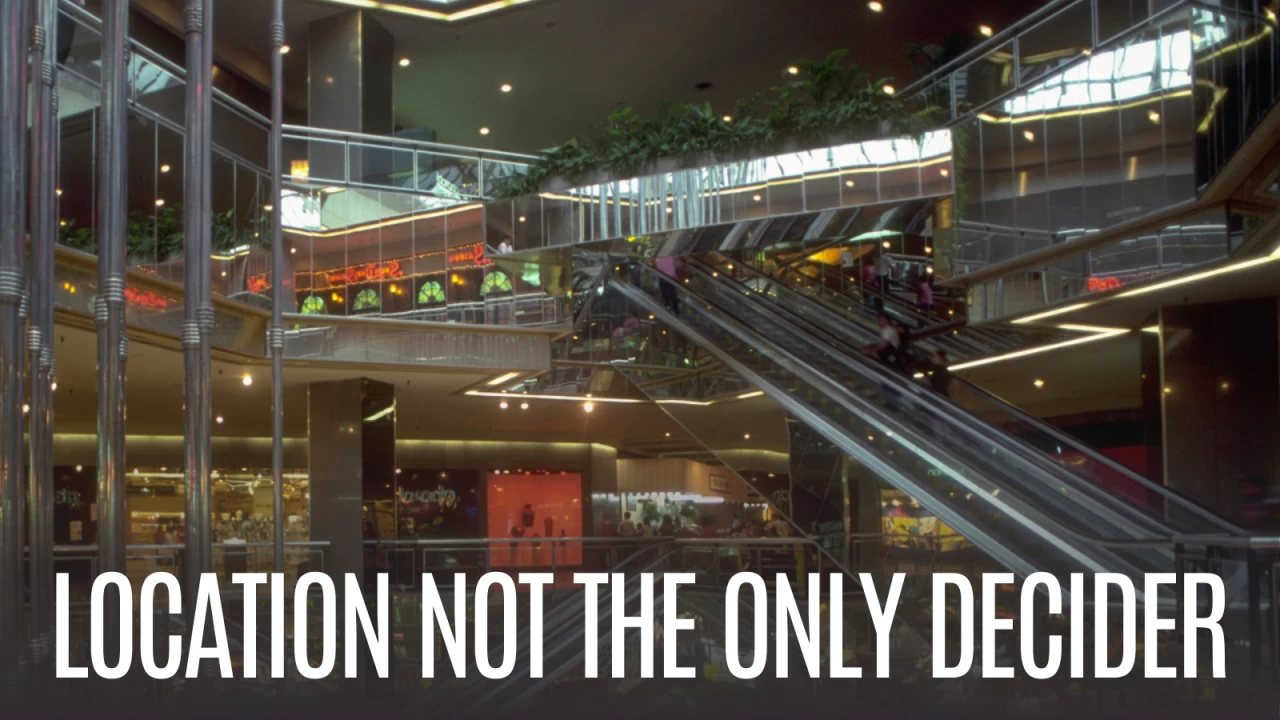
Kolkata: Whether for buying or for hangout or even for casual dining, shopping malls has become an extremely popular destination in different cities of India. As a result, numerous malls have opened in every small and big city. However, recent report has uncovered a shocking truth about shopping malls in the top 32 cities of the country. This report by Knight Frank has said that out of a total of 134.1 million square feet of retail space in the country, as much as 15.5 million or 1,55 crore square feet, has now become ghost malls. The message is simple -- these malls have no shops and no activity and are lying deserted like a haunted place.
Warning in the report
The report could be treated as an extremely significant one which shows that in retail real estate, location is not the only important factor. Quality, management and customer experience are perhaps bigger deciders than location. The report also warns that even areas once considered prime locations can become loss-making ventures. Therefore, investors have to become aware of these facts.
What are ghost malls?
According to the report, Ghost Shopping Centers are places where there are no retail or activity centers. These malls have only empty shops. Of the total 15.5 million square feet of ghost space, 11.9 million square feet is in Tier-1 cities, while 3.6 million square feet is in Tier-2 cities. Therefore, it is seen even in metro cities.
These malls in Gurugram
Gurugram is perhaps the shopping mall capital of the country. The report cites the example of MG Road in Gurugram, which was once referred to as the "Mall Mile". Five large shopping centers opened in this one area. As a result, only malls with the best locations and management survived, while the rest gradually lagged behind. The early shopping centers on MG Road are also part of this story. They were once synonymous with Gurugram, but as new and modern retail destinations emerged on CyberHub and Golf Course Road, the attraction of the older malls faded.
The tale of old malls
Knight Frank indicates in its report that many malls which were built in the early years of this century are now being deserted. Some of them failed to compete with newer, better-designed and professionally managed malls. The problem is more acute in Tier-2 cities, where weak brand pipelines, a lack of strong anchor stores, and operational difficulties have proved to be impediments. But since consumer demand and aspirations often remain strong in these cities, these malls stand a chance of being revived with appropriate management and strategy.
Next growth centres?
According to the report, quality is now the most crucial factor for a mall's success. Therefore, Grade A shopping centers are consistently performing well, while lower-grade assets are failing to retain tenants and customers. Knight Frank thinks the challenge lies in what will happen to the remaining malls. As space becomes scarce in Grade A centers, attention will shift to underperforming assets or ghost malls and these could become the next growth centres which could attract
investors. Therefore,
investments in these malls should be approached with great discretion and a well-defined strategy.
Many malls were constructed in areas where there weren't enough customers or where there were already too many malls. Many shopping malls from the early years of this century could not upgrade themselves over time and were swept away by new, modern complexes. The fast expansion of e-commerce over the past few years have also hurt mid-tier malls terribly. Items such as books, music and basic electronics are being purchased more and more online.