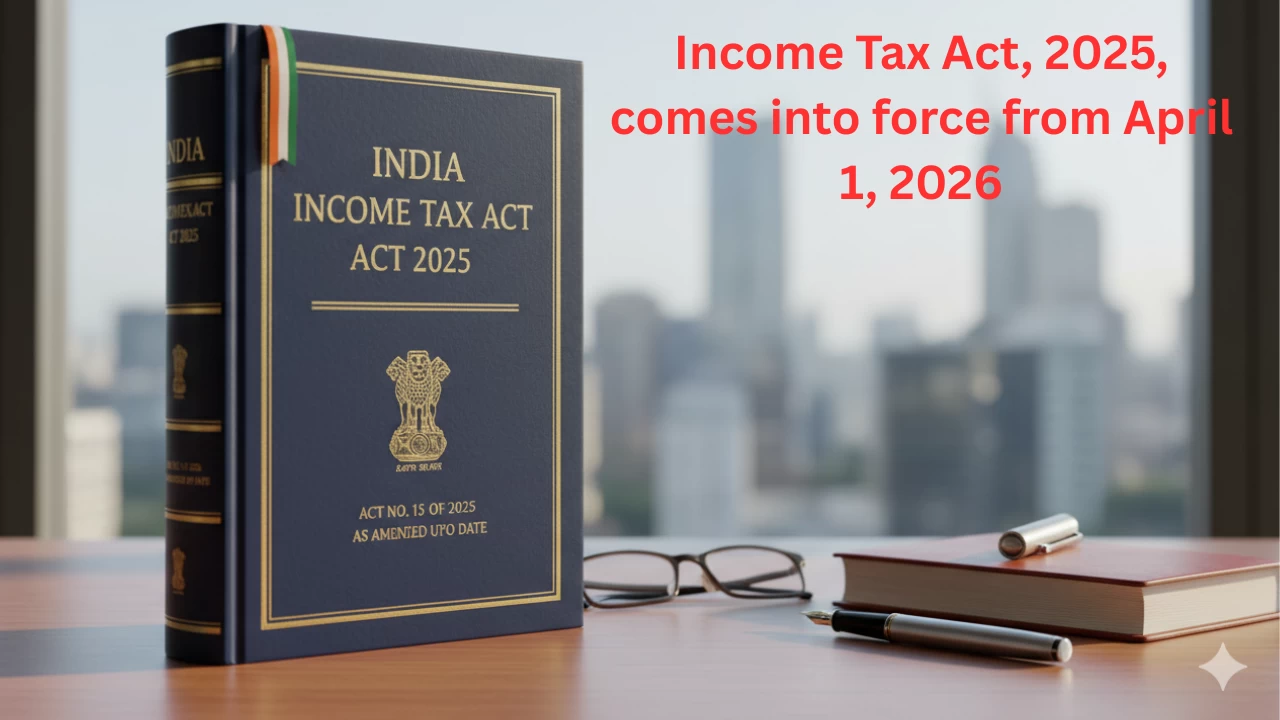
New Delhi: The Income Tax Act 2025 is all set to come into force across the country from 1 April 2026 and will replace the 64-year-old Income Tax Act 1961. The I-T Act 1961 was enacted at a time when India's economy was not as digital and modern as it is today. Over time, hundreds of modifications have been made to it. The result was that the law became so heavy and complicated that, far from paying taxes, it became difficult to read it. This had become a big problem for small taxpayers, salaried people and senior citizens. The government believes that the time has come to rewrite the entire law.
Income Tax Act 2025 features
According to the government, the new tax law will be about 50 percent less in size. The language has been simplified so that even common people can understand the rules without the help of tax experts. Unimportant sections have been removed and many old and useless tax provisions have been completely abolished. The government claims that this will reduce tax disputes and court cases.
Tax rate same, rules made easy
The biggest relief is that the tax rates have not been changed. That means your tax slab will remain the same as it was before. This law is revenue neutral, which means it will not affect the government's earnings. The only difference is that now the rules for filing taxes will be clearer and easier to understand.
Assessment Year hassle is over
Till now difficult words like previous year and assessment year used to confuse people in income tax. This has been abolished in the new law. Now the only word would be tax year. This will make the process of filing ITR even easier. Moreover, if a taxpayer files the return even after the due date, he will get the right to get a TDS refund, which was not an easy process under the incumbent tax law.
The government has made it clear that any new tax changes made in the budget 2026-27, be it personal tax, corporate tax or rules related to HUF, will all be included under the new Income Tax Act 2025. After getting approval from Parliament, its rules and tax forms are now being prepared.
This is not the first time that efforts have been made to redesign the tax system. An attempt was made to introduce the Direct Tax Code in 2010, but it could not be successful. Later in 2017, a committee was formed, based on whose report this new law has now been prepared. The purpose of the Income Tax Act 2025 is clear. Making the tax system simple, transparent and reliable. The tax will remain the same, but it will be easier to understand now. This change is considered a big relief for salaried people, small businessmen and senior citizens.