
Sign In
By signing in or creating an account, you agree with Associated Broadcasting Company's Terms & Conditions and Privacy Policy.
By signing in or creating an account, you agree with Associated Broadcasting Company's Terms & Conditions and Privacy Policy.
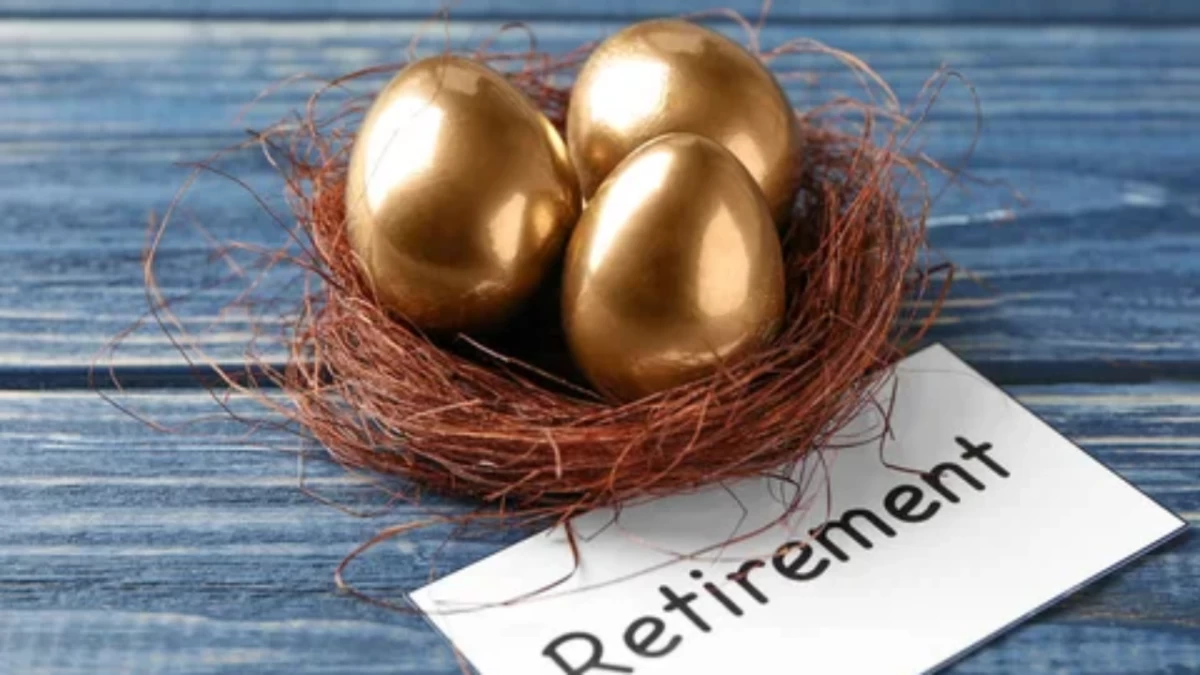

Kolkata: The common phrase "Today's Pain Tomorrow's Gain" has some similarity with the process of retirement planning. Retirement planning refers to the process of preparing yourself today (taking a little pain) to lead a happy post-retirement life so that all your objectives can be met easily (tomorrow's gain). Simply put, the process consists of saving some money and investing it regularly throughout your working life to create a significant corpus of money that can help you sail through your expenditure in life after retirement.
It is now clear that everyone will not have the same financial goal for post-retirement life. Usually, the standard of life after retirement is in sync with life before retirement. Hence, financial goals are also set accordingly. But unfailingly, one should identify income sources, estimate expenses taking to account an inflation calculator, , implementation of a savings plan, and management of assets and risk are all components of Retirement Planning. To determine if the Retirement income goal is realistic, future cash flows are estimated.
Theoretically, you can begin retirement planning any time but it is best to start as early as possible in your working life. There is a simple and inviolable truth behind it -- investments grow on the principle of compounding and the longer you allow this force to work, the higher the amount you can build. If you can build a comfortable amount, life after retirement can be beautiful -- you can pursue a new hobby, travel to new places, start a new business or enjoy carefree family life with children and grandchildren.
In a sense, inflation is the biggest nemesis of retirement planning. India is going through a period of 5-6% retail inflation, which is high. (Incidentally, Reserve Bank of India has a goal to bring it down to 4%.) With that sort of inflation, the expenditure today will be many times more 25 or 30 years later. For example, if your monthly household expenditure today in Rs 20,000 a month, 25 years later you will need to spend Rs 85,837 to maintain the same lifestyle and 30 years later the amount will rise to Rs 1,14,870. Therefore, while planning for life after retirement, one has to take the help of an inflation calculator. Planning on the basis of nominal figures will be suicidal.
Another important factor to keep in mind is that one should not be myopic and plan only for 10-15 years after retirement. One has to remember that with increased life expectancy, proliferation of healthy lifestyle and modern medical attention, one can easily live beyond 80-85. Therefore, it is safe to plan for at least 30 years after retirement. The longer one lives, the more the money one would require.
While planning for retirement, one should choose a proper portfolio to invest in. The character of any portfolio depends om the nature -- age, risk-aversion, income etc -- of the investor. However, many investment advisors advocate a middle path for a robust corpus. Assuming the investor is young, a large part of the money can be in instruments which focus on high returns like equities and equity-oriented mutual funds. Also buying annuities or NPS should be actively explored. But a part of the money has to be put in debt securities as well. One must consult a qualified personal investment strategist to determine the goals of investment and the quantum of investment required down the years and type of portfolio one should adopt.
This is also a pertinent question. These days one might retire from an active everyday job but that does not necessarily mean that one has to stop working and/or earning. One can do some consultancy work, especially in the field where one has spent decades of working life gaining experience and expertise. While a teacher, or a scientific officer can start imparting tuitions, a professional can become a consultant in his/her own field. This will prolong the earning period and help in generating cash flow.
As you advance in age, your health tends to get more and more frail and you become prone to various diseases. A large part of your monthly expenditure could be spend on budget The older you get, the more you will have to spend on healthcare. Medicines, tests, treatments, perhaps a nursing attendant could demand a higher and higher share of your monthly budget. To avoid such an eventuality or in any case to minimise it, start healthy practices from an early age.
For the middle class, debts are perhaps an inseparable part of life. But debts should be minimised and should be paid off as early in life as possible. Remember every rupee you pay on interest could go towards your retirement savings. Minimise use of credit cards and impulsive purchases. Another important thing to remember is that even a miniscule difference in interest rate (on loans) of return on investments can have an amplified impact on your eventual budget and retirement. So while taking loans or investing for the future take care of this fact.