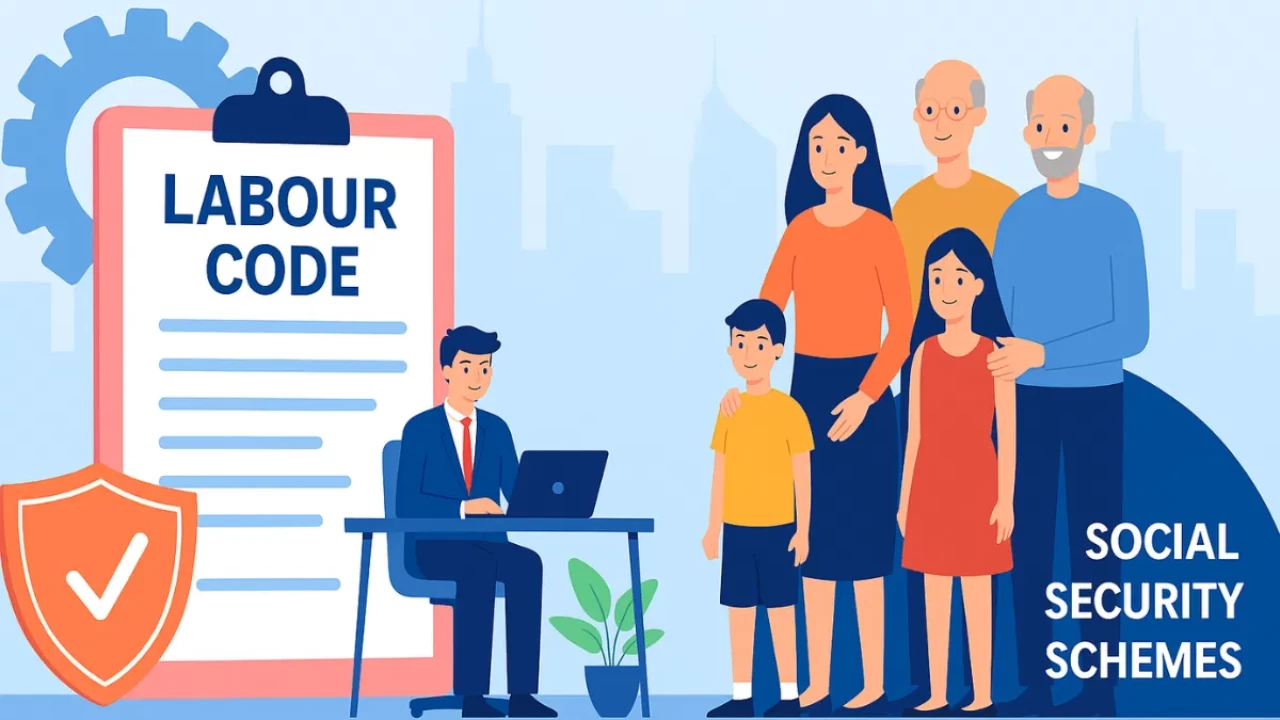
New Delhi: New Labour Code has brought a big change for the working class. Earlier, in government social security schemes (Social Security Schemes), the definition of family was very limited. The employees had limited options as to whom they should include under this scheme. Previously, only husband and wife, children, parents and unmarried daughters were covered under these schemes. Code on Social Security (CSS) 2020 has brought a major change in this old rule. Now employees will be able to include their grandparents, younger siblings and even parents-in-law in these schemes.
New Labour Code Changes for EPF, ESIC & Gratuity
This new rule applies to all major government schemes like ESIC (Employees' State Insurance Corporation), EPF (Employees' Provident Fund), gratuity and accident compensation. Whether the employee is a permanent or fixed term contract, everyone will get this benefit. However, this will not be automatically applicable in the company's own group health insurance, mediclaim or wellness programs.
Previously, only husband/wife, children, parents and unmarried daughters were counted in the family. Courts also used to prohibit nomination to anyone outside it. Now the new law includes maternal grandparents and fully dependent younger brothers or unmarried sisters for all employees. Especially for female employees, parents-in-law have also been added to the family.
Labour Code: Female Employees' Rights
Earlier, working women could not add their parents-in-law to these schemes. Now, they can cover her parents-in-law. This change is important because today more than 41 percent of women are earning money in urban areas and often take care of their parents-in-law, so involving parents-in-law in government schemes can be a relief for them.
According to the new rule, persons completely dependent on the employee have also been included. That means a relative needs to be financially dependent on the employee. However, for this they will have to provide evidence of this.
When divorced, the parents-in-law's relationship ends legally. So it will be difficult for them to claim after the divorce. According to the new law, it is advisable to update the list of dependents immediately after the employee's marital status changes, so that there is no dispute afterwards.