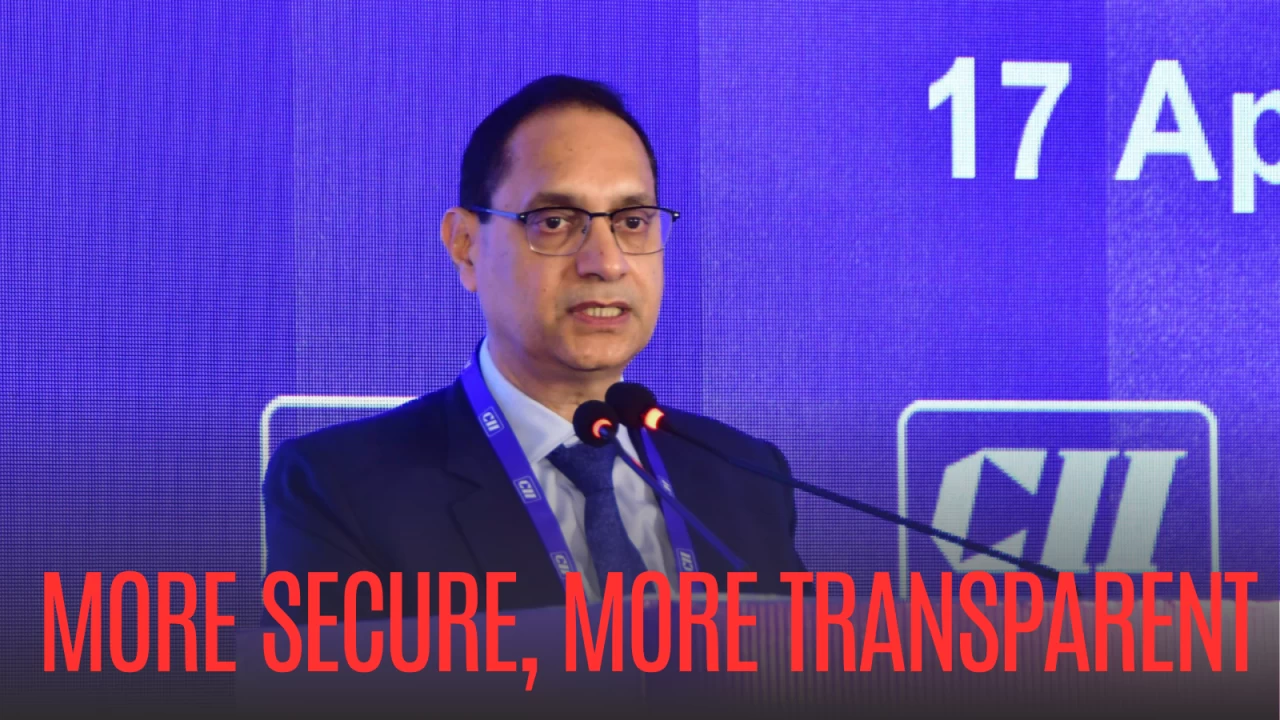
Kolkata: Ever since Tuhin Kanta Pandey has taken over as chairman, capital market watchdog Sebi (Securities and Exchange Board of India) has devoted a large part of its energy on securing investor interest. One of the landmark moments came towards the fag end of the year, when on December 8, it flagged off the pilot project of the platform christened 'Past Risk and Return Verification Agency, which is a performance verification platform for investors and India has become the first country in the world to adopt such a measure. Though it is directly aimed at benefitting the equity investors, it could also help mutual fund analysts and AMCs to read stock performance more efficiently.
In fact, 2025 is also the year when Sebi made significant changes in vital parameters of mutual funds which directly concern the retail investors of mutual funds. One can have an idea of the number of investors it can benefit from the fact that there are more than 25.60 crore mutual fund portfolios in the country in October/November 2025. The changes concern TER (total expense ratio), NAV (net asset value) and exit loads and they will These changes will directly impact the costs incurred, effective returns earned and risk undertaken by investors. Let's have a closer look at each.
Launch of MF-Lite
Safer, cheaper and more transparent -- these are the three objectives with which Sebi made its changes in the mutual fund world this year. On March 16, Sebi introduced MF Lite, which is a simplified framework for passively managed mutual fund schemes such as index funds and ETFs. Significantly, the popularity of passive funds and ETFs has been going up in the country very fast. MF Lite is designed to reduce entry barriers, lower compliance requirements and cut operational costs for AMCs. The outcome: it raises liquidity and offers more low-cost investment options for common investors.
NAV calculation
NAV or net asset value is the price at which an investor buys or sells an unit of a mutual fund scheme. From June 1, 2025, a new change was effective while selling mutual fund units. Sebi ruled that if the request to sell lands by 3 PM, the NAV of the day before the next business day will apply. But if the request comes after 3 PM, the NAV of the next business day will apply. For investors making online requests, the time limit is 7 PM for overnight funds only. This was supposed to reduce confusion regarding application of NAV.
Maximum exit load slashed
Earlier, mutual funds could charge as much as 5% as an exit load. SEBI has reduced this to 3% in one stroke. While most funds already charge only 1-2%, the new limit has reduced the burden on investors. By the way, exit load in a mutual fund scheme is a fee charged by the fund house at the time of redemption of units. It is designed to disincentivise short-term selling typically before a year from buying the units. It varies from fund to fund and is laid down in the key details of every mutual fund scheme. Some schemes also have zero exit load.
Passive breach
Sometimes it so happens that market fluctuations can cause a fund's asset allocation to exceed its defined limits. IN market terminology, it is called a passive breach. Sebi has set a time limit within which all AMCs must rectify the portfolio of a scheme in such situations. This will reduce unwanted risks in the funds.
REITs classified as equity
Sebi has made a significant announcement concerning REITs and that is from the first day of 2026, investments in REITs by mutual funds will be considered equity investments. One direct impact could be equity funds making investments in REITs. It has the potential of raising liquidity levels of these instruments and boosting valuations. It will also allow bigger flow of funds into the sectors of commercial real estate.
Proposal to trim Total Expense Ratio
Total Expense Ratio, or TER, is the annual cost of running a mutual fund. The higher the TER of a fund, the less the effective returns of the fund since these expenditures are deducted from the assets. These costs are typically designed to cover management costs, administrative costs, marketing costs of the scheme. Usually index or passive funds have lower TERs while actively managed funds have higher TERs.
SEBI has suggested in a consultation paper that TER costs be slashed. The market regulator has suggested TER be trimmed by 15 basis points across equity schemes. If the proposals are finally accepted, the maximum TER for equity funds with assets below Rs 500 crore would fall from 2.25% to 2.10%. Debt funds in the same size category would have their upper limit capped at 1.85%. Expenses will also reduce for funds wigth large AUMs. Also Sebi could allow performance-based TERs, which means funds that deliver better returns can charge a higher TER.
The aim of all the changes that Sebi has made this year, or proposed in 2025 is to improve the security level of investors, lower their costs and inject more transparency in the sector. This will certainly reduce confusion, increase confidence of retail investors and attract more investors to the expanding domain.