


Sign In
By signing in or creating an account, you agree with Associated Broadcasting Company's Terms & Conditions and Privacy Policy.
By signing in or creating an account, you agree with Associated Broadcasting Company's Terms & Conditions and Privacy Policy.
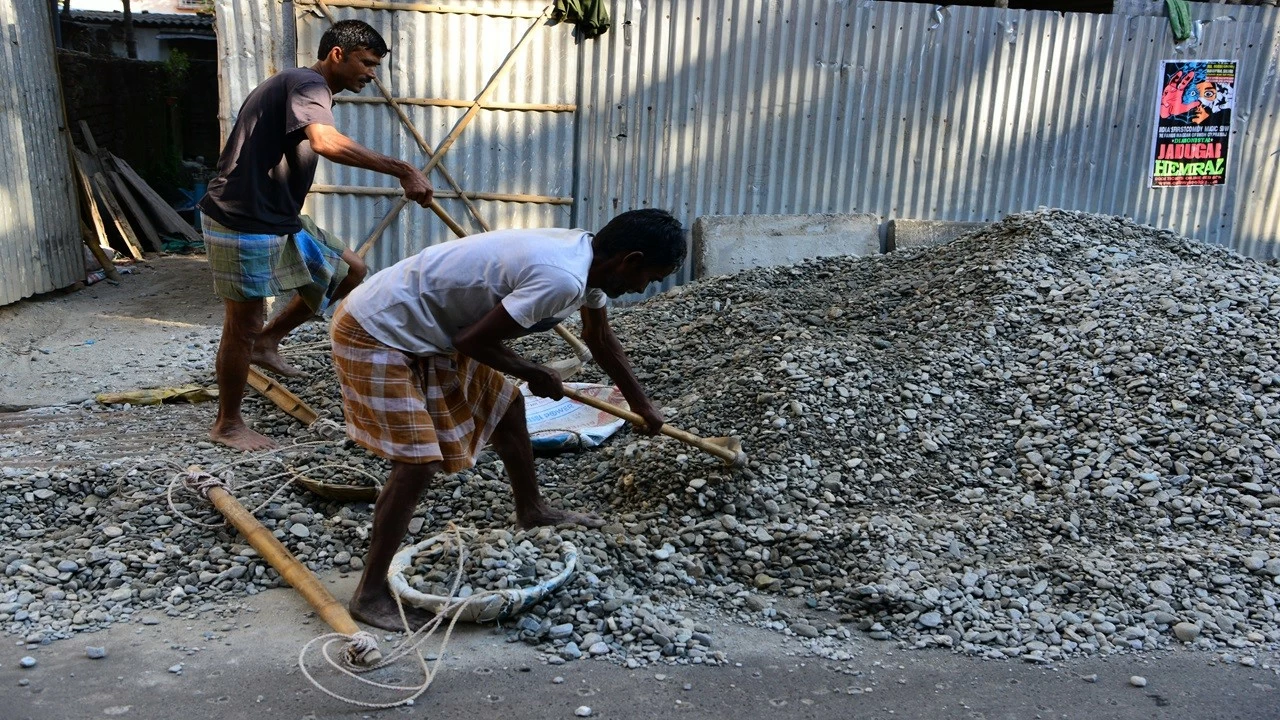

New Delhi: A draft Bill was circulated by the government among Lok Sabha members which proposes to repeal the Mahatma Gandhi National Rural Employment Guarantee Act (MGNREGA) and replace it with a new rural employment law, the Viksit Bharat-Guarantee for Rozgar and Ajeevika Mission (Gramin) (VB-G RAM G) Bill, 2025, a source was quoted as telling PTI.
The Bill also alters the funding structure, shifting from the current system under MGNREGA where the Centre covers the entire unskilled wage bill, and replacing the labour budget with a state-wise “normative allocation” determined by the Centre, The Indian Express reported.



1. The VB-G RAM Bill proposes to employment guarantee of 125 days per financial year to every rural household whose adult members volunteer for unskilled manual labour, The Indian Express report said. This is more than the current MGNREGA provision, which guarantees 100 days of wage employment in every financial year.
Section 3 (1) of the MGNREG Act provides for “not less than one hundred days” of work per rural household in a financial year. But, while being implemented, 100 days has effectively become the standard limit, the report added.
2. Another crucial change rolled out by the VB-G RAM G Bill relates to the funding system of the new scheme. The Centre has to pay the entire wage bill for unskilled manual work under the MGNREGS. However, under the new Bill, states will have to share the burden of the funding for wage payment.
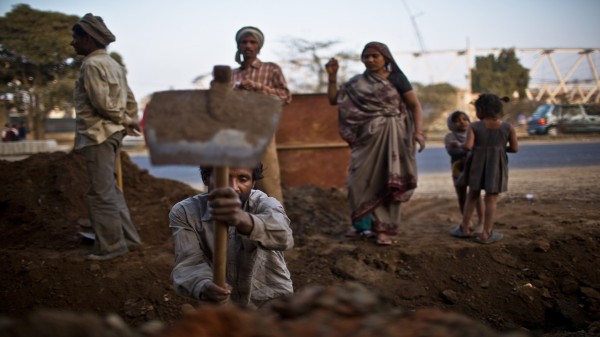
Section 22(2) of the Bill points out a 90:10 fund-sharing for northeastern states, Himalayan states and certain Union Territories (Uttarakhand, Himachal Pradesh, and Jammu and Kashmir), and a 60:40 split for other states and Union Territories with legislatures, the report added. For Union Territories without a legislature, the Centre will cover the entire cost of the plan.
3. Yet another key change is with regards to allocation. The Central Government will decide a state-wise normative allocation for each financial year, based on objective parameters as the Centre may prescribe, according to Section 4 (5) of the VB-G Ram G Bill.
The Bill also proposes that any spending exceeding the normative allocation would be borne by the state government, which is a total shift from MGNREGA’s labour-budget approach. The Bill defines “normative allocation” as “the allocation of the fund made by the Central Government to the State”, the report pointed out.
4. The VB-G RAM G Bill allows the employment guarantee work to be paused during peak farming seasons to ensure adequate agricultural labour is available. As per the Bill, state governments will be required to notify in advance up to 60 days in a financial year —covering peak sowing and harvesting periods — during which no work will be undertaken under the Act, the report said. States may issue area-specific notifications based on agro-climatic zones and local farm activity patterns.
5. The Bill also proposes wage payments to be disbursed per week, or in any case not later than a fortnight after the work is completed, The Indian Express reported.
Under MGNREGA, payment of wages is made within 15 days of closure of the muster roll date, with compensation payable for delays beyond the 16th day at 0.05 percent of unpaid wages per day. The new Bill retains compensation for delay in payments, while also underlining that wages will adhere to rates notified under Section 6 of MGNREGA, the report said.

