Sign In
By signing in or creating an account, you agree with Associated Broadcasting Company's Terms & Conditions and Privacy Policy.
By signing in or creating an account, you agree with Associated Broadcasting Company's Terms & Conditions and Privacy Policy.
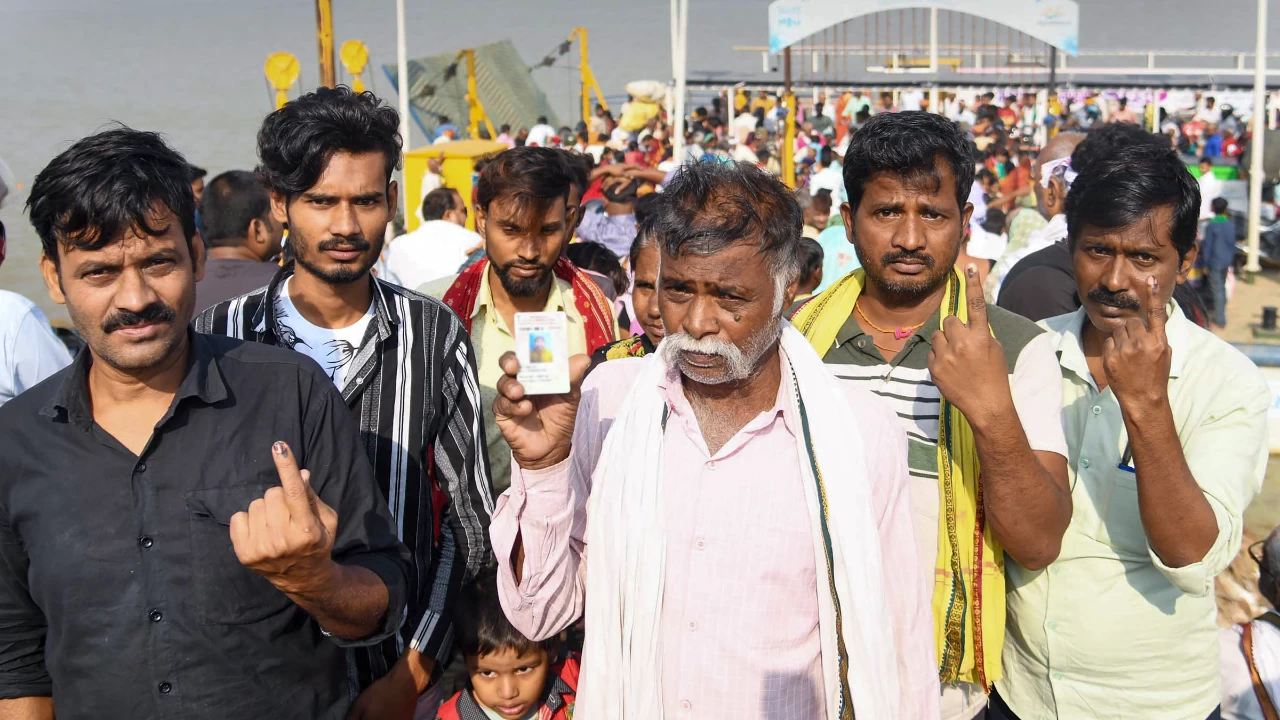


New Delhi: Bihar Assembly elections have seen some intense showdowns between the NDA and the Mahagathbandhan. The first phase of the polling for 121 seats took place on November 6, while the second phase for 122 seats will be held on November 11. The results will be declared on November 14. However, before the announcement of the actual results, the general public will be presented with exit polls from various organisations.
An exit poll is an election survey conducted on the day of voting. When people leaves the polling station after casting their votes, a representative from the survey agency asks them some questions, like which candidate or party they voted for. This conversation is conducted in a casual manner so that the voters do not feel pressured. Voters often write their preferences on a slip of paper or a small form and place it in a box, keeping their identity confidential. This method is used to encourage voters to express their opinions freely. All these responses are collected and later analyzed to estimate the public support for each party.
Exit polls do not specify who to ask questions. The one conducting the survey can ask any voter; a robust sample size can be anywhere between 30,000 and 100,000 voters. The effort is to include people from every region, caste, age, and class in the survey. The more data is collected, the greater the likelihood of accurate estimates.
Different agencies conduct the survey for opinion polls before elections. It includes both eligible and non-voting individuals. The survey focuses on the electoral issues and attempts to gauge the public's pulse on key issues in various areas. It tries to determine whether people are dissatisfied with the ruling party or whether they are completely satisfied with its performance.
On the other hand, an exit poll is conducted immediately after voting. This survey only includes voters who are returning from their polling booth on the election day and is conducted during the final phase. It allows us to estimate which party appears to be winning. Exit polls are broadcast only after the voting has concluded.
It was in the United States that the world's first election surveys began, with George Gallup and Claude Robinson conducting the earliest opinion polls to gauge public mood. Later, this method spread to Britain, France, Germany, and other countries. Exit polls were introduced in the Netherlands by sociologist Marcel van Dam in 1967, and his predictions proved to be absolutely correct in that election.
In India, exit polls were started by Eric D'Costa, head of the Indian Institute of Public Opinion. It gained a lot of attention in the 1996 and 1998 elections and was telecast on TV for the first time. It must be kept in mind that exit polls are only estimates, not final results. Voters may hesitate to disclose their choice or deliberately provide incorrect information. Sometimes, the margin of victory is very small, which can alter the predictions. Therefore, exit polls are only considered trends. The real verdict will be revealed only during the counting of votes on November 14.