

Sign In
By signing in or creating an account, you agree with Associated Broadcasting Company's Terms & Conditions and Privacy Policy.
By signing in or creating an account, you agree with Associated Broadcasting Company's Terms & Conditions and Privacy Policy.
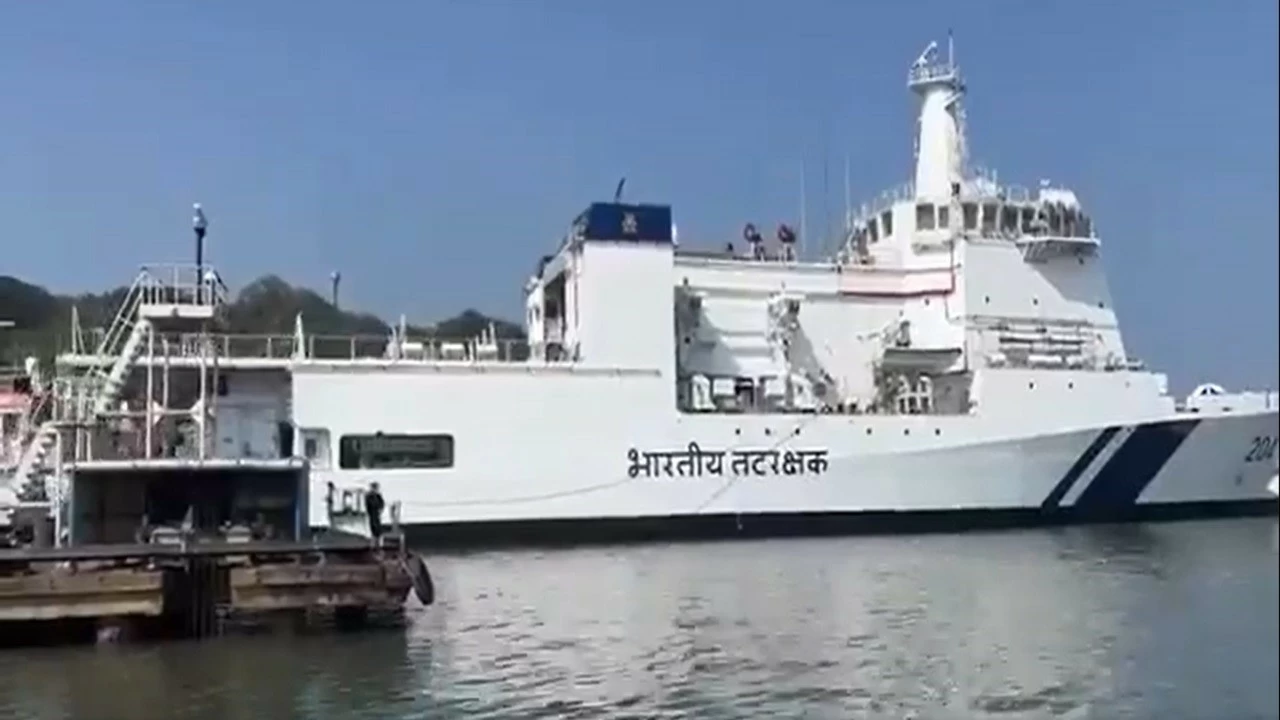


New Delhi: Defence Minister Rajnath Singh commissioned the Indian Coast Guard’s first indigenously designed and built pollution control vessel, 'Samudra Pratap', in Goa Shipyard Limited (GSL), Vasco on Monday. The 114.5-metre ship has more than 60% indigenous material.
The commissioning formed part of Singh’s two-day visit to Goa. The visit is aimed at bolstering India’s maritime security and environmental protection capabilities.
The first indigenously designed and built Pollution Control Vessel (PCV) of the Indian Coast Guard (ICG), Samudra Pratap is also the largest ship in the ICG fleet.
It has been built by GSL with more than 60 per cent indigenous content. The 114.5-metre-long vessel has a displacement of over 4,170 tonnes.
The ship is fitted with advanced systems, including a 30mm CRN-91 gun, two 12.7mm stabilised remote-controlled guns with integrated fire control, an indigenously developed Integrated Bridge System, Integrated Platform Management System, Automated Power Management System, and a high-capacity external firefighting system.
The vessel boasts a top speed of over 22 knots and an operational endurance of 6,000 nautical miles.
The vessel is also the Coast Guard’s first to feature Dynamic Positioning (DP-1) capability and has been awarded the FiFi-2 / FFV-2 notation certificate, allowing for precise positioning during pollution control and firefighting missions.
It is also equipped with advanced oil spill detection and response systems, including an oil fingerprinting machine, a gyro-stabilised standoff active chemical detector, and specialised pollution control laboratory equipment. This enables comprehensive pollution response operations within India’s Exclusive Economic Zone (EEZ) and beyond.
The vessel will markedly increase the Coast Guard’s operational reach and capability, serving as a critical platform for marine pollution control enforcement, maritime law enforcement, search and rescue operations, and safeguarding India’s EEZ.
The ship was officially handed over to the Coast Guard in December at GSL.
The commissioning of 'Samudra Pratap' marks a huge boost to the Coast Guard’s capabilities. The vessel is equipped to detect and respond to marine pollution, including oil spills and chemical threats, throughout India’s waters. Its state-of-the-art firefighting systems and Dynamic Positioning technology help in accurate and efficient emergency operations. Besides, the vessel will enhance maritime law enforcement and search-and-rescue efforts within the EEZ. It significantly bolsters the Coast Guard’s operational reach, environmental protection, and maritime security.
Singh has emphasised the importance of Aatmanirbharta in defence, calling it a “strategic necessity”. He pointed out: “Aatmanirbharta in defence is not a luxury, but a strategic necessity. Institutions like the GSL are transforming this necessity into reality. The GSL is developing capabilities, absorbing technology, and strengthening indigenous design, which have resulted in the timely delivery of equipment to the Armed Forces and accelerated the pace towards making the nation self-reliant."
Singh added: “The ships built by the Goa Shipyard Limited (GSL) and other Indian yards for the Indian Navy & the Indian Coast Guard (ICG) are the floating symbols of India’s sovereignty, representing our presence, capability, and resolve on the high seas.”