Sign In
By signing in or creating an account, you agree with Associated Broadcasting Company's Terms & Conditions and Privacy Policy.
By signing in or creating an account, you agree with Associated Broadcasting Company's Terms & Conditions and Privacy Policy.
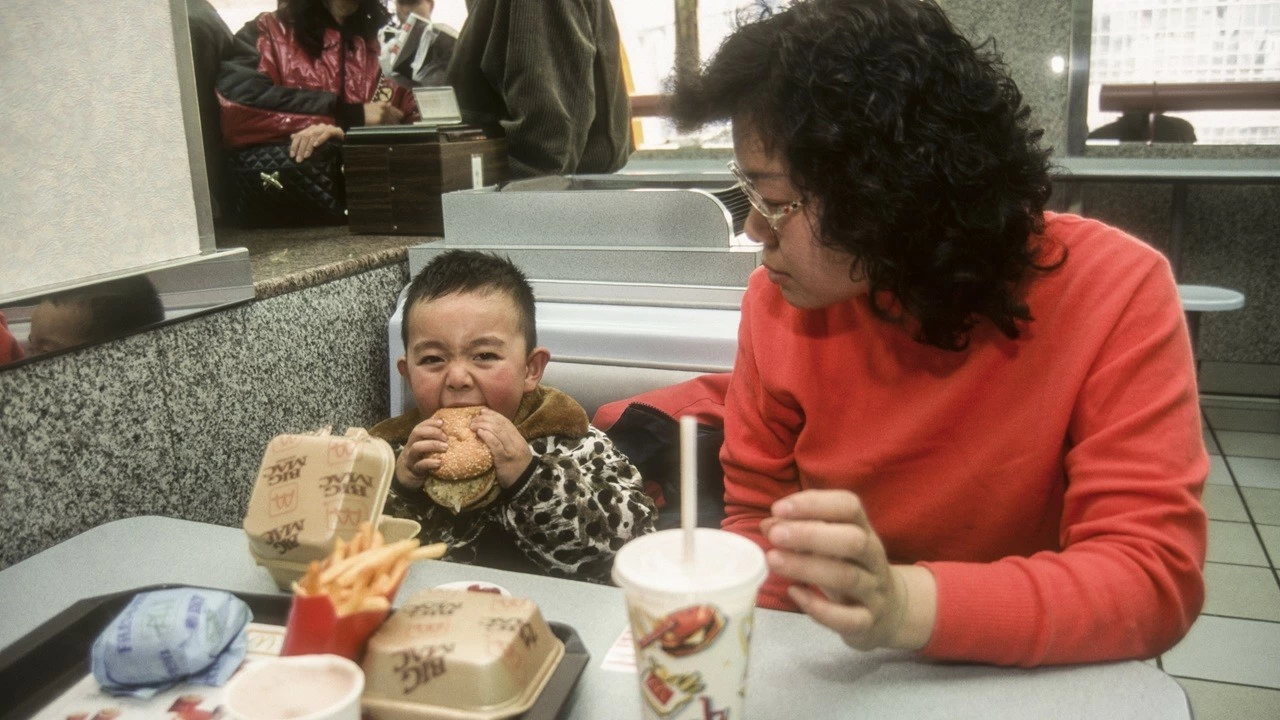


New Delhi: Obesity has become a global problem today. It is a major health issue, which is not restricted to age now. While adults have been plagued by this problem for some time, even children and teenagers are currently being affected by obesity and the related health problems it induces. A major reason behind this is the increased consumption of junk food around the world, and many are now trying to combat this problem. The UK is taking major steps in this direction, and India should take cue as it too is suffering heavily from this problem.
The United Kingdom has taken a major step in the fight against childhood obesity by enforcing a new ban on junk food advertising on daytime television and across the internet. From January 5, 2026, advertisements for foods high in fat, sugar and salt (HFSS) are no longer allowed to air on TV before 9 pm or appear as paid promotions online at any time of day. The move aims to shield children from the pervasive influence of unhealthy food marketing.
The National Health Service in the UK data indicates that almost one in 10 reception-aged children are living with obesity, while one in five children has tooth decay by the age of five. Obesity alone is estimated to cost the NHS more than £11 billion annually. It is in response to this oversized problem that the government has introduced strict advertising rules to limit children’s exposure to unhealthy food marketing during peak viewing hours.
Officials estimate that the ban could remove up to 7.2 billion calories from children’s diets each year and help prevent around 20,000 cases of childhood obesity, potentially easing long-term pressures on the health system and delivering health benefits across the population.
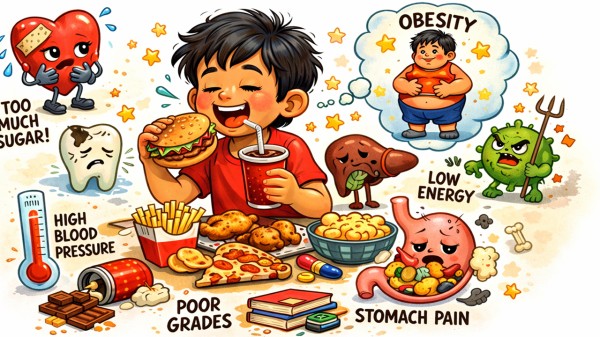
The restrictions put up in the UK ban target 13 categories of products deemed high in unhealthy ingredients such as sugar, salt or saturated fat. This includes many sweets, fizzy drinks, snack foods and ready-to-eat processed items that are heavily marketed to young audiences. It has been a long time now that awareness surrounding the ill effects of such foods have been around. They have caused a problem of obesity for not such adults but for children as well, and the problem persists in India as well.
Childhood obesity in India is a rapidly escalating public health crisis, with millions affected and significant increases seen across all age groups. Factors like poor diet, sedentary lifestyles, urbanization, and socioeconomic shifts only compound the problem. A 2024 Lancet study for example revealed that around 12.5 million children in India are overweight and obese. This at the time of the study included 7.3 million boys and 2.3 million girls between 5 to 19 years of age. Such figures are projected to nearly triple by 2035, with higher rates in wealthier families and urban areas.
The implications of such numbers are heavily damning. Conditions such as high blood pressure, heart problems, strokes, diabetes and fatty liver disease and cirrhosis of the liver are becoming more and more common and are being witnessed at more and more younger ages. Thus it is imperative that India too sees measures to combat this problem come in place as soon as possible.
A major way in which this can be done is through spreading awareness about the scale and intensity of the problem. Children should be educated on how dangerous obesity is. Dietary Improvements is another major area in which work can be done. A balanced and nutritious diet is important and should be encouraged for children.
The UK government’s decision to ban excessive advertisement of junk food is also something that can be looked at. The step aligns with mounting scientific evidence that even brief exposure to junk food advertising can influence children’s eating behaviour. India with a large junk food problem of its own can do well with some such rules, especially in urban settings where the problem runs excessively rampant.