
Sign In
By signing in or creating an account, you agree with Associated Broadcasting Company's Terms & Conditions and Privacy Policy.
By signing in or creating an account, you agree with Associated Broadcasting Company's Terms & Conditions and Privacy Policy.


New Delhi: Dussehra, also known as Vijayadashami, is one of the most crucial Hindu festivals that celebrates the triumph of good over evil. Rooted in the epic Ramayan, it marks Lord Ram’s victory over the ten-headed demon king Ravan, symbolising the end of evil forces. The name Dussehra comes from Sanskrit, meaning annihilation of ten, referring to Ravan’s ten heads. In the epic, Ravan is the supreme antagonist, who abducted Lord Ram’s wife Sita to avenge his sister Surpanakha’s humiliation.
But people do not see Ravan as evil in some parts of India. They would rather see him as a learned scholar, the greatest devotee of Lord Shiva, and a respected son-in-law. While most of the nation revel in burning his effigies during Dussehra, these places worship him as a deity. Let’s explore these places in India where Ravan is worshipped.
Here is the list of six Ravan temples where the ten-headed demon is worshipped.
1. Ravan Mandir, Uttar Pradesh
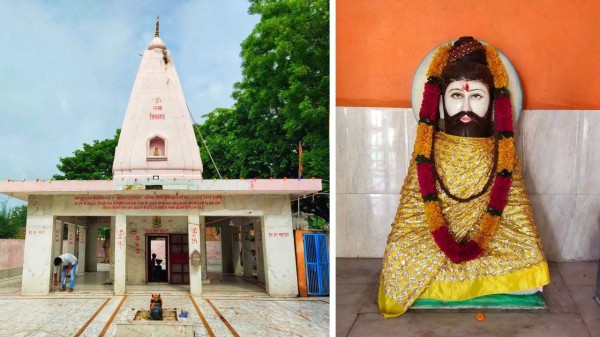
Situated in Greater Noida near Delhi, Bisrakh village is considered to be Ravan’s birthplace. The village’s name is derived from Ravan’s father, Vishravas. The people here do not follow Ravan Dahan or the burning of Ravana’s effigy on Dussehra, as he is regarded as a god in this area. They perform a yajna, or fire sacrifice, to honour him as a symbol of their culture.
2. Mandore Ravan Mandir, Rajasthan

Mandore’s Dave Brahmins are considered Ravan’s descendants, and this temple was built in the Mandore region of Jodhpur by them. They do not celebrate Dussehra but perform shradh and offer pind daan on the same day.
3. Ramalingeshwara and Kailashapura Mahalingeshwara Mandir, Karnataka
Karnataka’s Mandya is home to the Kailashapura Mahalingeshwara Temple, where Ravan is worshipped alongside Lord Shiva. The sacred Shiva linga is believed to have been placed there by Ravan after he received it from the gods. Kolar’s Ramalingeshwara Temple worships Ravan as Ramappa or Ramalinga. The four Shiva lingas here were brought from Mount Kailash by Ravan.
4. Baijnath Temple, Himachal Pradesh
Located in Himachal Pradesh’s Kangra, Baijnath Temple is dedicated to Lord Shiva, but it has a link to Ravan. As per legend, Ravan performed intense penance to please him, offering nine of his heads as sacrifices. Impressed by him, Shiva granted him one of the 12 Jyotirlingas, but with the condition that if it touched the ground, it would become fixed there. Ravan was tricked by Lord Vishnu in disguise, causing the Jyotirlinga to be placed in Baijnath, where it became permanently enshrined.
5. Kakinada Ravan Temple, Andhra Pradesh
Located in Andhra Pradesh’s East Godavari district, Kakinada Ravan Temple features a huge Shivling mural. It has idols of Lord Shiva along with depictions of Ravan. It is believed that the site was chosen by Ravan himself to build a temple for Lord Shiva.
6. Ravangram Ravan Temple, Madhya Pradesh
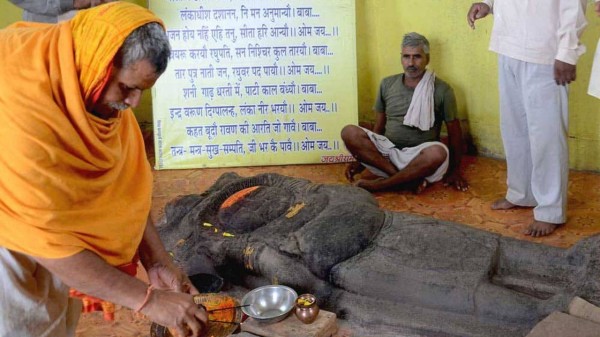
Ravangram, a village in Madhya Pradesh, revere Ravan as a deity. It is believed that Ravan’s wife, Mandodari, was originally from this village. The villagers regard Ravan as their son-in-law and honour him by chanting Ravan Baba Namah, meaning Salutations to Ravan. A temple has been constructed in his honour, featuring a ten-foot-long reclining idol of Ravan.
While Dussehra celebrates Lord Ram’s triumph over the ten-headed Demon King Ravan, these Ravan temples are worth visiting to witness the art and architecture and learn about a different narrative. In today’s time, these places have become the top tourist attractions.