
Sign In
By signing in or creating an account, you agree with Associated Broadcasting Company's Terms & Conditions and Privacy Policy.
By signing in or creating an account, you agree with Associated Broadcasting Company's Terms & Conditions and Privacy Policy.

New Delhi: Navratri is when everyone surrenders to the Navadurga, the nine popular manifestations of Goddess Durga. From Shailaputri, Brahmacharini, Chandraghanta, Kushmanda, Skandamata, Katyayani, Kalaratri, and Mahagauri to Siddhidhatri, these nine forms on the nine nights symbolise the victory of Shakti. But if we look at the ancient sacred scriptures like the Rigveda, Brahmanas, Upanishads, and Puranas, the story of the Divine Feminine is older, wider, and deeper than the familiar Navadurga.
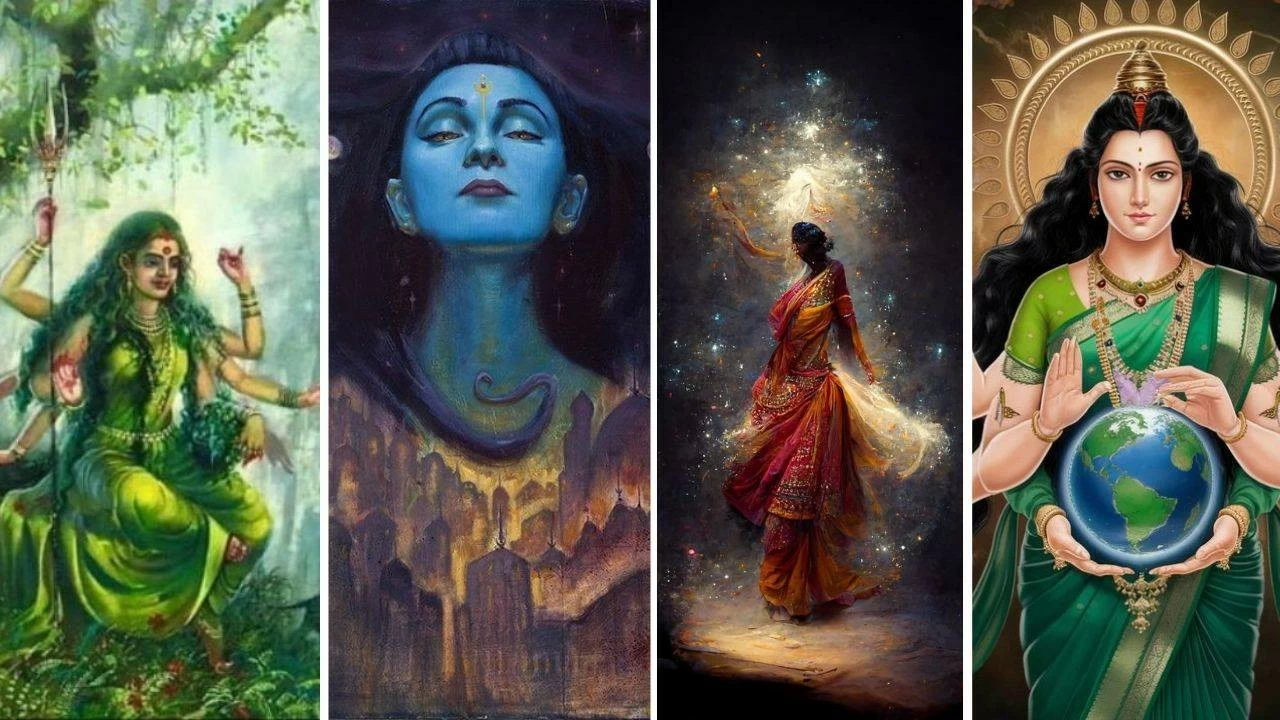
These scriptures describe other forms of goddesses, such as Aranyani, Ratri, Aditi, Prithvi, Ushas, Nirrti, and Shachi, who once held powerful roles and were worshipped. But they are now considered forgotten as traditions were altered and festivals became more structured over the centuries. Though forgotten, these forms were integral to worshipping Shakti or the divine feminine and its connection to the natural world, not just the protective and destructive power depicted in the Navadurga.
These forms, though forgotten or lesser-known, were integral to the worship of the divine feminine and its connection to the natural world.
1. Aranyani: The Forest Goddess
The Rigveda mentions that Goddess Aranyani is one of the oldest Vedic goddesses. Praised as the spirit of the forest, she embodies nature’s mysterious and untamed traits that are also fertile and nurturing. Unlike Durga’s fierce image, Aranyani was quiet, shy, and elusive. No temples are dedicated to her because the forest itself was her shrine. Her hymn in the Rigveda describes her as moving unseen, with anklets that sound without footsteps.
2. Ratri: The Goddess of night
The Vedas personified the night as Goddess Ratri, who is the sister of Ushas or the dawn, and appears in hymns of the Rigveda. Usually, darkness symbolises ignorance, but Goddess Rati embodies protection, shelter, and rest. She guards every creature from danger when light fades. Interestingly, some experts suggest that the word Navratri itself originally meant “nine nights” devoted to her cycle.
3. Aditi: The Goddess of Infinity
The mother of the Adityas or the cosmic powers of order, Aditi, is considered one of the greatest goddesses in the Vedas. Identified with the boundless, limitless, eternal sky, she is invoked as the one who frees from bondage and restores harmony. Goddess Aditi is absent in Navratri, but her essence continues to live in the idea of universal motherhood.
4. Prithvi: The Earth Goddess
Prithvi is both the mother and the foundation of all life. Unlike the warrior form of Navadurga, Prithvi embodies endurance, patience, nourishment, and stability. In Vedic hymns, she is revered as the one who grants fertility, health, and strength. She is not directly worshipped during the Navratri, but every offering made on earth silently acknowledges her power.
5. Ushas: The Dawn Goddess
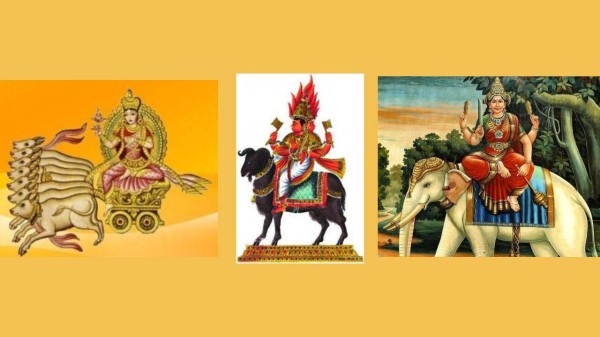
Ushas, the radiant goddess of dawn, symbolises light, awakening, and renewal. Known to drive away darkness with her gentle illumination, Ushas was once the main focus of the daily prayer. Today, Navratri celebrations left Ushas in silence by acknowledging only the night’s power but not the dawn.
6. Nirrti: The Goddess of Decay
Nirrti, the goddess of decay and misfortune, was not seen only as a destroyer but as a crucial cosmic force. Just as creation cannot exist without destruction, prosperity cannot exist without decline. Nirrti was once invoked to drive away misfortune or accepted as part of the balance of life. During Navratri, Goddess Nirrti is excluded because the festival celebrates victory, not dissolution.
7. Shachi: The Goddess of the Heavens
Shachi or Indrani is the consort of the Heaven King Indra. Once, she was considered a powerful goddess, representing fierceness, sovereignty, pride, and command. Unlike Lakshmi or Parvati, she was not considered gentle and regal. In today’s time, Navratri does not include her, though she once symbolised feminine authority in the cosmic order.
Navratri celebrates nine manifestations of Goddess Durga, but the forgotten goddesses remind us that Shakti was once worshipped in every aspect of existence. Their absence from customs and rituals does not wipe out their presence in life. By remembering them, we honour the fullness of Shakti!