Sign In
By signing in or creating an account, you agree with Associated Broadcasting Company's Terms & Conditions and Privacy Policy.
By signing in or creating an account, you agree with Associated Broadcasting Company's Terms & Conditions and Privacy Policy.
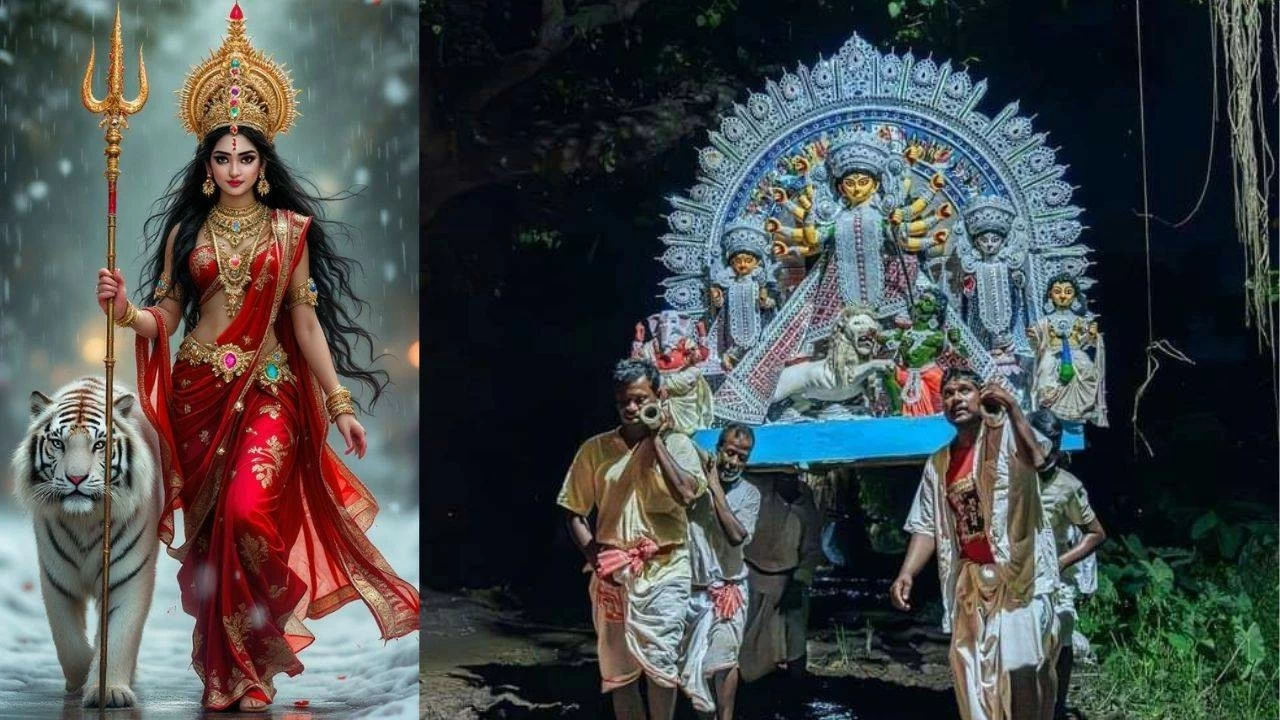

New Delhi: India is rightly regarded as the land of diversity, as the various cultures blend perfectly to celebrate the vibrant festivals throughout the year. One such grand festival is the Navratri festival. Typically, Navratri is celebrated twice a year, with Chaitra Navratri during March-April, and Sharad Navratri in September-October. This year, Sharad Navratri is all set to begin on September 22, 2025 and conclude on October 1, 2025.
This 9-day festival is celebrated with great enthusiasm and fervour throughout the country. Devotees worship Maa Durga and seek her blessings. But do you know why Goddess Durga is worshipped in nine different forms during Navratri? Let us know about the different forms of Maa Durga to celebrate Navratri 2025 with great zeal and passion.
During each day of Navratri, a different avatar of Goddess Durga is worshipped. It is believed that each form of Maa Durga represents a phase of life that teaches us important lessons about courage, wisdom, and love.
1. Maa Shailaputri
The first day of Navratri is dedicated to Maa Shailaputri. Also known as Shailaja, Maa Shailaputri is the form of Goddess Parvati when she was the daughter of King Himavat. In Sanskrit, ‘Shail’ means the mountain, so she is known as Shailaputri – the daughter of the mountain.
2. Maa Brahmacharini
On the second day of Navratri, devotees worship Maa Brahmacharini. She is symbolic of the severe penance carried out by Goddess Parvati. This avatar of Maa Durga signifies knowledge, wisdom, and austerity.
3. Maa Chandraghanta
The form of Maa Durga that is worshipped on the third day of Navratri is Maa Chandraghanta. She is also known as Chandrakhanda, Chandika, or Ranachandi. Her third eye is depicted as always open, ready to war with demons. This avatar of Maa Durga has ten hands, with each hand holding a distinct assortment of weapons.
4. Maa Kushmanda
Devotees pray to Maa Kushmanda on the fourth day of Sharad Navratri. It is believed that Maa Kushmanda created the whole universe with her smile. The name Kushmanda can be broken into Ku, which means little, Ushma, which means energy or light and lastly, Anda, which means cosmic egg. Maa Kushmanda is depicted riding a lion and has eight hands, holding a kamandalu, a bow and arrow, a lotus, a trident, a jar of nectar, and a discus.
5. Maa Skandmata
Maa Skandmata is the fifth form worshipped on the fifth day of Navratri. This form of Maa Durga is depicted as a female deity carrying Kartikeya, the son of Lord Shiva and Goddess Parvati, on her lap. Kartikeya is also known as Skand, and that’s how this avatar derives her name, showcasing motherly love.
6. Maa Katyayani
The sixth day of Navratri is dedicated to worshipping Maa Katyayani. As per Hindu mythology, Lord Brahma, Vishnu, and Shiva combined their energies to create Maa Katyayani, who killed the demon Mahishasura. She is depicted as a fiery warrior with eighteen arms and various kinds of weapons. Hence, she is also known as Goddess Mahadevi or Durga.
7. Maa Kalaratri
Navaratri’s seventh day is dedicated to Maa Kalaratri, the most fierce and violent form of Maa Durga. She is the destroyer of darkness and ignorance and therefore known as Maa Kali. She is depicted mounted on a donkey, with four hands, two of which are in a blessing and protective, while the other two carry a scimitar and a thunderbolt.
8. Maa Mahagauri
Maa Mahagauri is worshipped on the eighth day of Navratri. She is extremely bright and shines like the moon, and it is believed that she blesses all our devotees and fulfils their wishes.
9. Maa Siddhidatri
Devotees pray to Maa Siddhidatri on the ninth and final day of Navratri. While Siddhi translates to supernatural powers and meditative ability, Datri means the giver of all Siddhis. She is believed to be the supreme goddess who created the universe, and Lord Shiva also obtained all the siddhis while praying to Maa Siddhidatri.
Navratri, the festival of celebrating the nine forms of Maa Durga, guides us in how to live a life of balance, courage, compassion, and wisdom. Just like Maa Durga transformed herself into nine different forms to navigate our divine responsibilities, we too must adapt, learn, and grow through the various stages of our lives.