Sign In
By signing in or creating an account, you agree with Associated Broadcasting Company's Terms & Conditions and Privacy Policy.
By signing in or creating an account, you agree with Associated Broadcasting Company's Terms & Conditions and Privacy Policy.
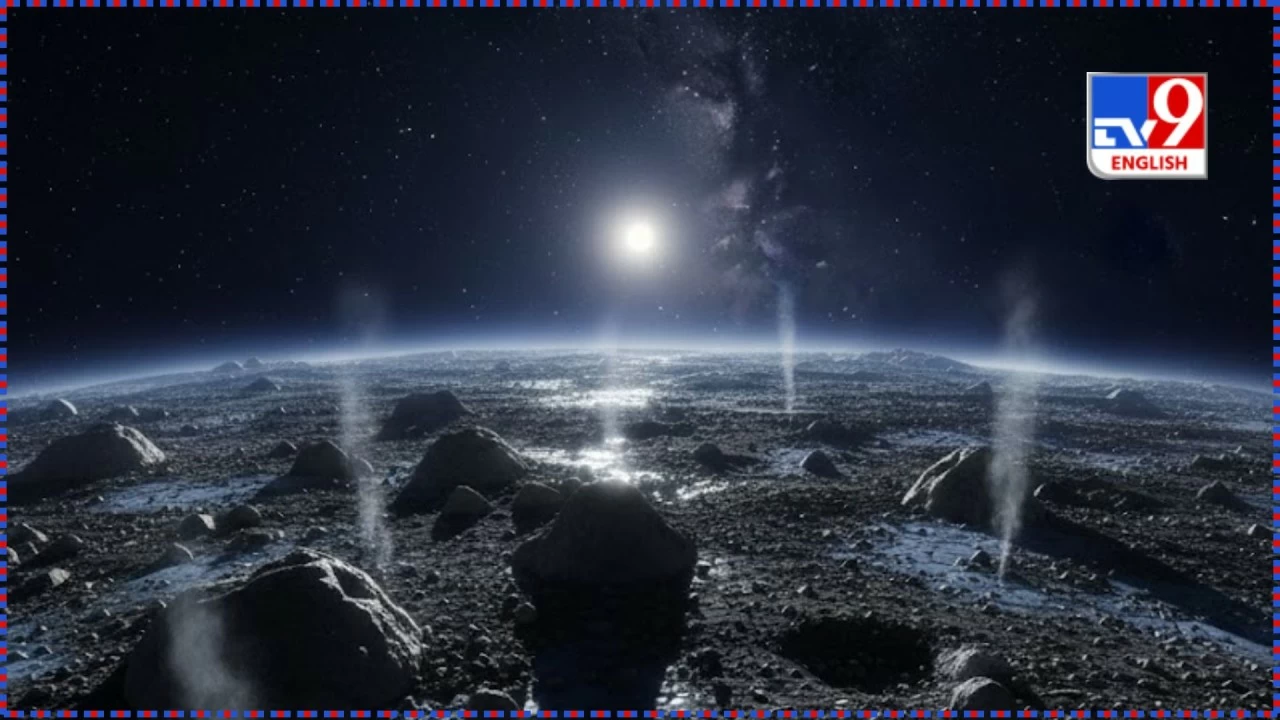


Asteroids are time capsules with pristine material, and scientists want to study them to better understand the processes at work in the chaotic infancy of star systems, when planets are being assembled in the leftover material from the birth of a star. This is the reason why NASA dispatched the OSIRIS-REx spacecraft to bring back samples from the asteroid Bennu, which is a pile of ancient rubble. A slew of papers based on examination of the retrieved material have dramatic implications for life across the Solar System. Scientists have discovered all the ingredients necessary to make RNA, a mysterious substance formed in pre-aqueous chemistry, as well as the dust from long-dead stars in the samples.
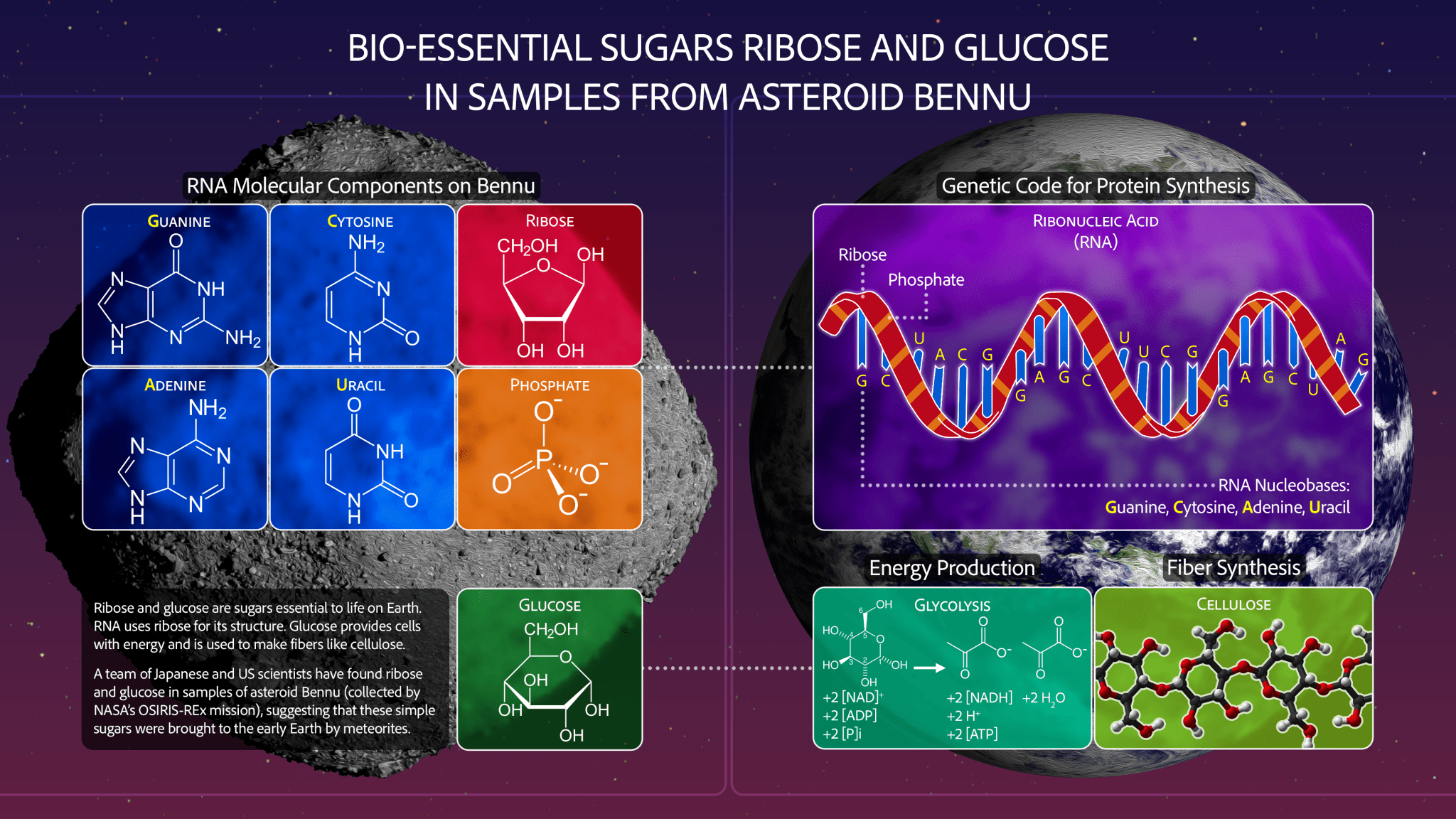
Bio-essential molecules discovered on Bennu. (Image Credit: NASA/Goddard/University of Arizona/Dan Gallagher).
Ribose, the sugar necessary to make ribonucleic acid (RNA) has been discovered in the samples, notably in the absence of deoxiribose, the sugar necessary to make DNA. This indicates that the chemical inventory necessary to form RNA was widely and easily available on asteroids throughout the early Solar System, which were the building blocks for planets. The research, published in Nature Geoscience supports the RNA world hypothesis, which suggests that the earliest primitive life was dominated by RNA rather than a combination of DNA and proteins. These primordial self-replicators could have evolved into the rich biochemistry that we see today on Earth.
Scientists have also discovered a mysterious material never before seen in any astromaterial before, a flexible pliable material that resembles soft plastic or chewed gum. The translucent material becomes brittle on exposure to radiation, and bends or dimples under the application of pressure. The material was deposited in grains of ice and minerals in the pristine asteroid. This material is validated as being truly ancient, from a time when the newborn Sun was warming up the asteroid, before liquid water could exist on the surface. The research indicates that asteroids similar to Bennu go through a phase of nitrogen-rich organic chemistry in the absence of water. A paper describing this research has been published in Nature Astronomy.
The pristine material on Bennu also contains pre-solar dust, that is grains of dust that were formed before the birth of the Sun. Two different rocks examined from the samples reveal the presence of six times the amount of supernova dust than any other extra-terrestrial material previously studied. This material was blown away by the violent deaths of stars, and indicates that Bennu was formed in a region of the protoplanetary disc around a new Sun that was enriched by the material from dying stars. A paper describing the research has been published in Nature Astronomy.
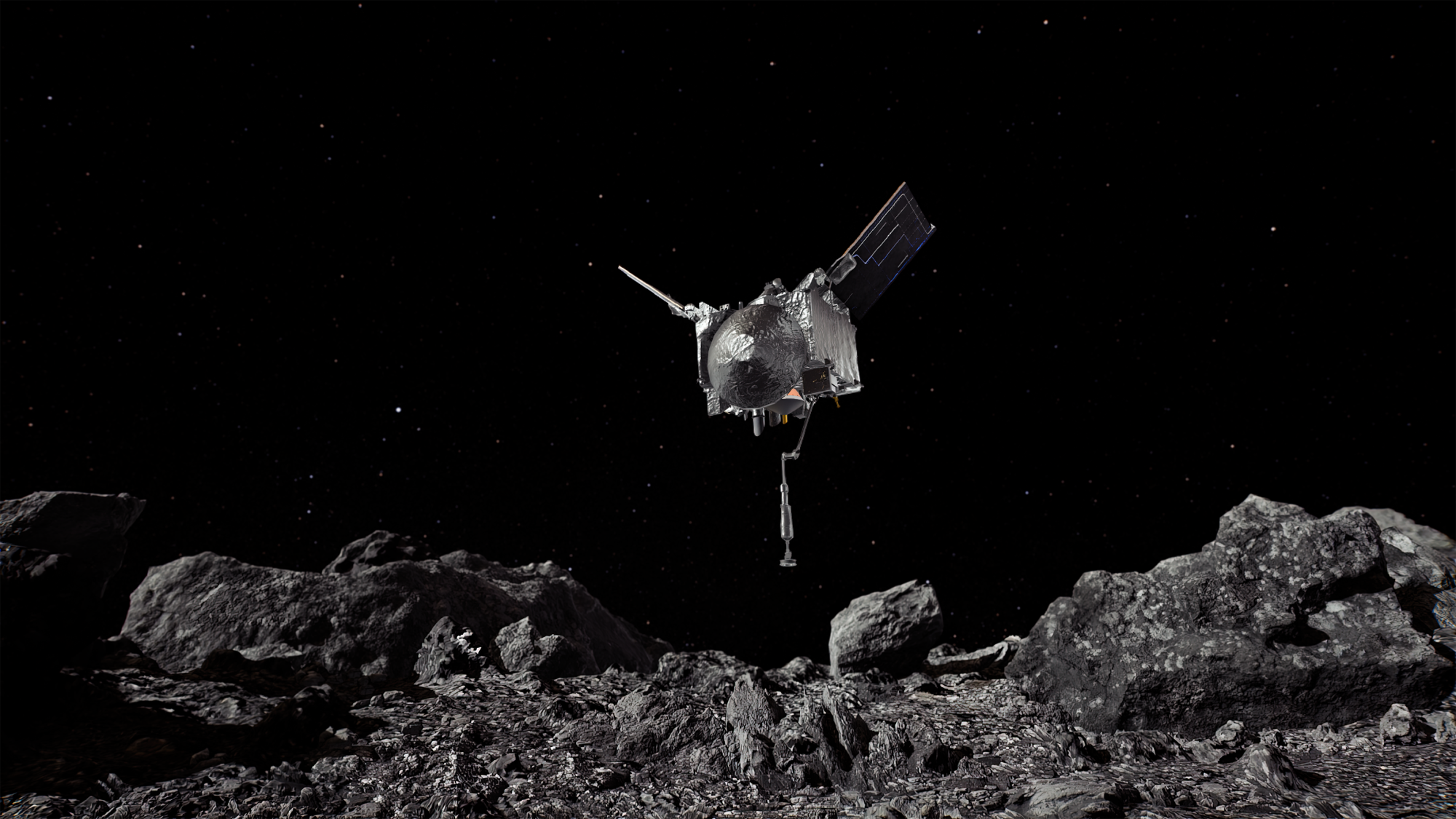
Illustration of the OSIRIS-REx spacecraft collecting the samples. (Image Credit: NASA/Goddard/University of Arizona).
All of this research adds evidence to the notion that life is an astrophysical process, and not a geochemical one. The chemical reactions necessary to lead up to life build up in the complex interactions between dust, ice and gasses in the disk of gas and dust falling into embryonic stars, even before they can sustain the fusion of helium into hydrogen, marking their births. The chemical inventories are similar to those discovered in distant protoplanetary discs, where planets are still being assembled in the waste material from the birth of their host stars. Complex organic chemistry can occur long before little ponds on terrestrial surfaces are heated by the energy from the host star.