The NASA-ISRO Synthetic Aperture Radar (NISAR) satellite has radioed back the first observations of the surface of the planet, providing scientists with an idea of its capabilities. The NISAR satellite has a pair of radar payloads on board, an S-band SAR made by ISRO's Space Applications Centre in Ahmedabad, and an L-band SAR by NASA's Jet Propulsion Laboratory in California. NASA provided the antenna boom, the radar antenna reflector, and an engineering payload, while ISRO provided the spacecraft bus, the solar panels, and the launch vehicle. The satellite was deployed by the
GSLV-F16 flight on 31 July, with the satellite subsequently passing
all systems checks.
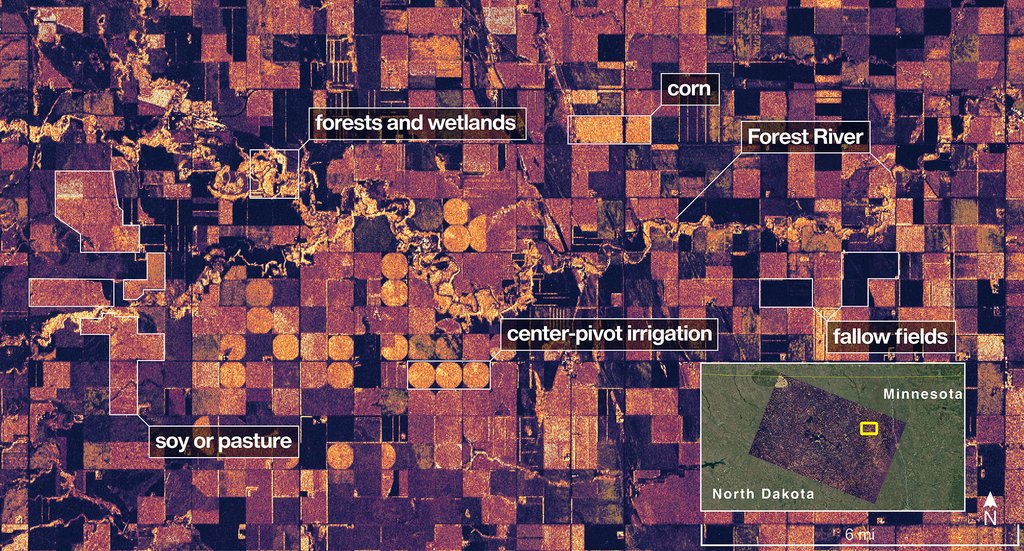
NISAR image of the region around North Dakota's Forest River. (Image Credit: NASA/JPL-Caltech).
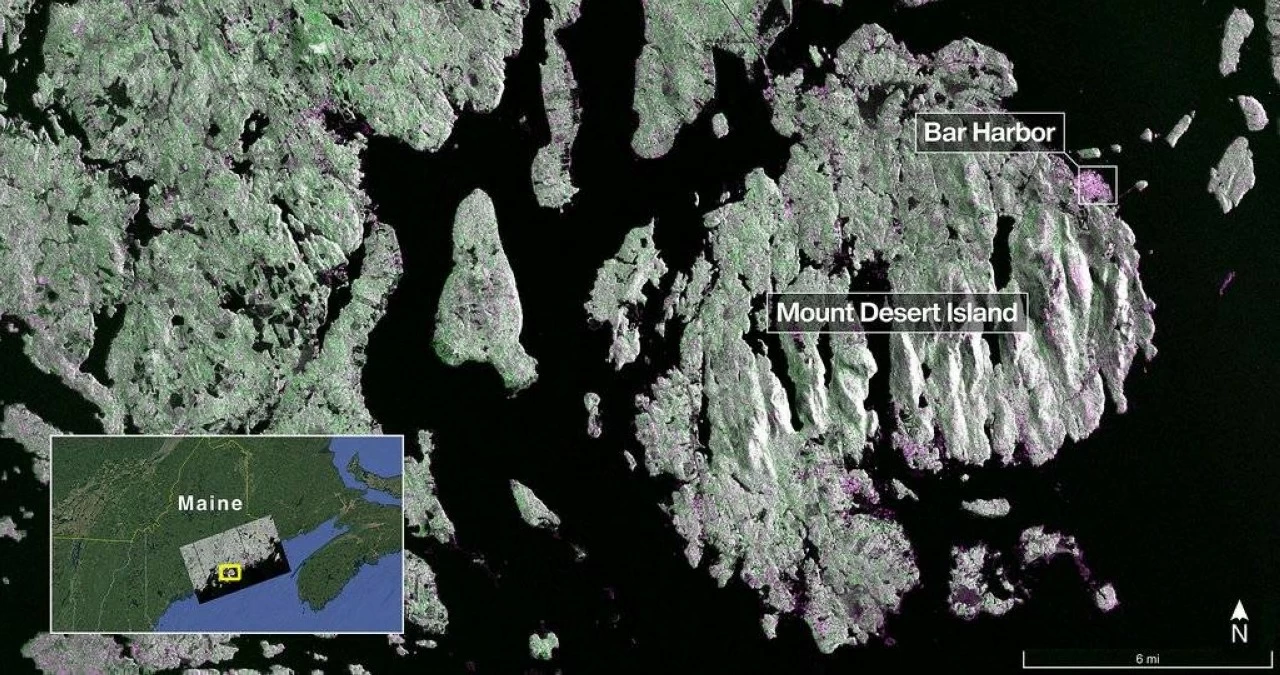
The satellite has captured imagery of forest cover over Maine's Mount Desert Island, and the Forest River in North Dakota winding through agricultural fields. The dark agricultural plots are fallow fields, while the lighter fields are of pastures or crops. The circular patterns appear where center-pivot irrigation is being used. The L-band radar can resolve features as small as five metres across, allowing the image to display narrow waterways cutting across the island, as well as the islets dotting the water around it, in the image of the Maine coast. The images demonstrate the capabilities of the L-band payload for discerning the type of land cover, low-lying vegetation, trees and human structures.
Science ops to commence in November
Associate administrator of Science Mission Directorate at NASA Headquarters in Washington, Nicky Fox says, "These initial images are just a preview of the hard-hitting science that NISAR will produce — data and insights that will enable scientists to study Earth’s changing land and ice surfaces in unprecedented detail while equipping decision-makers to respond to natural disasters and other challenges. They are also a testament to the years of hard work of hundreds of scientists and engineers from both sides of the world to build an observatory with the most advanced radar system ever launched by NASA and ISRO." The satellite is on track to commence regular science observations from November.