Sign In
By signing in or creating an account, you agree with Associated Broadcasting Company's Terms & Conditions and Privacy Policy.
By signing in or creating an account, you agree with Associated Broadcasting Company's Terms & Conditions and Privacy Policy.
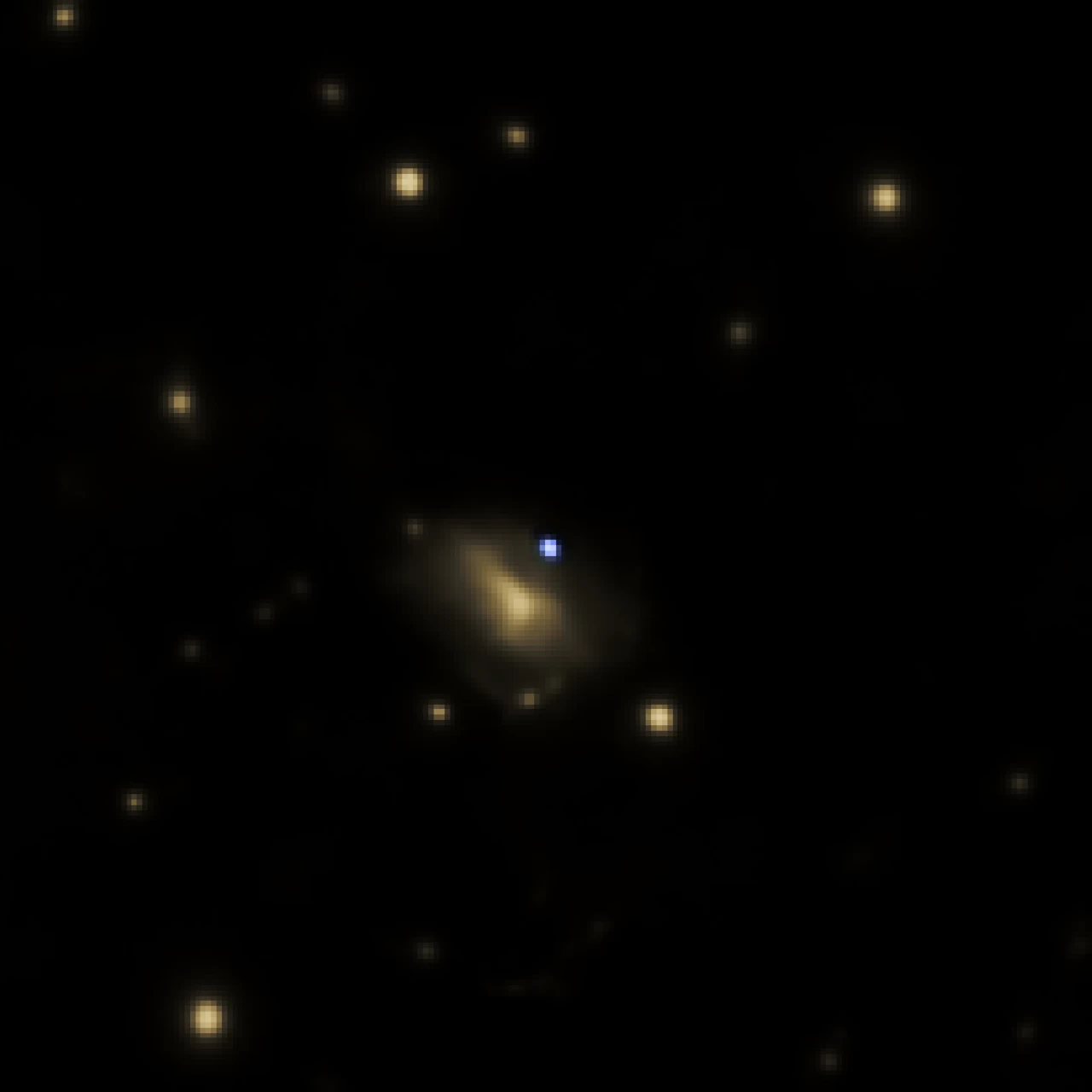


Using data from an array of ground based telescopes, astronomers have determined that mysterious cosmic flashes known as luminous fast blue optical transients (LFBOTs) are the result of tidal disruption event by black holes. Here, a black hole containing up to 100 times the mass of the Sun can completely shred a massive stellar companion within days. The clearest evidence yet that these rare cosmic flashes are not merely atypical supernovae is from the LFBOT designated as 2024wpp. The research challenges existing models of black hole physics, and advances the understanding of the life cycles of stars.

LFBOTs are among the more puzzling cosmic phenomena discovered over the past few decades. These flashes are bright in blue, ultraviolet light, which fades away rapidly, leaving behind faint X-ray and radio emissions. A little more than a dozen or so of these events have been recorded. Astronomers have long debated if they are caused by unusual supernovae or material falling into a black hole. The new research based on the brightest LFBOT observed so far indicates that they are neither. The production of LFBOTs requires more energy than a supernova can produce.
One of the interesting implications of the study is that LFBOTs are caused by intermediate mass black holes, elusive objects that have to exist in theory, but have not been discovered yet, though a few candidates are known. The scientists believe that AT 2024wpp was caused by a long-lived black hole binary system that had been siphoning material from a massive companion for an extended period of time. When the companion star ventured too close, it was shredded by tidal forces, with the material becoming entrained in the rotating accretion disk. The friction produces powerful bursts of energetic X-ray, ultraviolet and blue light. The shredded companion star is likely to have contained over ten times the mass of the Sun.