Sign In
By signing in or creating an account, you agree with Associated Broadcasting Company's Terms & Conditions and Privacy Policy.
By signing in or creating an account, you agree with Associated Broadcasting Company's Terms & Conditions and Privacy Policy.
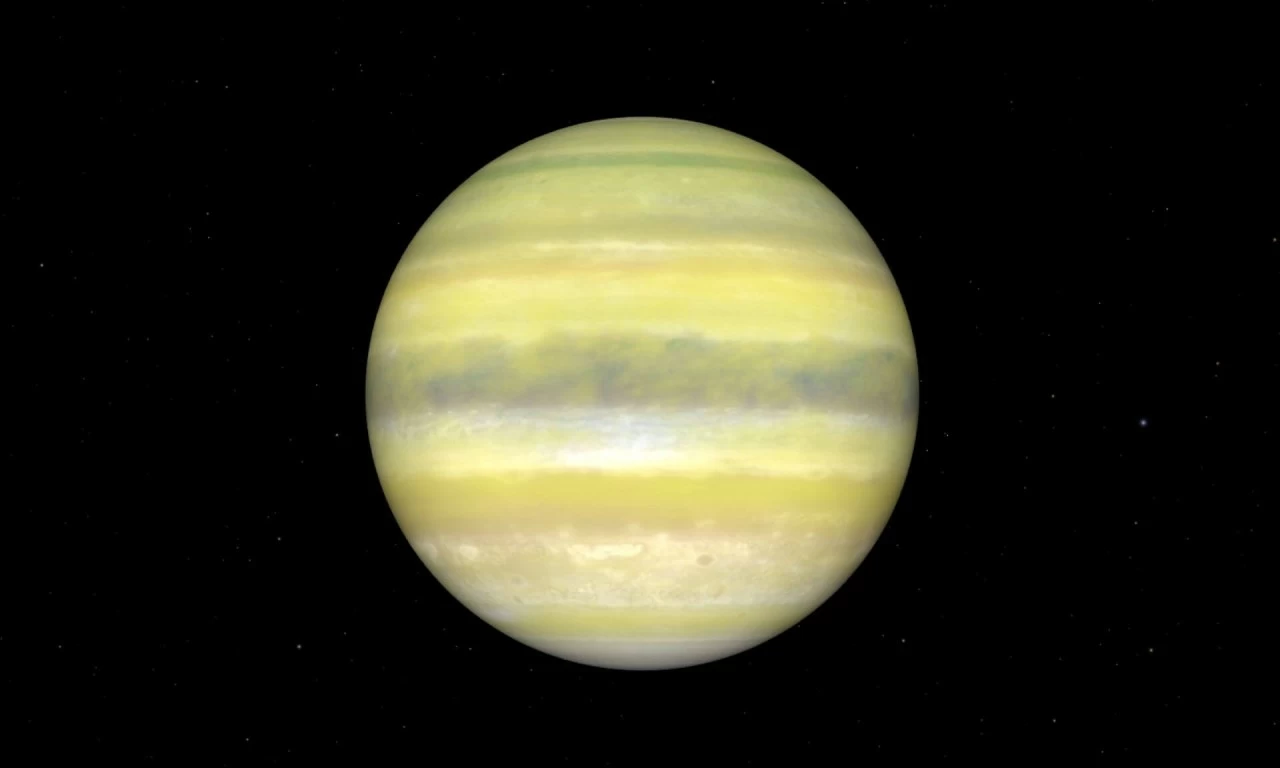


Astronomers have used the James Webb Space Telescope to peer into the skies of LP 791-18 c, a sub-Neptune exoplanet orbiting a cool red dwarf star at a distance of 86 lightyears from the Sun. The astronomers expected the world to resemble other temperate sub-Neptunes, straddling the mass gap between Earth and Neptune. Other such worlds have been studied, such as K2-18 b and TOI-270 d that have cloud-free atmospheres rich in methane and carbondioxide. Instead, the astronomers were surprised to discover that LP 791-18 c had a hazy atmosphere rich in methane, with no signs of carbon dioxide.
The research indicates that exoplanets that appear similar at first glance may have dramatically different cloudiness, chemistry and evolutionary history. LP 791-18 c is exposed to the same amount of irradiation from the host star as the other comparison targets. The haze on LP 791-18 c is likely to be driven by photochemistry, where the ultraviolet radiation from the red dwarf host star breaks apart methane in the upper atmosphere, with the fragments recombining into heavier hydrocarbons, similar to the process that forms the orange smog on the Saturnian moon of Titan.
The researchers also discovered that the spectrum of the planet remains consistent irrespective of whether or not the stellar activity is included in the analysis, indicating that the unusual atmospheric chemistry is not an illusion caused by star spots or flares, which pollutes the studies of exoplanetary atmospehres. The researchers believe that the formation history of a planet has a role to play in its atmospheric chemistry. Worlds formed in an environment with an abundance of ices will have a completely different chemistry than worlds assembled from drier, carbon-rich material. The research underscores the diversity of exoplanets. A paper describing the research has been published in Nature Astronomy.