
Sign In
By signing in or creating an account, you agree with Associated Broadcasting Company's Terms & Conditions and Privacy Policy.
By signing in or creating an account, you agree with Associated Broadcasting Company's Terms & Conditions and Privacy Policy.
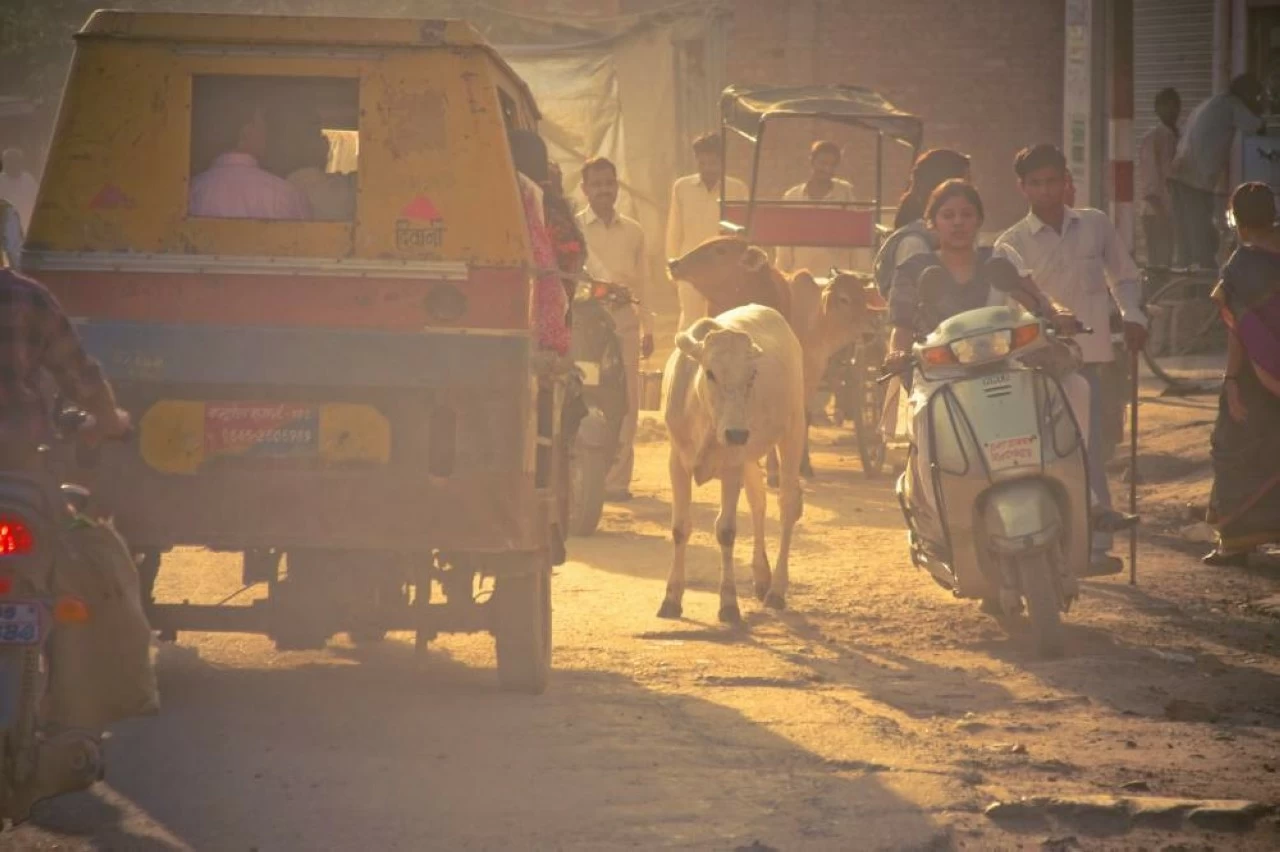


Indian roads are a busy and chaotic environment shared by animals, pedestrians, trucks, cars, as well as motorised and non-motorised three wheelers and two wheelers. The roads themselves can suddenly get narrower and wider, with lanes reserved for certain vehicles in some cities. For two wheelers, there is freedom to use either side of the road and even the footpaths if they are more convenient, and at times the traffic is perpendicular to the direction of the road. The technology for autonomous vehicles is just not built for these conditions, as they were developed to cater to well-delineated roads with well-defined categories of vehicles and an adherence to traffic rules.
With backing from Intel, researchers from India have built the Indian Driving Dataset, mimicking western data collection, only 5x larger. The work was accomplished within a year, and is the first open, large-scale, curated dataset on unstructured driving conditions. Initially, the datasets were oriented towards detection and segmentation, but grew to include other aspects of machine learning, deep learning and autonomous driving. There are specific datasets within the IDD including multimodal IDD, a lite IDD for use in resource-constrained setups, IDD for fine-grained videos, IDD-3D, IDD for missing traffic signs and so on. A distinct cap was discovered on testing with western datasets.
AI researcher and Adjunct Faculty at IIITH, Anbumani Subramanian explains, "We now have over 15,000 downloads with 10,000 IDD users spanning across 88 countries of the world. The datasets in IDD have helped many students, researchers and startups to learn and contribute to building new and improved algorithms and push the boundaries of cutting-edge research. Some startups in India have also benefited from the free and open nature of the dataset to explore problems related to unstructured driving conditions." iHub-Data at IIITH has also developed a research vehicle platform, which is essentially a data capturing platform outfitted with sensors and cameras. The vehicle is available to students, researchers and stakeholders in the mobility ecosystem.