Sign In
By signing in or creating an account, you agree with Associated Broadcasting Company's Terms & Conditions and Privacy Policy.
By signing in or creating an account, you agree with Associated Broadcasting Company's Terms & Conditions and Privacy Policy.
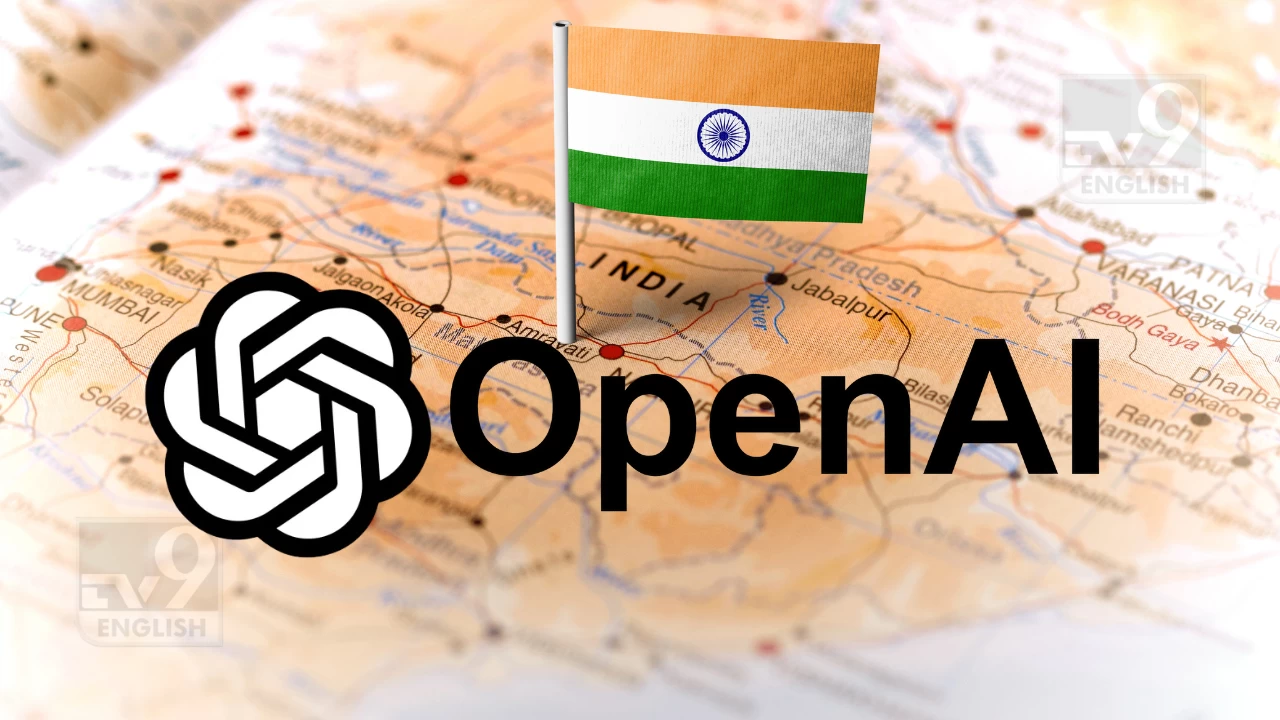

New Delhi: OpenAI, the company behind ChatGPT, has started discussions to bring parts of its massive $500 billion Stargate supercomputing project to India. The move could mark one of the biggest foreign technology investments in the country, if the plans take shape.
According to The Economic Times, preliminary talks are being held with Indian data centre operators including Sify Technologies, Yotta Data Services, E2E Networks and CtrlS Datacenters. At the same time, OpenAI has been in parallel conversations with Reliance Industries for more than six months. Reliance is building a 1 GW data centre in Jamnagar, Gujarat, alongside a large clean energy complex, which could make it a frontrunner for OpenAI’s requirements.
Announced in January, Stargate is OpenAI’s ambitious joint venture to build the next wave of AI infrastructure. Backed by SoftBank, Oracle, Microsoft and MGX, the project plans to invest $500 billion (₹43.5 lakh crore) over four years. The facilities will be hyperscale data centres, housing hundreds of thousands of GPUs, designed to handle both AI training and inference. Each site would require uninterrupted gigawatt-scale energy supply.
SoftBank founder Masayoshi Son serves as the chairman of the joint venture, while Microsoft, Nvidia, Arm, Oracle and OpenAI are the core technology partners.
The Indian government has asked OpenAI to invest “at least a few billions” out of the Stargate budget locally and to store Indian user data within the country. Officials said India is becoming a key growth market for OpenAI and should receive a significant share of the project. One official told ET that storing data locally would also reduce latency for Indian users, in line with what Microsoft, Google, Meta and AWS are already doing.
Sam Altman, OpenAI’s chief executive, said last month that India was the company’s second-largest market after the United States and could soon become its biggest. He added, “We are especially focused on bringing products to India, working with local partners to make AI work great for India, (making) it more affordable for people across the country.” Altman is expected to visit India later this month, where further details on Stargate may emerge.
Building at the scale OpenAI envisions will not be easy. Experts said availability of GPUs and advanced cooling systems are the main bottlenecks. India currently has less than 1 percent of the world’s AI computing capacity. Under the IndiaAI Mission, only 38,000 GPUs have been empanelled so far. By comparison, Morgan Stanley estimates that a single 1 GW data centre would need about 135,000 of Nvidia’s advanced B100 Blackwell GPUs over four to five years, along with a 1.3 GW power supply running 24x7.
Executives familiar with the talks told ET that the bigger question is not whether OpenAI will work with a local partner, but who can provide uninterrupted energy supply for such a massive operation.
Some global players are already betting big. Reports suggest Google Cloud is planning a $6 billion (₹52,200 crore) investment in Andhra Pradesh for a 1 GW facility. Reliance has announced similar capacity in Jamnagar tied to its $10 billion (₹87,000 crore) new energy complex.
“India's data centre industry meets most AI workload requirements including competitive power, skilled talent, and strong local market demand,” said Jitesh Karlekar, director of research, Asia Pacific and India Data Centres at JLL. He added that while hardware supply chain constraints remain, targeted investments could allow Indian operators to take advantage of the AI boom.
Industry executives noted that whether India will be used for model training or for inference remains unclear. Training could benefit from India’s lower land and energy costs, while inference may be prioritised because of the growing demand from businesses for localised AI services.
For India, hosting a share of Stargate would bring global attention to its AI infrastructure gap and potentially accelerate local capacity building. For OpenAI, it could offer cheaper expansion, compliance with local rules, and direct access to one of its fastest-growing user bases.
As Altman himself pointed out, the company is paying close attention to India because of its rapid growth. If the talks move forward, Stargate could be the project that turns India from an AI consumer into a critical player in global AI infrastructure.