New Delhi: The year for the United States under President Donald Trump has started with a bang. Carrying out one of the boldest foreign interventions in its recent history, the US by launching a
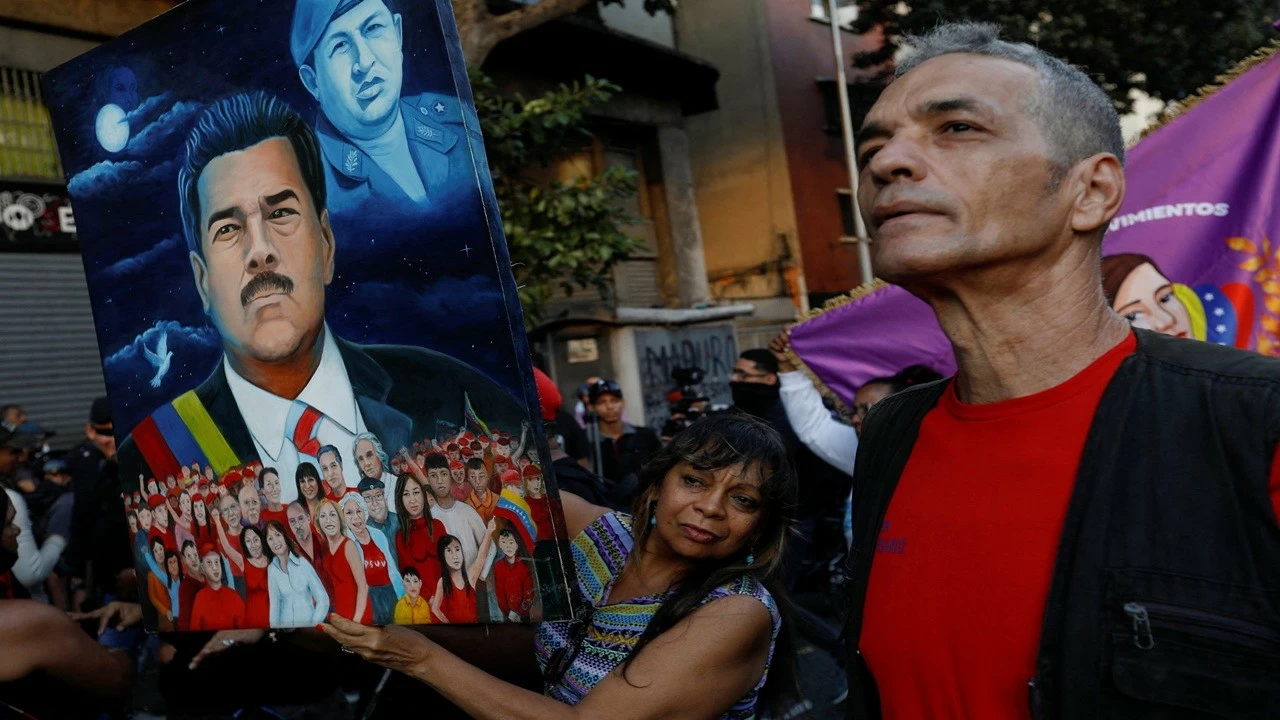
military operation against Venezuela and capturing its president, Nicolas Maduro has shaken the world. Trump had for some time now been vocal about carrying out some sort of action against Venezuela, which he has now carried through. The action in the region is not new though and follows similar US action in the past as well.
The Venezuelan chapter
The US justified its action against Venezuela by pointing to long-standing US indictments against Maduro mainly on drug-related charges and that of a leadership chosen non-democratically. The regime change is thus being justified as not being a conventional act of war.
The operation in Venezuela, which looked to be coming for some time now, involved targeted strikes on key military installations in the country and the rapid extraction of
Maduro to face trial in the United States. While some justified the move as a righteous one done against an authoritarian rule, detractors have claimed it is against international law. US military action against a sovereign country in Latin America is not new. The incident has still shattered many there who claim that bypassing multilateral institutions and acting unilaterally by the US risks destabilizing the whole region.
The Panama Chapter
Political theorist Karl Marx once said that "history repeats itself, first as tragedy, second as farce." This has now become true for Venezuela, as the US action against it represents a similar action done against Panama in December 1989, when the US invaded the country in what was then called Operation Just Cause.
That operation too was launched to remove the country’s ruler, in that case General Manuel Antonio Noriega, Panama’s military ruler. The charges brought against him were also similar, that of drug trafficking, racketeering, and money laundering. Noriega had once been a valuable US intelligence asset during the Cold War, assisting American interests across Central America. However, as geopolitical priorities shifted, his criminal activities and increasingly authoritarian rule began to be a cause of unease for the US. After Noriega annulled elections in Panama in opposition to US wishes, it was only a matter of short time that the US decided to act.
What followed was more than 25,000 US troops being deployed in Panama and taking over the country within days. Noriega eventually took refuge in the Vatican’s diplomatic mission but surrendered after sustained psychological pressure by the US. Eventually he too was flown to the United States where he was tried, convicted, and imprisoned for nearly two decades.
Parallels between the two cases
The similarities between the two cases are thus clear. US unease over the country’s rule and action against it over charges related to drug trade and authoritarian rule. The justifications for military action were the same, as was the fate of the two leaders of the countries, taken back to the US for trial. Military action in both cases also saw the toppoling of government and a change of rule that was justified by citing a restoration of democracy to uphold the rule of law.
What can happen now is also something that can be looked at through examining the earlier case. In the aftermath of the action in Panama, the US then went on to
shape the political and economic transitions of the country. Will it do so in the case of Venezuela as well remains to be seen. Its effects on the region though will be significant as others in the region brace for what is about to come, what is certain though is that the underlying willingness of the US to use force in Latin America still remains.