
Sign In
By signing in or creating an account, you agree with Associated Broadcasting Company's Terms & Conditions and Privacy Policy.
By signing in or creating an account, you agree with Associated Broadcasting Company's Terms & Conditions and Privacy Policy.
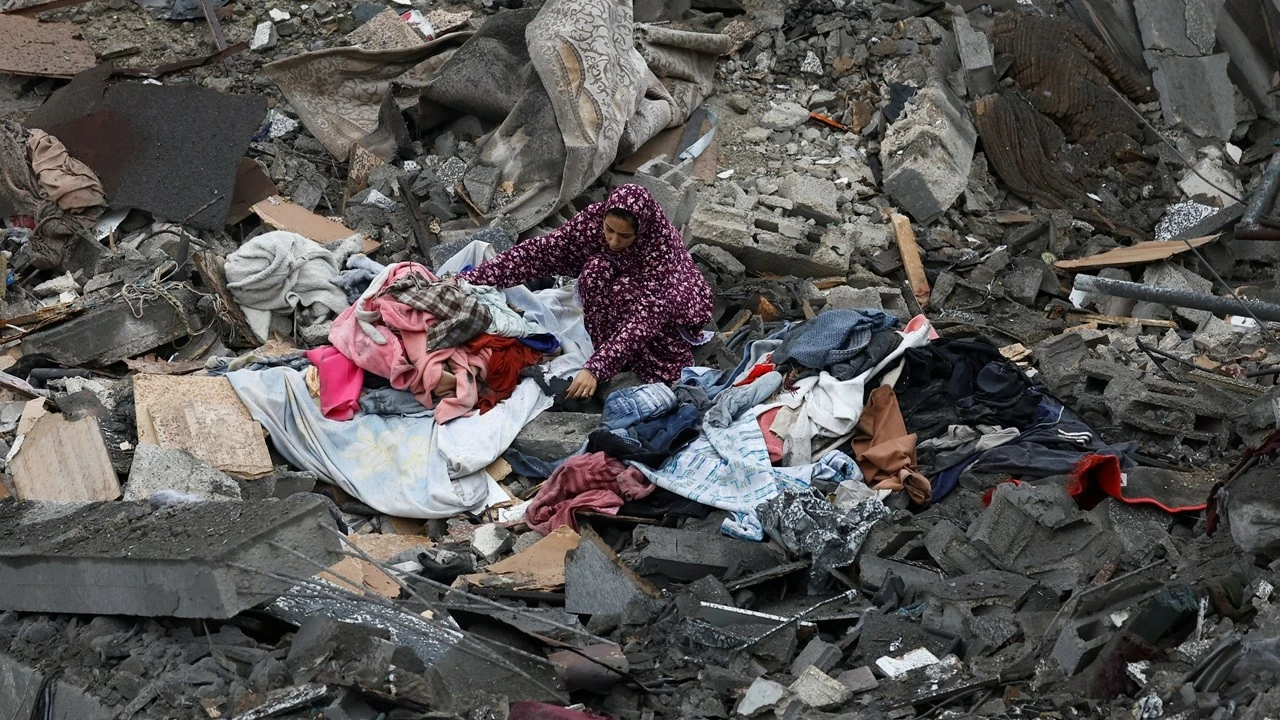


New Delhi: Just some months ago, the Israel-Hamas war was looking to be an unending conflict, but a lot has changed in a short period of time. This pertains to the US-brokered ceasefire deal current in place in Gaza, whose second phase has now been formally announced. Thus, hopes of a more durable pause in the Israel–Hamas war after now high.
The ceasefire deal mediated primarily by Qatar, Egypt and the United States focuses on a temporary cessation of hostilities, limited prisoner-hostage exchanges and increased humanitarian aid into Gaza. The second phase is being presented as the most politically consequential stage of the agreement. The completion of this would be crucial as it goes beyond immediate relief and addresses questions of Gaza’s post-war future.
While the success of the first phase of the ceasefire is important and laudable, it is the second phase which is crucial. At the core of the second phase is a proposal to fundamentally reshape governance and security in Gaza.
Under this, proposals include the establishment of a technocratic government. This is being seen as one of the most important aspects of the second phase which would induct a non-partisan administrative body made up of professionals rather than political factions to temporarily run Gaza’s civil affairs. One of the most contested things on the agreement between Israel and Hamas was who would run local governance in Gaza once military hostilities die down.
Under the second phase of the ceasefire, the idea is to separate day-to-day governance from armed groups and slowly restore basic services and facilitate large-scale reconstruction of war-torn Gaza with international support. Alongside this is another highly contentious issue, this pertains to the disarming of Hamas and other such militant factions.
While the precise mechanism to bring about this difficult task remains ambiguous, the framework currently understood aims to see Hamas relinquishing heavy weaponry and military control under international supervision. This for Israel remains a central demand if it is to ensure the ceasefire in Gaza.
The ceasefire agreement was crafted in phases to bridge the deep historic mistrust and slowly lessen the military escalations between Israel and Hamas. The first phase aimed to halt the fighting temporarily and ease humanitarian suffering. This has now helped create a space for further political negotiations which would come in place with the second phase of the ceasefire deal.
The second phase tackles the underlying conflict dynamics, like who governs Gaza and how reconstruction will proceed. Then the third phase could commence, which is to focus on long-term reconstruction, international guarantees and possibly reopening a pathway to broader Israeli Palestinian talks.
While the ceasefire has been successful till now, the tensions between Israel and Hamas are historic and layered, the region being so volatile that any guarantees of peace cannot be taken for granted. Nonetheless the current rate at which the ceasefire has been implemented and the announcement of the second phase are hopeful events.