Sign In
By signing in or creating an account, you agree with Associated Broadcasting Company's Terms & Conditions and Privacy Policy.
By signing in or creating an account, you agree with Associated Broadcasting Company's Terms & Conditions and Privacy Policy.
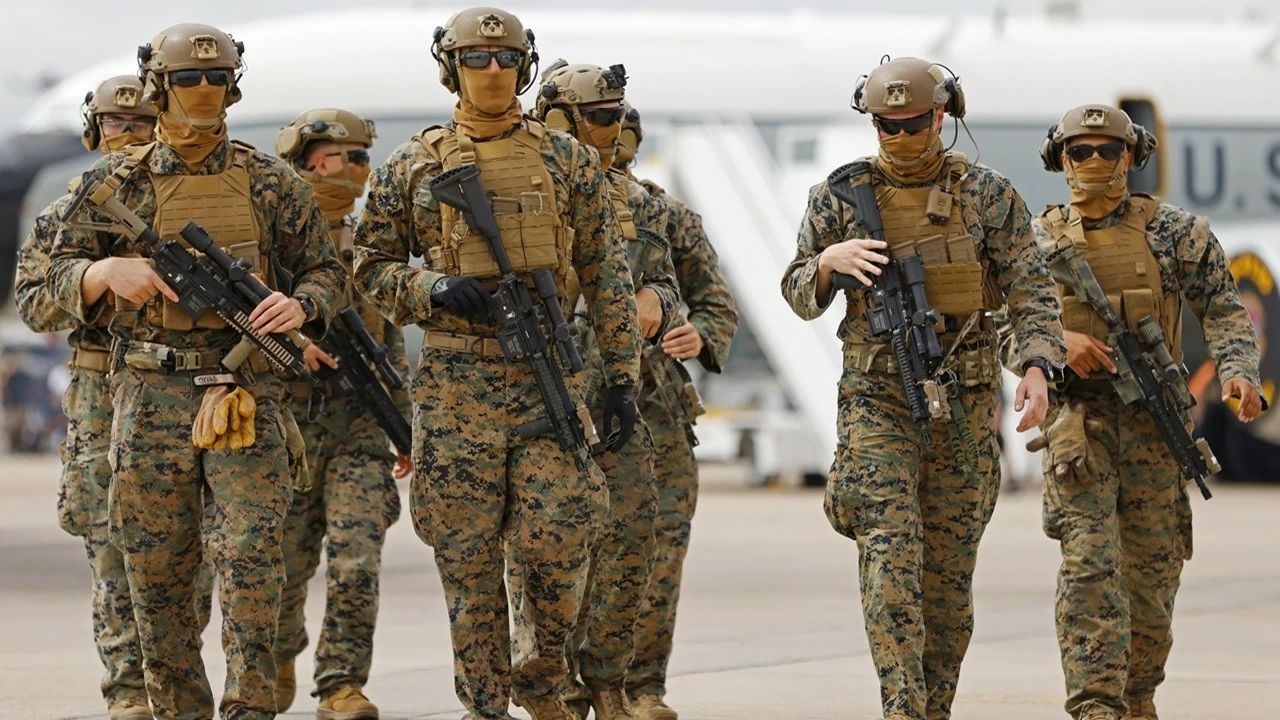


New Delhi: On Wednesday, the US House of Representatives passed a significant and large defense policy bill authorizing a record $901 billion in annual military spending. The tally for the bill’s passing was 312-112 in favor of the National Defense Authorization Act. The bill will now be sent for consideration by the US Senate, which is expected to pass it next week.
The legislation is a compromise between versions of the NDAA passed earlier this year by the Senate and House, both controlled by Trump’s Republicans. Members of both parties urged lawmakers to support it even if they objected to individual provisions.
The 3,086-page massive bill includes a 4 per cent pay raise for soldiers and improvements in base housing, a move aimed at making the life of the troops better. But it does not include insurance coverage for military families to get fertility treatments, including embryo transfers for in vitro fertilization, something opposed by Republican House Speaker Mike Johnson of Louisiana, a social conservative.
“I do support this bill. This does not mean that I do not have concerns. I do,” said Representative Adam Smith of Washington, the top Democrat on the House Armed Services Committee, in a speech before the vote.
The $901 billion in defense spending is being seen as pivotal for the US military spending at the moment. Importantly, it is $8 billion more than President Donald Trump’s request earlier this year.
The NDAA is one of a few major pieces of legislation in the US which has traditionally received huge bipartisan support in the country. It has significantly made it through Congress every year since its enactment in 1961. This year though the process was not characteristically smooth, with friction between the Republican-controlled Congress and the Trump administration over the management of the US military being significant.
Nonetheless the new stipulations in the NDAA are important, some even aimed at easing the recent tensions. One such far-reaching measure is against the Department of Defense, where a demand for more transparency on deadly attacks carried out by the US military on alleged drug smuggling vessels in the Caribbean Sea recently was seen.
US military spendings and budget are keenly observed by nations around the world and are also a cause of concern for many. With US military operations active in several places around the world, and tactical loggerheads operational in others, the US military, one of the most powerful in the world, spends heavily on its armament.
It was so this time as well, and current conflicts were given prominence. Prime among them the Russia-Ukraine war and other tensions in Europe. Inclusion of several provisions cementing Washington’s commitment to Europe’s defence in the response to Russia were present. This includes $400m in military assistance to Ukraine in each of the next two years to help repel Russia’s invasion.
Another measure requires the Pentagon to keep at least 76,000 troops and major equipment stationed in Europe unless NATO allies are consulted. Russia thus would be alert with the announcement of the bill. As would China, another US antagonist, with whom the country is not engaged in direct warfare, but the military competition with the country is significant. As Republican chair of the House Armed Services Committee Mike Rogers said, “The threats to our nation, especially those from China, are more complex and challenging than at any point in the last 40 years.” The bill reflects this and is something that should be well acknowledged by both the other big powers in prime military competition with the US.