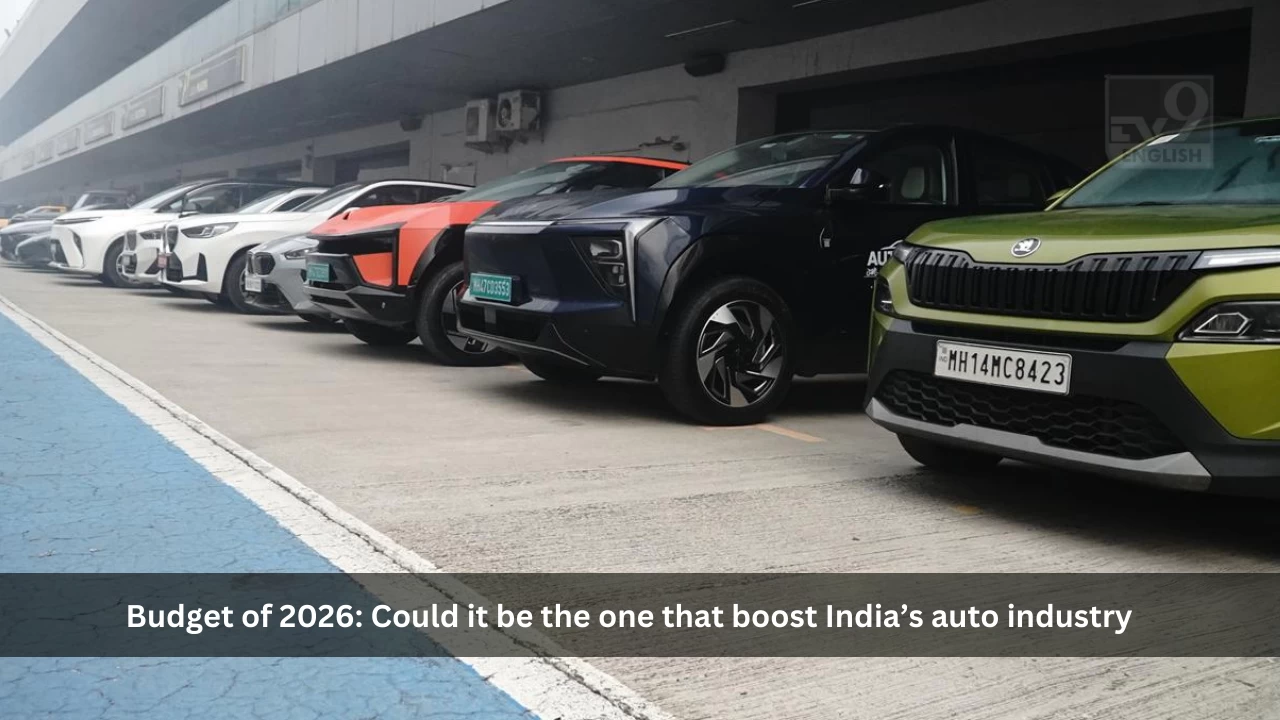
New Delhi: For the Indian auto industry, September 2025 was the turnaround that it had been waiting for a long while. For a long while, the GST reset helped reset the long-standing tax distortions, and the festive season helped in demand, bringing buyers back to the showrooms, and year-end sales helped auto makers close the year on a better note.
For a sector that contributes about 7 per cent of India’s GDP and anchors a huge segment of the manufacturing base, this was respite.
For the new year and the final quarter of fiscal year 2026, it puts the next policy movement in the spotlight. The Union Budget 2026-27 is set to be tabled on February 1st, and the auto industry will obviously keep a close tab on it, which has seen a major tax overhaul. Experts believe it isn’t about structural fixing but can targeted measures steady demand, ease cost pressures, and restore confidence across segments that are finding their roots in the industry.
Data from SIAM and FADA show that numbers over FY2 period5 and FY26 show that volumes have improved from the post-pandemic, but the recovery is still uneven. Premium PVs continued to find good numbers but it was sluggish for the likes of entry-level cars and the two-wheelers as well.
Rural PV, though, saw robust growth according to FADA data, highlighting that the recovery is not at all uniform but going towards an industry that might not have been the highlight previously.
What would the auto industry hope for
In the coming time period, a major focus will be on electric mobility, and as EV adoption slowly picks up, manufacturers are advocating for consistent fiscal support and incentives similar to the ones provided in the last budget. This will include GST advantages for EVs, protection of clarity on the applicable tax rates for EV batteries and components, and extensions of duty exemptions on critical inputs to keep EV prices much more affordable.
For EVs, another issue is the charging infrastructure; battery production and skills development are key for it to succeed, and that is one area experts feel the budget will focus on, too. Automakers believe that a strong national roadmap for charging networks, streamlined approvals and incentives for localisation of battery supply chains would strengthen India’s competitive edge in electric mobility.
Automakers, of course, continue to want clarity and continuity in the major policies, including a much more consistent and predictable framework for GST compliance, along with improved input tax credit processes and easier customs and duty processes.
One big concern for the industry is affordability and demand, particularly from the mass-market segment. The premium vehicles have performed well, with entry-level cars and two-wheelers still facing pricing issues that could choke the market performance and participation.
While the auto sector has shown resilience and signs of recovery from the pits, the stakeholders see the upcoming budget as a big policy moment. It will be where the auto sector will get a much clearer understanding and have more predictability towards the regulations and policies as well.