Sign In
By signing in or creating an account, you agree with Associated Broadcasting Company's Terms & Conditions and Privacy Policy.
By signing in or creating an account, you agree with Associated Broadcasting Company's Terms & Conditions and Privacy Policy.
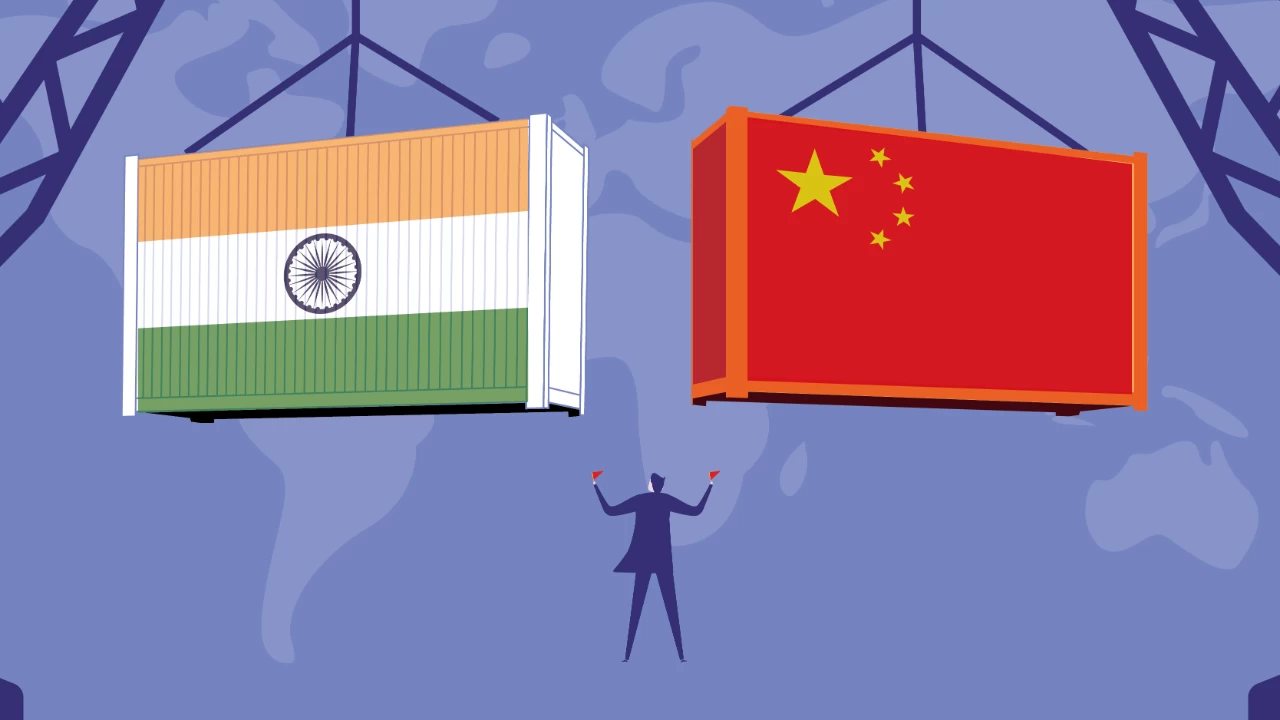


Kolkata: Transport equipment, basic metals, machinery, construction, electricals & electronics are the sectors that will be impacted by the ban of China on the export of rare earth elements, SBI Research has said. In a report titled "China’s ban on Rare Earth and Permanent Magnets: Implications for India" the research agency of State Bank of India has said that the ban will adversely impact both exports and domestic production.
The SBI Research report has stated that the import of rare earth magnets averaged about $249 million in the past four years and in the last financial year alone (FY25), magnet imports stood at $291 million, the highest level in the past four years.
"Our analysis indicates sectors impacted by ban are Transport Equipment, Basic Metals, Machinery, Construction and Electrical & Electronics. Both domestic production and exports will be impacted," said the report. In the past 30 years, there has been a remarkable surge in the in the application of rare earth elements and the alloys created from these metals in multiple sectors.
"Criticality of a mineral is decided by many factors notably the current and emerging economic structure, technology, local availability and technologically feasible substitute," the report added. As a fallout of Chinese restrictions, the following things could occur. Working capital cycles can get prolonged resulting in idle capacity and partly finished inventory. This can, in its turn, lead to stress in downstream and upstream applications, stress in the export sector and unmet obligations. Banks which finance such activity can also face stress.
SBI Research also mentioned that the Centre has launched National Critical Mineral Mission in 2025 to move in the direction of self-reliance in critical mineral sector. The government has also allocated Rs 18,000 crore for the six-year period between 2025 and 2031. As a part of this quest, state governments are encouraging the exploration of rare earth elements.
Incidentally, there are 15 critical minerals, in which India is almost fully dependent on imports. These are Lithium, Nickel, Vanadium, Cobalt, Rhenium, Beryllium, Strontium, Niobium, Manganese, Germanium, Silicon, Tantalum, Zirconium, Graphite and Chromium.
Significantly, rare earth elements comprise a set of 17 elements, which are known for their unique magnetic, luminescent and electrochemical properties. These are crucial components in modern technologies in the sectors of electronics (TV screen, computer, cellphones, LED, rechargeable battery etc), clean energy (wind turnbine, hybrid cars, biofuel catalyst etc) and medical science (MRI, nuclear medicine imaging, cancer treatment applications, portable X ray machines etc) and technology (laser, optical glass, fibre optics, mercury avpur loamps, nuclear fuel rods etc). Due to the rise in significance of these industries, the demand for rare earth elements is on an upward curve too.