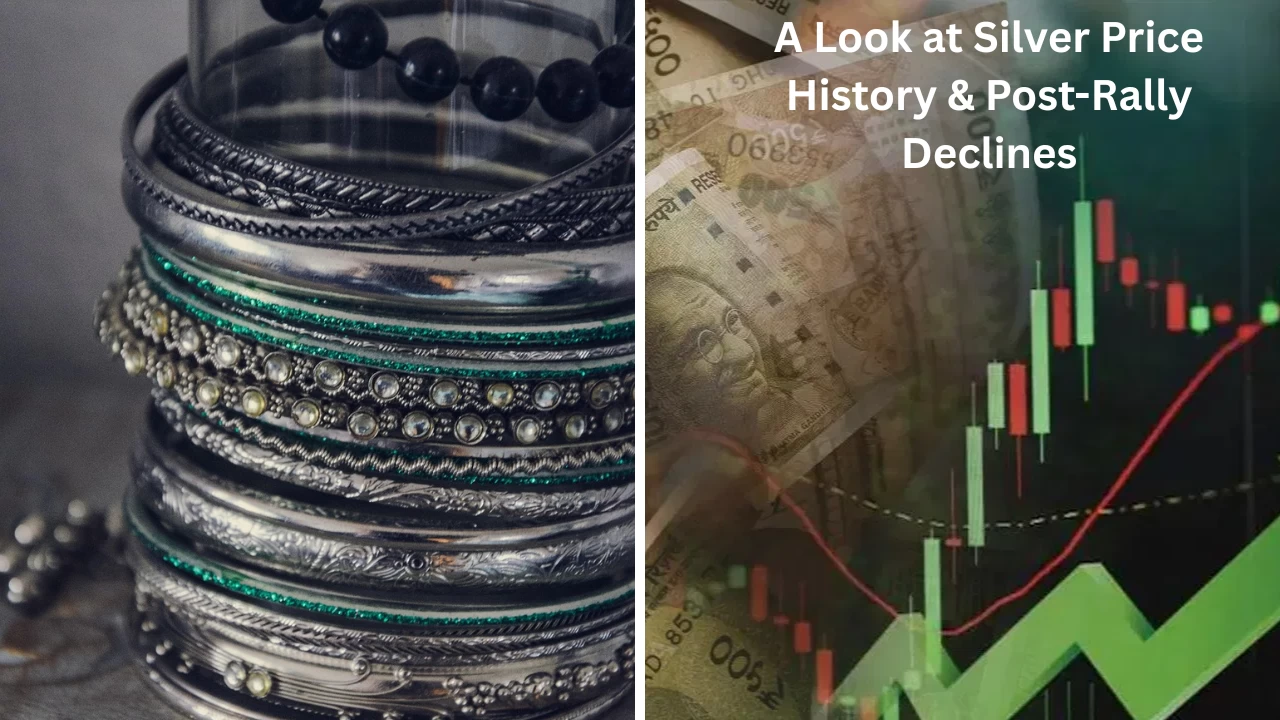
New Delhi: Silver prices have surged more than 80 percent this year. This rally, which has reached a record high, has attracted the attention of investors. Increasing industrial demand and decreasing supply are the main reasons for this. But if you look at history, then whenever there has been such a sharp rise in silver, a drastic decline has also been noticed. Statistics for the last several years showed that whenever silver has given more than 50 percent returns in a year, then there has been a period of recession. In such a situation, let's see the history of returns by silver and understand whether the white metal can repeat the history.
Why is the silver price rising?
The current silver rally is completely different from
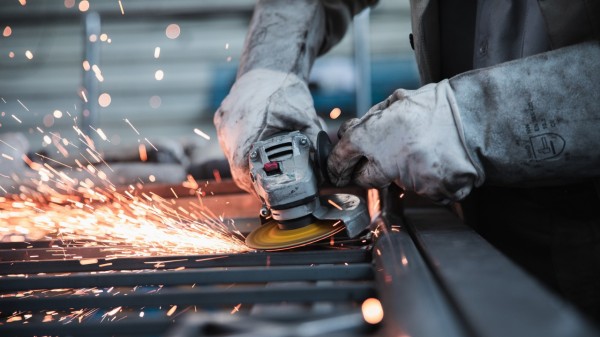
gold. While gold depends on investor sentiment and central bank purchases, the demand for silver is now coming from industries. It has become an essential metal in sectors like solar panels, electric vehicles, semiconductors and 5G networks. Moving towards clean energy has made this even more important. But this year's increase of 80 percent is not only due to industrial demand. Mining production across the world is not increasing as per demand. Along with this decrease, the interest of speculators and rising lease rates have created a silver squeeze situation in the market.
Silver price history
According to the data of Macrotrends, when we look at the silver price figures for the last century, we will see very interesting results. The relationship of silver and excitement has always been a bit fun and patterned.
1946 — First post-war boom: Just after World War II, silver prices surged 53.9 percent in 1946. But this rise did not last long. Prices declined 10 percent next year, and silver swung between a slight rise and a slight decline in the next four years. One year it gained 2.8 percent, then the next year it fell by 2.7 percent. By 1951, silver had again gained double digits.
Big boom and early cooling in 1967: Silver gained a spectacular 72.6 percent in 1967, which was one of the biggest annual booms of the 20th century. But the next year a decline of 13.5 percent in 1968, then 8.2 percent in 1969 and 8.9 percent in 1970 cooled this boom.
The surprise that lasted two years in 1973: In the midst of the oil crisis and inflation worries in 1973, silver again became a market favorite. Its price increased by more than 60 percent and increased by 37 percent in 1974. But the decline of 7 percent in 1975 shocked investor confidence.
Frenzy of 1979: Silver prices reached 435 percent in 1979, when the Hunt brothers tried to capture the global market. Prices reached around $50 per ounce. But due to the intervention of regulators and trading limits, this bubble burst. Silver fell 51.9 percent in 1980 and was at a loss for 11 years in the next 13 years.
The big boom of modern times
After the global financial crisis, silver rose by 57.5 percent in 2009; a rise of 80 percent in 2010 raised it further. But then there was a steady decline between 2013-2018. 35 percent in 2013, 18 percent in 2014 and 13.6 percent in 2016.
Bullish and bearish cycle of Silver
After every major rise in silver in the last century, there was a recession. Investors often take a long time to recover from declines. For example, after silver crossed 10,000 rupees per kilogram in January 1980, it took 24 years to reach that level again. After reaching its high in 2011, silver struggled to regain that height for almost eight years.
What should be remembered
Today's rise is based on actual industrial demand, but this does not mean that silver will remain stable. Long-term trends involving renewable energy, electronics and electric vehicles support high demand, but history suggests that volatility may come. Investing in silver can diversify the portfolio, but investing with excess enthusiasm can be risky. Unlike gold, silver has fewer institutional purchases, so prices can fall sharply as betting decreases.