Sign In
By signing in or creating an account, you agree with Associated Broadcasting Company's Terms & Conditions and Privacy Policy.
By signing in or creating an account, you agree with Associated Broadcasting Company's Terms & Conditions and Privacy Policy.
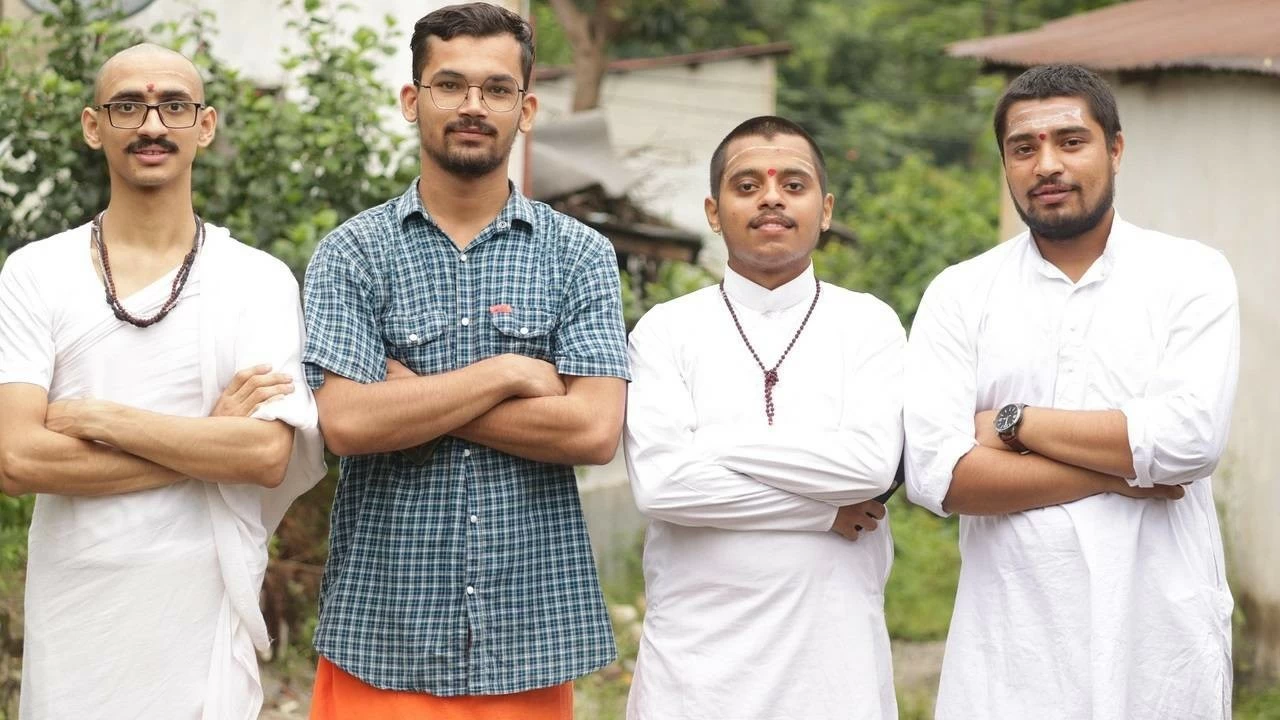


New Delhi: In a bold move to bridge modern technical education with ancient learning, the government has decided to allow gurukul students to be admitted to the prestigious Indian Institute of Technology (IITs). It has also agreed to offer scholarships and recognised qualifications for research at IITs for gurukul students.
With the growing global interest in Ayurveda, Sanskrit, Yoga and other subjects, the government has decided to admit students from Gurukuls in IITs. The Setubandha Vidwan Yojana has been launched to encourage traditional scholars to acquire knowledge of modern science and technology for great results. Let's explore the Setubandha scheme.
The government has rolled out 'Setubandha Vidwan Yojana', intending to bridge the traditional learning with modern education. The scheme is a joint initiative by the Indian Knowledge System (IKS) Division - Ministry of Education (Government of India) and the Central Sanskrit University, Delhi. According to the sources, the scheme offers fellowships of up to Rs 65,000 per month for a total of 18 fields, including Ayurveda, political theory, architecture, health sciences and performing arts. The maximum age limit for applying to this scheme is 32 years.
The scheme will also allow candidates to receive a monthly fellowship amount. Candidates who got selected under Category 1 (which is equivalent to postgraduate level) will receive Rs 40,000 per month, besides an annual research grant of Rs 1 lakh. In Category 2 (which is equivalent to PhD level) will receive Rs 65,000 per month and an annual grant of Rs 2 lakh.
"Setubandha is the first national-level programme to formally integrate traditional scholars into the research ecosystem of IITs, without insisting on conventional degrees. Instead, eligibility is based on a minimum of five years of rigorous study in a recognised gurukul and demonstrable excellence in Shastras or traditional knowledge," TOI quoted a senior MoE official.
Thanks to the National Education Policy (NEP) 2020, which has encouraged both modern and traditional learning.