


Sign In
By signing in or creating an account, you agree with Associated Broadcasting Company's Terms & Conditions and Privacy Policy.
By signing in or creating an account, you agree with Associated Broadcasting Company's Terms & Conditions and Privacy Policy.
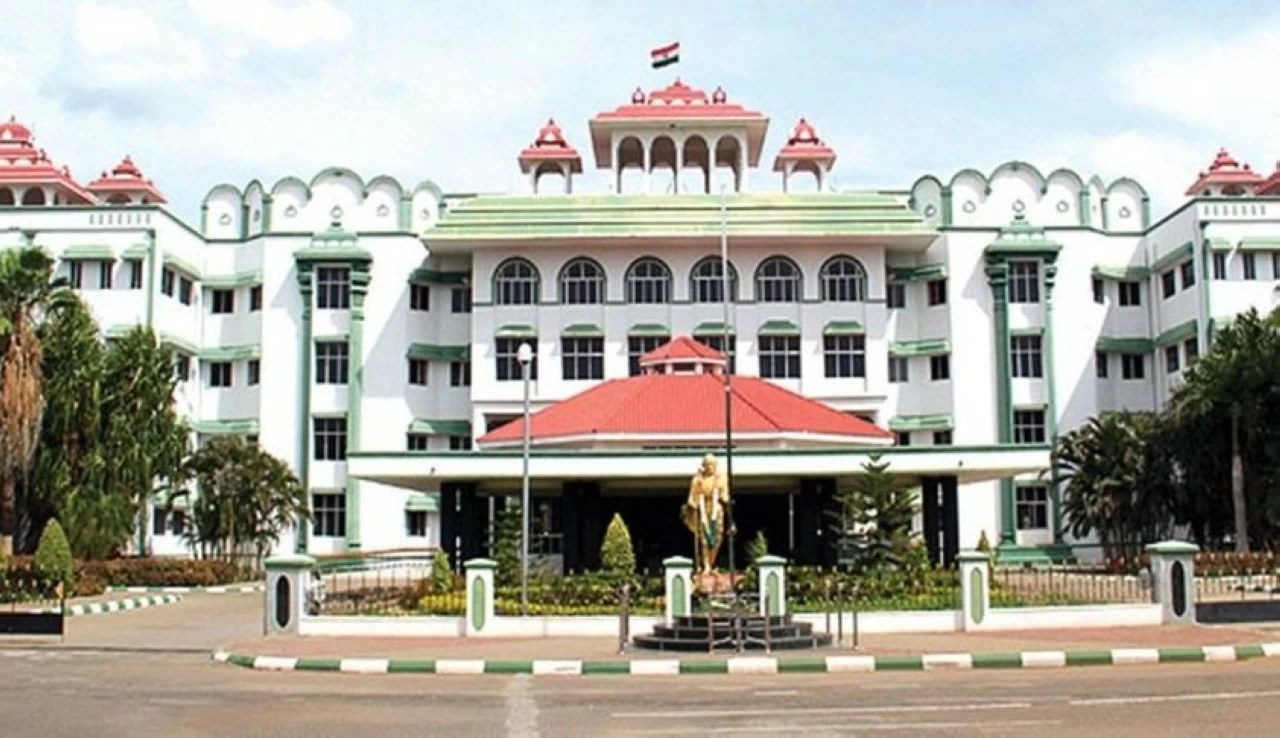


Madurai: A centuries-old stone pillar, known as a ‘deepathoon' atop the sacred Thiruparankundram hill, has become the focal point of a heated legal battle. The Tamil Nadu government asserted before the Madurai Bench of the Madras High Court that the structure belongs to Jains and not Hindus.
This claim directly contradicts a previous single-judge order that had directed the lighting of the traditional Karthigai Deepam festival on the pillar.

Tactic to get a case heard
The state’s stance was presented on Monday by Senior Counsel N. Jothi, representing the joint commissioner of the Hindu Religious and Charitable Endowments (HR&CE) department. Jothi argued that the petition seeking the lighting of the lamp was, in fact, a disguised Public Interest Litigation (PIL) that had been deliberately filed as a private petition to engage in "forum shopping" – a tactic to get a case heard by a particular judge or court.
This assertion follows earlier arguments by Advocate General PS Raman, who had represented the Collector. Raman had previously contended that the petitioners had failed to provide any conclusive proof before the single judge to establish that the pillar was indeed a ‘deepathoon’ traditionally used for lighting the Karthigai Deepam.
During Monday's hearing, Jothi presented a compelling case for Jain origins. He argued that stone pillars of a similar structure to the Thiruparankundram ‘deepathoon’ have been historically erected by Jain sages on various hills. He cited examples like the ‘Samanar Hills’ in Madurai itself and Shravanabelagola in Karnataka.
Pillars were used by Jain sages
According to Jothi, these pillars were used by Jain sages of the Digambara sect to light lamps during their nocturnal gatherings and discussions on these hills. To support his claims, he submitted several reference books.
Moreover, Jothi asserted that the stone pillar atop Thiruparankundram is not intended for the lighting of the Karthigai Deepam. He further referenced Section 4 of the Tamil Nadu Temple Entry Authorisation Act, 1947, which outlines the powers of trustees in maintaining order and performing religious rites within temples.
Adding to the complexity, Senior Counsel AK Sriram, representing the Subramaniya Swamy temple, highlighted a procedural anomaly. He pointed out that while the single judge had overturned the executive officer’s decision to light the lamp at a different customary spot near the Uchipillaiyar temple, the temple’s Board of Trustees, who should have been a party to such a decision, had not been included in the case.
Single judge had conducted the case in a 'hurried manner'
The contentious nature of the proceedings was further underscored by Senior Counsel T Mohan, representing members of the Dargah community. Mohan strongly criticised the "hurried manner" in which the single judge had conducted the case. He alleged that despite rules stipulating eight weeks for filing counter-arguments, the judge had granted only three days.
Mohan also recounted an instance where he was disconnected from the video conference during proceedings before Justice Swaminathan, raising concerns about the fairness of the process. He drew a parallel to a previous litigation concerning animal sacrifice on the hill, where the High Court had directed the Muslim community to approach the civil court to establish the practice's traditionality, suggesting the same yardstick should apply to the current petitioners.
Adding to the procedural grievances, another counsel, G. Prabhu Rajadurai, representing the managing trustee of the Dargah, also alleged procedural violations and a lack of adequate opportunity to present a detailed counter-argument. Rajadurai contended that despite the single judge’s claim of an open invitation before his inspection of the hill, the Dargah had not even been made a party to the case at that juncture.
Rajadurai further challenged the interpretation of a 1996 judgment’s phrase, "at least 15 metres from the dargah." He argued that this was wrongly interpreted to mean 15 metres from the dargah building, whereas it should have been construed as 15 metres from the hilltop, which is considered Dargah property.
He emphasised the need for demarcating the boundary of this hilltop before calculating any distance. In response, the judges inquired whether the Dargah would object if the boundary was demarcated and a lamp was lit 15 metres away from that boundary. However, Rajadurai maintained that undertaking such an action through a writ petition would still cause significant prejudice to their community.

