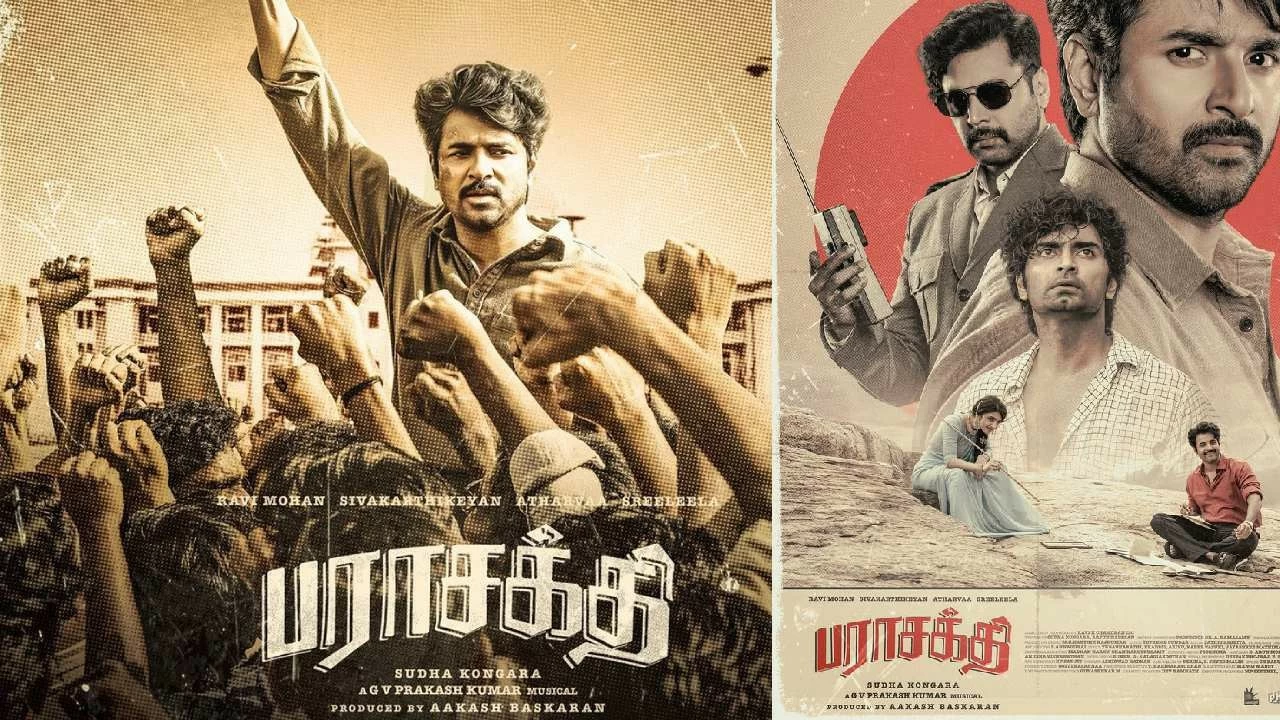
Chennai: As the Pongal release of Sivakarthikeyan’s much-awaited film Parasakthi approaches, audiences are gearing up for a powerful cinematic retelling of one of Tamil Nadu’s most defining political movements—the anti-Hindi imposition protests. Directed by Sudha Kongara, the film is a biographical drama based on the language rights movement, with Sivakarthikeyan playing the role of a student leader inspired by real-life martyr Rajendran.
Before stepping into the theatres, here’s a short and insightful look at the history that shaped the story of Parasakthi.
The Pre-Independence Stir: 1937–1938
Even as India was striving for independence from British rule, Tamil Nadu witnessed its first major language protest. In 1937, C. Rajagopalachari (Rajaji) became the Chief Minister of the Madras Presidency under a Congress government. The following year, his government introduced an order making Hindi a compulsory subject in schools. This move was met with fierce resistance across Tamil Nadu. Led by Periyar E.V. Ramasamy, the Justice Party, and various Tamil nationalist groups, widespread protests and rallies forced the government to withdraw the order.
Post-Independence Resistance: 1948
Language tensions resurfaced soon after independence. In 1948, under Chief Minister O. P. Ramaswamy Reddiar, the Madras government again attempted to impose Hindi. This time, protests were led by C.N. Annadurai (Anna) and the Dravida Munnetra Kazhagam (DMK). Faced with strong opposition, the government eventually made Hindi an optional subject in schools.
The Great Uprising of 1965
The most intense and consequential phase of the movement came in 1965. The central government’s move to make Hindi the sole official language of India ignited massive protests across Tamil Nadu. Student organizations, along with leaders like Anna and M. Karunanidhi, led enormous demonstrations. The protests turned tragic when police opened fire on student agitators, resulting in multiple deaths, including that of Rajendran, a student from Annamalai University in Chidambaram. The widespread anger and unrest ultimately compelled the central government to retain English as an associate official language, a compromise that endures to this day.
From History to Screen: Parasakthi
The film Parasakthi draws directly from this turbulent chapter, particularly the 1965 protests and the martyrdom of student leaders like Rajendran. Sivakarthikeyan steps into a serious, intense role, departing from his usual comedic style to portray a young man thrust into the heart of a language struggle.
Directed by Sudha Kongara, the film also stars Atharvaa and Sreeleela, with Ravi Mohan playing a Delhi officer who represents the imposing state machinery. The music is composed by G.V. Prakash Kumar, and the trailer—already breaking Tamil YouTube records—hints at gripping period action, including a dramatic train sequence.
Set to release worldwide on January 10, Parasakthi is not just a film but a tribute to a movement that shaped Tamil identity and political consciousness. It enters the Pongal box office race alongside Vijay’s Jananaayagan, promising audiences both reflection and resonance in today’s times.