Sign In
By signing in or creating an account, you agree with Associated Broadcasting Company's Terms & Conditions and Privacy Policy.
By signing in or creating an account, you agree with Associated Broadcasting Company's Terms & Conditions and Privacy Policy.


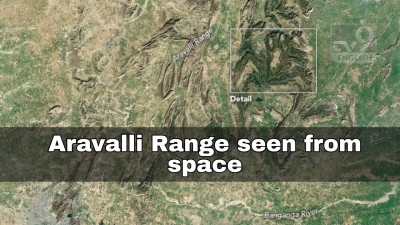
New Delhi: In a major development, the Supreme Court on Monday stayed its November 20 order that limited the definition of Aravalli range. In its previous order, the top court had limited the definition of Aravali to landforms rising at least 100 metres above local terrain. Issuing a fresh order, it said proposed forming a panel to examine questions relating to their height and permissible mining.
Last month, the apex court had accepted a uniform definition of the Aravalli hills. It had banned the grant of fresh mining leases in Aravalli in areas areas spanning Delhi, Haryana, Rajasthan, and Gujarat until experts file their reports. It accepted the recommendations of a committee of Ministry of Environment, Forest and Climate Change (MoEF&CC) on the definition of the Aravalli hills.
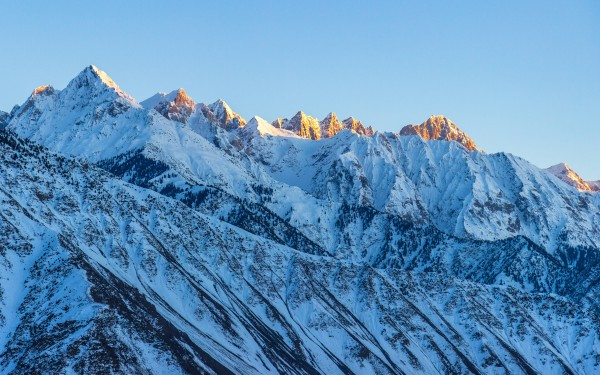
The committee had recommended that Aravalli Hill be defined as any landform in designated districts with an elevation of 100 metres or more above its local relief. It said that the range will be a collection of two or more such hills within 500 metres of each other. The Supreme Court had earlier also noted that uncontrolled mining in the Aravalli Hill poses great danger to the ecology of the nation. It had also directed uniform criteria to safeguard them.
The latest decision of the Supreme Court came after various environmental groups and individuals expressed concerns that this narrow, elevation-based criterion would exclude more than 90 percent of the existing Aravalli hills from legal protection.
Experts also felt that removing protection would end up making them vulnerable to unregulated mining, deforestation and construction which may lead to severe ecological consequences like increased air pollution, groundwater depletion, among others.
On Monday, the top court said that it would again hear the matter on January 21 next year. By that time, the Supreme Court had stayed its earlier order, which permitted mining on some areas of the Aravalli hills.