Sign In
By signing in or creating an account, you agree with Associated Broadcasting Company's Terms & Conditions and Privacy Policy.
By signing in or creating an account, you agree with Associated Broadcasting Company's Terms & Conditions and Privacy Policy.
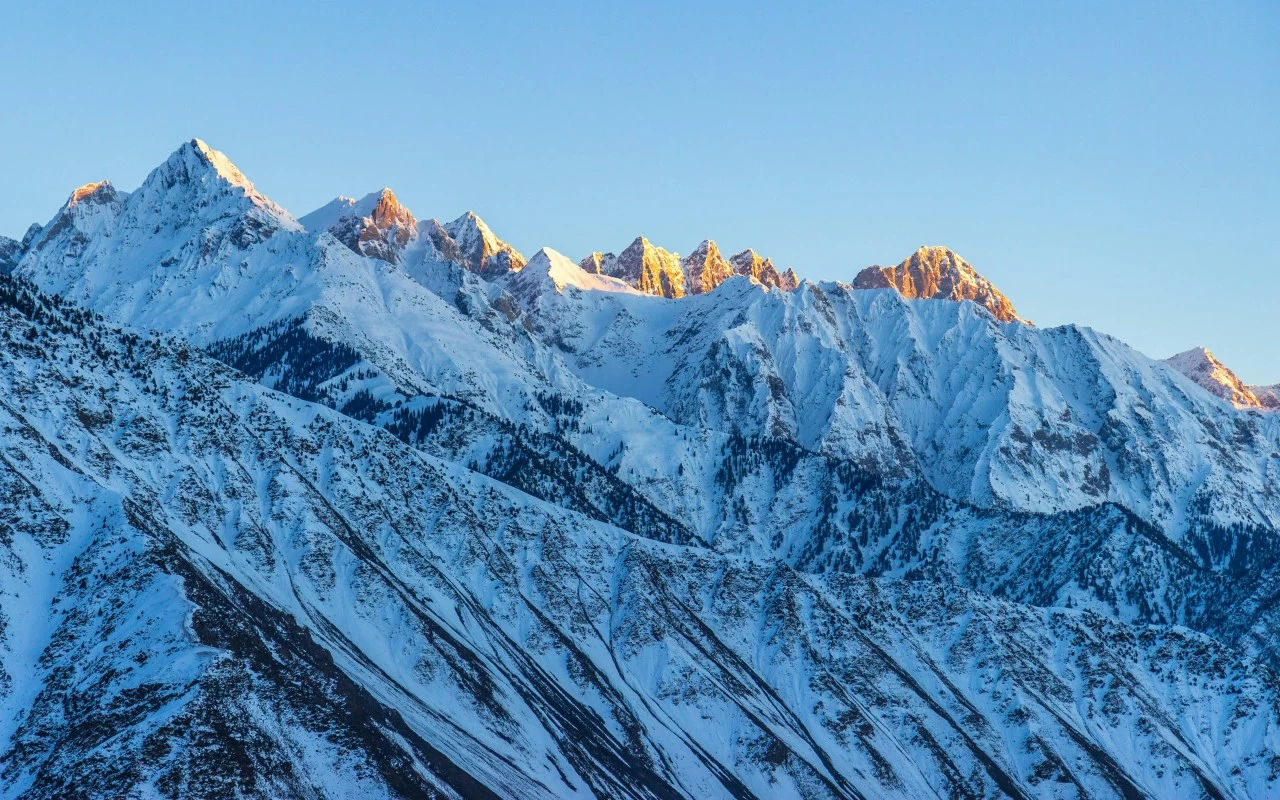


Researchers from IIT Jammu and IIT Mandi have determined that snow droughts are recurring with alarming frequency across the Hindu Kush Himalayas, threatening the water security of the nearly two billion people who live downstream. Periods of abnormally low snow accumulation results in changes in the timings and volumes of river flows, that then has an adverse impact on agriculture and hydro power generation. The biggest impact is on communities that rely on meltwater in the spring for irrigation and domestic use.
The researchers identified moderate to severe snow loss in 2008, 2011, 2015 and 2016 in the North-West, Amu-Darya, Indus, Salween and Mekong basins, that were linked to both declined snow cover days and snow cover persistence anomalies. Snow droughts are the reduction in the buildup of snow in the winters, which then has an impact on the domestic and industrial sustenance, as well as local and global economy. The snow cover also has a role in recreational winter snow tourism, that generates billions of dollars in revenue. The Hindu Kush Himalayas have seen the most significant decline compared to the global snow cover.
The Hindu Kush Himalayas is warming at a faster rate than the global average, rising at 0.74°C more than anywhere else. The droughts are most pronounced in a critical elevation band at altitudes between 3,000 and 6,000 metres, where the snow loss is accelerated by elevation-dependent warming. In the Himalayas, there is now more rainfall than snow, resulting in lower reservoirs for meltwater in spring. The researchers used satellite imagery and reanalysis databases between 1999 and 2016 to develop the most detailed mapping of Himalayan snow droughts so far. A paper describing the results has been published in Scientific Reports.
In a News Feature by Nature, one of the authors of the study, Hemant Singh says, "We found moderate to severe snow droughts occurring in the region as recently as 2015 and 2016, with particularly strong signals in Afghanistan and northern India. We need to treat snow as a strategic water asset. That means mapping it, conserving it, and managing meltwater efficiently." While the glaciers retreat slowly, snow droughts can suddenly cut off the water supply, with farmers in the western Himalayas relying on late-spring meltwater. Even a week of reduced supply can stress the agricultural yields. The researchers recommend that policy-makers move beyond a glacier-centric approach for one that holistically accounts for the full mountain water cycle.
According to Mahesh Palawat, an independent expert not involved with the study, from the private SkyMet Weather Services, explains in a blog post, "More worryingly, glaciers continue to melt, and the absence of fresh snowfall is failing to replenish them. This poses a long-term threat not only to the fragile Himalayan ecosystem but also to millions of people living downstream who depend on these glaciers for sustained water supply." The shortage of both snow and rain in the Himalayas is directly impacting agriculture, particularly horticulture and apple orchards. Residents of the hills as well as the entire population of the plains is exposed to more water risk because of the drought-like situation in the Himalayas.