Sign In
By signing in or creating an account, you agree with Associated Broadcasting Company's Terms & Conditions and Privacy Policy.
By signing in or creating an account, you agree with Associated Broadcasting Company's Terms & Conditions and Privacy Policy.
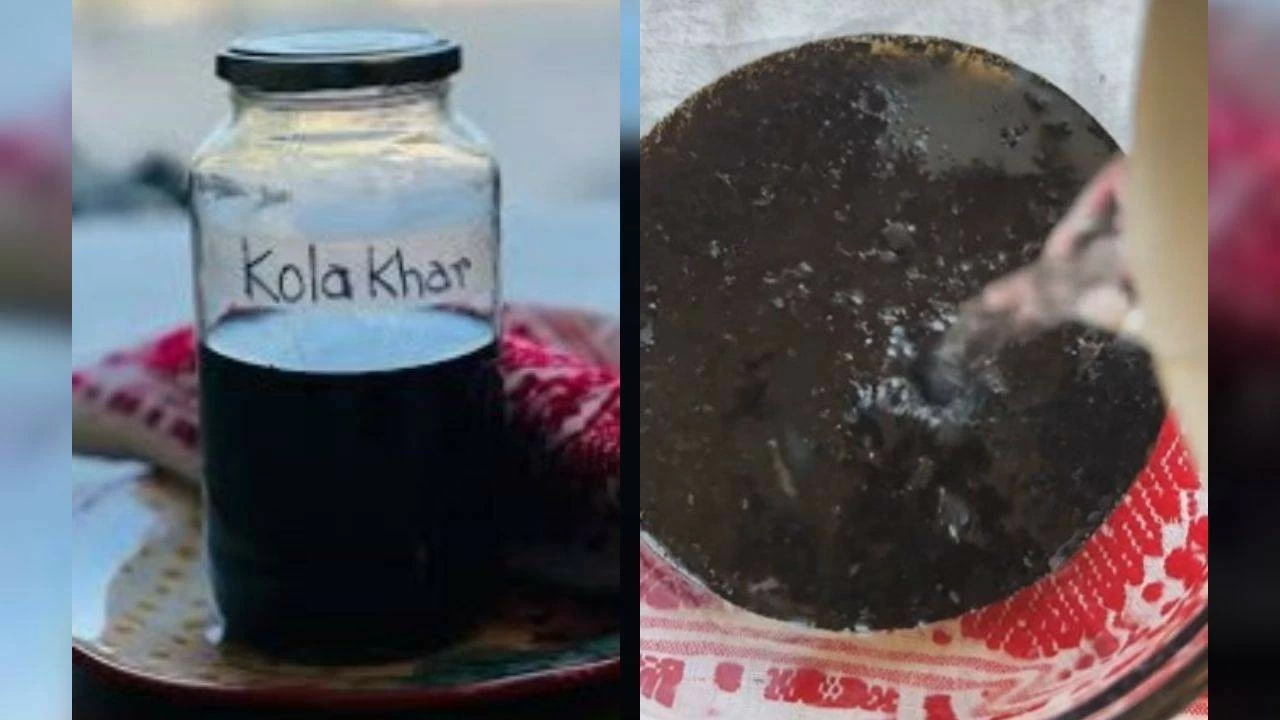

New Delhi: Every region in the world has its unique cuisine. If you have ever visited Assam and tasted its ethnic dishes, you might have felt a different taste, similar to an alkaline solution, that you have found nowhere else. It’s khar, a traditional and pivotal ingredient for Assamese dishes. It feels more like a magical elixir when considering its multiple uses in cooking, health, and even hygiene. Made from the ashes of dried bhim kol or seeded banana peels or the Musa balbisiana peels, papaya or even water hyacinth, khar is not just a seasoning but a potion steeped in heritage. This banana variety produces the finest khar.
Assamese people have been using khar for centuries. It has been used not only to season dishes but to cure ailments, preserve food, and, at one point, even to get rid of parasitic worms. If used in food, it can change the culinary game. Assamese people use it for various vegetable mashes like aloo pitika or potato mash, bengena pitika or roasted eggplant mash, masor petu pitika or fish liver mash, various vegetable dishes like raw papaya or amita khar, cabbage, gourds, green leafy vegetables like spinach and all types of meat and fish curries. It helps in digestion. So, let’s explore how to make this ingredient.
Here is the step-by-step guide to prepare khar from the seeded-banana peel, as it’s considered the best.
It feels great that popular culinary historian Colleen Taylor Sen wrote in her book Feasts and Fasts: A History of Food in India, that Assamese cuisine is the only regional Indian cuisine that has preserved the six tastes of ancient Hindu gastronomy. Alkalinity is what distinguishes Assamese cuisine from the rest of India. So, change your cooking game with this important Assamese ingredient.