Sign In
By signing in or creating an account, you agree with Associated Broadcasting Company's Terms & Conditions and Privacy Policy.
By signing in or creating an account, you agree with Associated Broadcasting Company's Terms & Conditions and Privacy Policy.


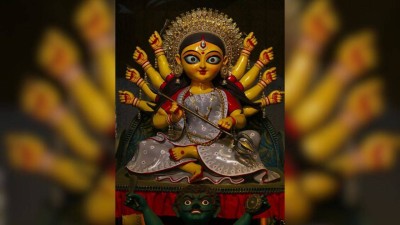
New Delhi: Navratri is one of the famous and vibrant festivals of India, celebrating the spirit of Goddess Durga, who fought with the powerful demon king Mahishasura. It symbolises the victory of good over evil. During Navratri, meaning nine nights, people honour Goddess Durga and her nine manifestations, from the fierce Kaalratri to the nurturing Kushmanda. For nine successive nights, men and women come together to celebrate through music and dance, paying homage to the divine feminine.
While people observe fast and follow rituals, traditional dances like Garba and Dandiya are among the most vibrant highlights of Navratri. These forms of art are beyond rhythmic movements. These ethnic dances symbolise centuries of devotion, social bonding and storytelling. Owing to its uniqueness and universal appeal, Garba has garnered global recognition, with UNESCO inscribing it as an Intangible Cultural Heritage of Humanity. Originating in Gujarat’s villages, these dances hold cultural significance. Dive further for more information.
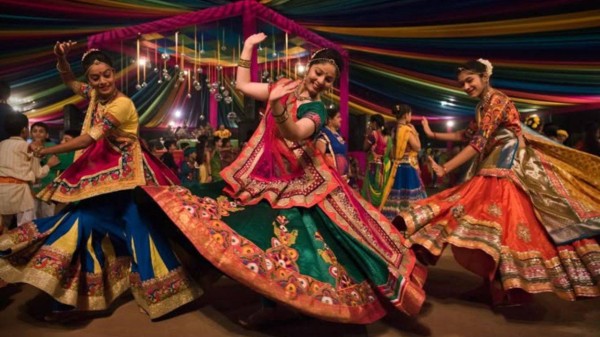
The word Garba comes from the Sanskrit garbha, meaning womb. Dancers form circles around a clay lantern with a flame inside, called the Garbha Deep, embodying the womb of creation and the Goddess’s eternal energy. Traditionally, this lamp represented the body as a vessel of divinity, though modern practice often replaces it with images of Durga.
The circular dance formation reflects Hindu cosmology, such as time as a cycle of birth, life, death, and rebirth, with the Goddess as the unmoving centre of an ever-changing universe. Dancing barefoot is crucial as the earth is revered as the Mother, transferring vital energy through the feet.
Dandiya Raas is related to the cosmic battle between good and evil. The decorated sticks known as dandiyas are not just props. These sticks symbolise Goddess Durga’s swords during her fight with the buffalo demon Mahishasura. Each rhythmic strike echoes the Goddess’s power, reminding participants of her courage, strength, and divine protection.
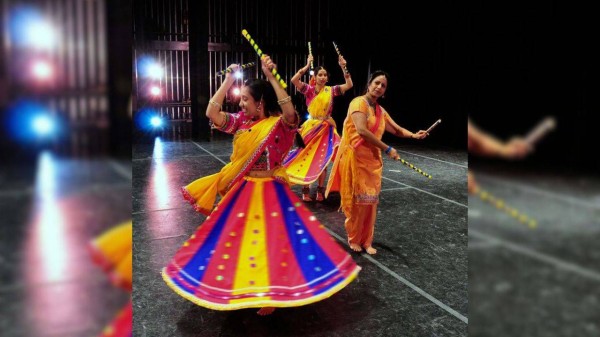
The circular formations reflect cosmic harmony, while the clashing sticks embody the destruction of ignorance and ego. Dancing Dandiya, hence, becomes a joyful yet devotional act.
Hence, Garba involves graceful claps, spins, and footwork; Dandiya Raas adds a martial element by using dandiyas. Both dances, though different in form, share the same essence of joy, unity, and surrender to divine power.
Garba and Dandiya, with their roots in spirituality, have expanded beyond temple courtyards. Many people love to include these dance forms in weddings, social gatherings, and grand cultural events worldwide. So, dance your heart out this Navratri 2025!