Sign In
By signing in or creating an account, you agree with Associated Broadcasting Company's Terms & Conditions and Privacy Policy.
By signing in or creating an account, you agree with Associated Broadcasting Company's Terms & Conditions and Privacy Policy.
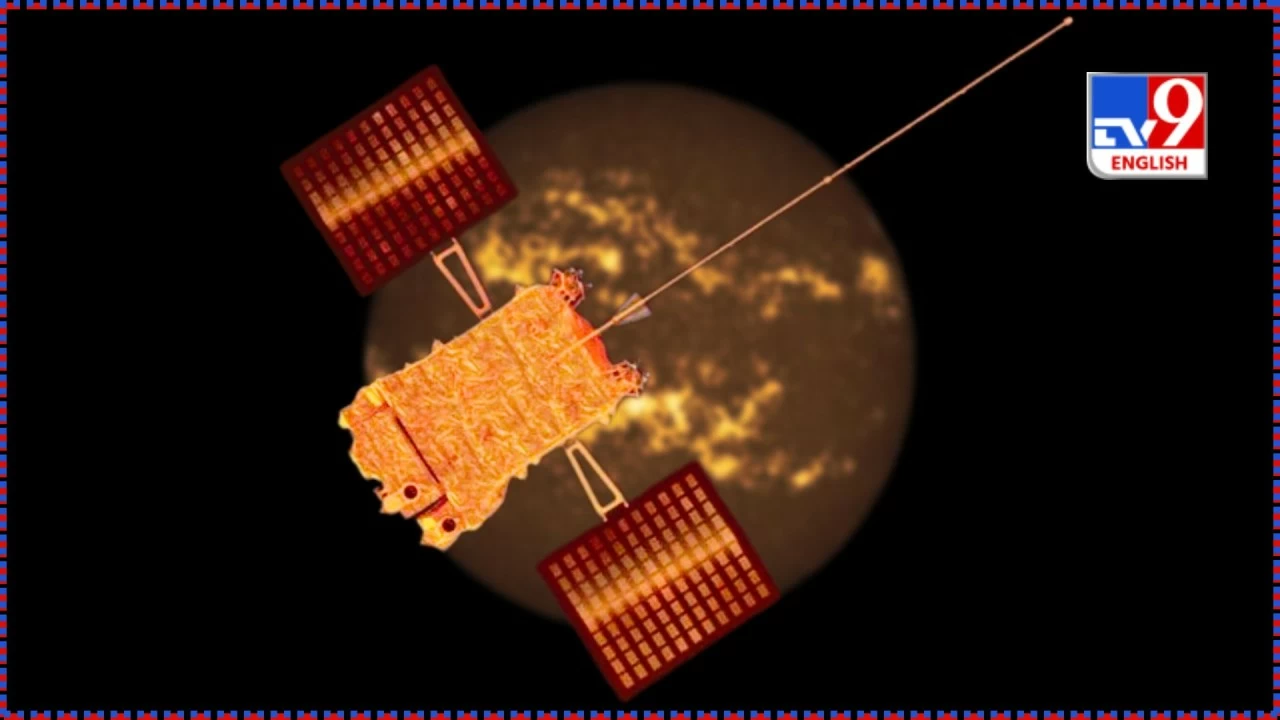


Researchers have combined the observations from the fleet of NASA heliophysics observatories distributed across the Solar System, and ISRO's Aditya L1 spacecraft deployed in a halo orbit around the first Lagrange point in the Sun-Earth system to reveal the complexities of the extreme geomagnetic storm that struck the Earth in May 2024. The May 2024 geomagnetic storms were the strongest observed since the 2003 Haloween Storms, and has been dubbed the Gannon Storm in memory of renowned heliophysicist Jennifer Gannon who passed away just as the solar activity increased.
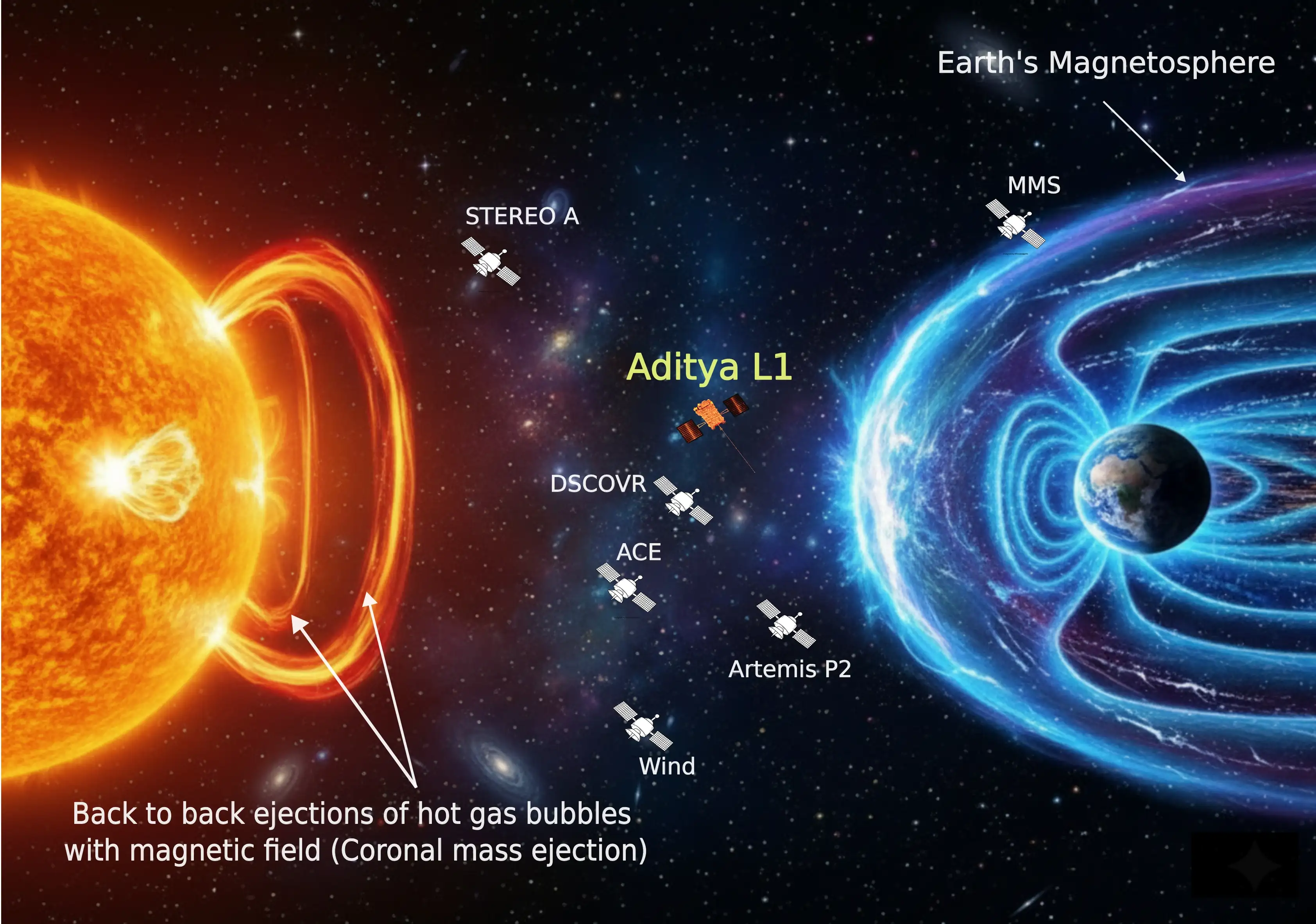
NASA's fleet of heliophysics observatories along with Aditya L1. (Image Credit: ISRO/NASA).
The observations from all of these spacecraft allowed scientists to trace the evolution of the coronal mass ejections (CMEs) that are charged clouds of hot gas or plasma violently ejected outwards into the Solar System by the Sun. These CMEs carry with them the tangled magnetic fields of the Sun, that then cause disturbances to the geomagnetic field while washing over the Earth. During the May 2024 solar storm, interacting CMEs caused the 'ropes' of magnetic flux to squeeze, break and rejoin, resulting in a magnetic reconnection event at unprecedented scale. Such events are typically observed on the surface of the Sun or the photosphere.
The interplanetary CMEs or ICMEs interacting with each other resulted in the magnetic field of the CMEs tearing and rejoining across a distance of 1.3 million kilometres, nearly 100 times the size of the Earth. Scientists believe that the sudden reversal of the magnetic fields in the CME caused the storming to be more intense than forecasted. A paper describing the research has been published in the Astrophysical Journal Letters. The study helps scientists better understand and predict solar storms, as well as their impact on Earth.