The fully stacked GSLV-F16 rocket is at the second launch pad (SLP) of the Sriharikota Spaceport, and is scheduled to
liftoff at 17:40 hours IST today. The only payload on board is the NASA-ISRO Synthetic Aperture Radar (NISAR) satellite, the first collaboration of its kind between NASA's Jet Propulsion Laboratory (JPL) in California and ISRO's Space Applications Centre (SAC) in Ahmedabad. The collaboration was officially started in 2014. NASA's JPL had developed an innovative new SweepSAR technology that allows for wide area coverage without compromising on fine spatial resolution, and was looking for an economical way to launch the payload. After approaching Germany, Japan and Argentina, NASA approached India with a proposal for cooperating on the mission.
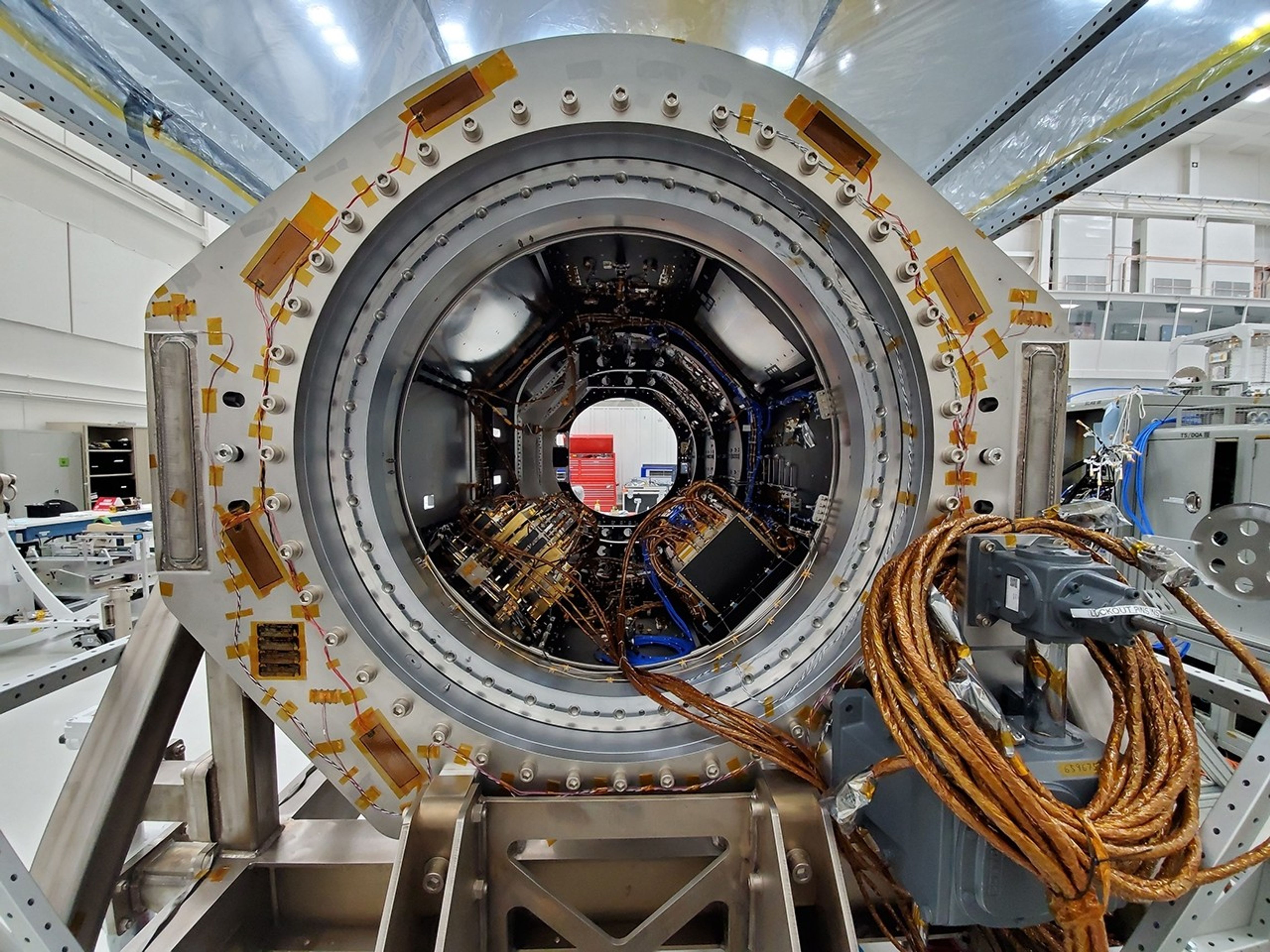
The Radar instrument structure with the two payloads in a clean room at JPL. (Image Credit: NASA).
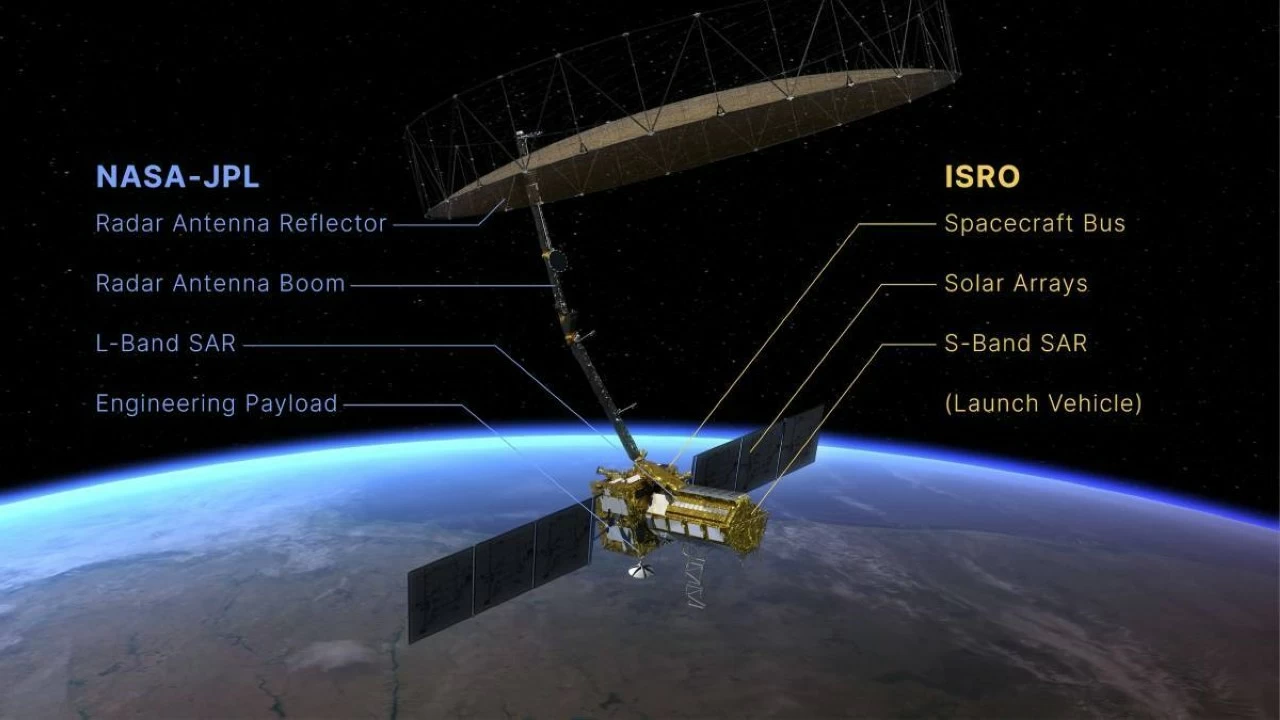
Initially, the plan was to use both lidar and radar payloads, but JPL decided to focus on the radar payload only. The initial proposal was to house the radar payload in an ISRO satellite, and use an ISRO rocket to deploy it in orbit. The scientists at ISRO's SAC did not see how this mission would benefit India, and wanted to learn something from the mission. JPL scientists then proposed that SAC make a radar payload as well, making the partnership more equitable for both the parties involved. ISRO is providing the spacecraft bus, the S-band radar and the solar panels for the mission, while NASA is providing the boom, the 12 metre wide radar reflector antenna, and the L-band payload. ISRO is launching the mission on its launch vehicle.
Cost of the Mission
NASA estimates that the NISAR mission will cost the agency around USD 1.2 billion over the planned five year mission duration, which may be extended. The initial plan was for a three year mission duration, but ISRO insisted that the mission lasts for at least five years. The State Minister for Space in India, Jitendra Singh had previously revealed that the mission is expected to cost Rs 788 crore, which is about USD 90 million. At the pre-launch presser for NISAR, Director of Earth Science at NASA HQ, Karen St Germain said, "ISRO has a different business model, a different way of accounting for costs and so forth, so it is really difficult for me to draw a conclusion or comparison based on the money." It is more useful to compare what NASA and ISRO are bringing to the table. The exquisite precision offered by the NISAR satellite stands to
benefit all life on Earth.