Sign In
By signing in or creating an account, you agree with Associated Broadcasting Company's Terms & Conditions and Privacy Policy.
By signing in or creating an account, you agree with Associated Broadcasting Company's Terms & Conditions and Privacy Policy.

New Delhi: The biggest technology show of the year is back. CES 2026 kicks off this week in Las Vegas, and the mood feels busy already. Even before the show officially opens, press previews and early announcements are setting expectations high. From AI-packed laptops to home robots and electric vehicles, CES once again looks ready to show where consumer tech is headed next.
CES has always been loud, crowded, and slightly chaotic. Walking those halls feels like drinking tech news through a fire hose. This year is no different. Organisers expect crowds similar to last year, when more than 140,000 people landed in Las Vegas. Over 4,500 exhibitors are on board this time, including around 1,400 startups, all trying to grab attention in a market that feels both exciting and tense.
CES, organised by the Consumer Technology Association, officially runs from January 6 to January 9, 2026. Pre-show events began on January 4, followed by a full day of press conferences on January 5. The Las Vegas Convention Center and nearby hotels once again turn into a giant tech maze.
The scale remains massive. Industry data from last year shows more than 141,000 attendees from over 150 countries. Organisers expect similar footfall in 2026, with more than 3,500 exhibitors spread across venues this week .
Artificial intelligence is not a side story at CES 2026. It sits right at the centre. Nearly every product category is talking about AI in some form, from laptops and TVs to healthcare apps and robots.
Nvidia CEO Jensen Huang will take the stage to showcase the company’s latest productivity solutions. AMD CEO Lisa Su is set to keynote and “share her vision for delivering future AI solutions.” Lenovo CEO Yuanqing Yang is also expected to talk about AI during his keynote appearance .
AI is not just about flashy demos this year. Health-focused use cases are getting space too. Some companies are pitching AI tools aimed at changing daily habits, treating specific medical conditions, or filling data gaps in healthcare research.
CES has quietly become one of the biggest battlegrounds for chipmakers. This year looks intense.
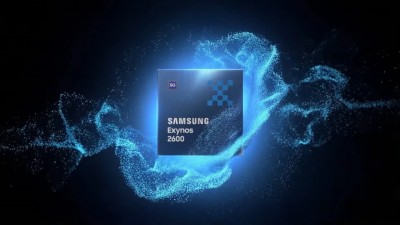
Intel has already unveiled its next-generation Core Ultra platform called Panther Lake. Qualcomm announced a next-generation mobile Windows on Arm processor, the Snapdragon Elite X2. AMD is expected to talk about future AI-focused chips during its keynote.
All this usually leads to one thing. A flood of laptop announcements.
LG has already teased its 2026 Gram Pro laptops, calling one model the “world’s lightest 17-inch RTX laptop.” More thin, light, and AI-heavy laptops are expected to follow quickly.
Display tech remains a CES favourite. Samsung and LG are going big on OLED and Micro RGB displays.
Samsung says it will integrate OLED into “edge device” concept models to improve how AI-powered devices look. One example shown is an AI OLED Bot, a small robot used as a teaching assistant in a university setting.
LG is also bringing visual tech and robots. The company has announced a helper bot named “CLOiD,” which it says can handle a “wide range of indoor household tasks” .
Robots are no longer hidden in corners at CES. Domestic robots, factory automation, and extended reality tools for training machines are all part of this year’s conversation.
Sony Honda Mobility is expected to show a production version of the Afeela electric vehicle. Hyundai is also making announcements around robotics and manufacturing tech.
Walking past these booths often feels surreal. One moment you see a smart fridge. Next, a robot rolling past you like it belongs there.
CES 2026 is less about one big gadget and more about direction. AI is no longer optional. Chips are fighting for relevance beyond phones. Robots are slowly entering homes. Laptops are trying to stay exciting again.
CES does not predict the future perfectly. It never has. But it does show what companies want us to care about next. And this year, that message feels clear, louder AI, smarter hardware, and a lot of competition packed into four noisy days in Las Vegas .