Sign In
By signing in or creating an account, you agree with Associated Broadcasting Company's Terms & Conditions and Privacy Policy.
By signing in or creating an account, you agree with Associated Broadcasting Company's Terms & Conditions and Privacy Policy.
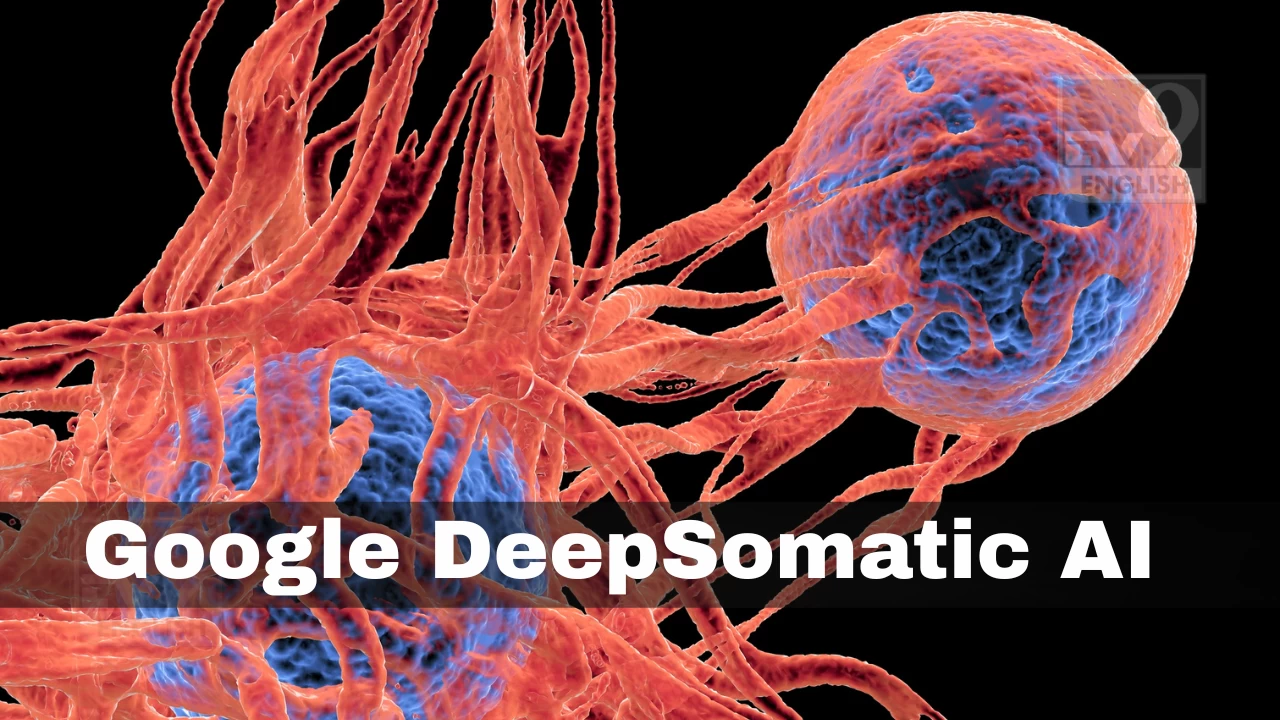

New Delhi: Google has unveiled a new artificial intelligence model called DeepSomatic, which aims to help scientists identify genetic mutations in cancer cells faster and more accurately. The model, developed in collaboration with UC Santa Cruz and Children’s Mercy Hospital, uses machine learning to detect genetic variants that cause cancer, potentially improving diagnosis and treatment.
Cancer, at its core, is a disease of the genes. When the genetic controls that regulate cell growth break down, abnormal cells begin to multiply. Each type of cancer behaves differently, and those differences are often rooted in unique genetic changes. DeepSomatic has been designed to pinpoint those variations in tumor DNA with greater precision than existing tools.
DeepSomatic uses convolutional neural networks, a type of AI model often used in image recognition, to distinguish between inherited and acquired mutations. According to Google Research, it can even handle complex cancers such as pediatric leukemia and glioblastoma. In a paper published in Nature Biotechnology, researchers describe how the system works across data from multiple sequencing technologies and can adapt to new cancer types not included in its training.
The researchers said, “DeepSomatic, an open-source AI model, is speeding up genetic analysis for cancer research.” The tool is built to outperform existing systems in detecting important variants, particularly insertions and deletions, which are small but critical DNA changes that can drive cancer growth.
Like Google’s earlier model DeepVariant, DeepSomatic first converts genetic sequencing data into a set of images that represent how DNA sequences align along chromosomes. The AI then compares tumor and non-tumor data to separate inherited genetic variants from those acquired later in life that cause cancer.
It can even work when a non-tumor sample is unavailable, a common challenge in blood cancers such as leukemia. In such cases, the model can still identify the cancer-related mutations by analyzing tumor-only data. That flexibility makes it suitable for both research and clinical labs.
To train the model, Google and its partners created a new reference dataset known as CASTLE (Cancer Standards Long-read Evaluation). It combines whole-genome sequencing from six samples, including breast and lung cancer cell lines, using three leading sequencing technologies: Illumina, PacBio, and Oxford Nanopore. This multi-platform dataset helped remove platform-specific errors, allowing DeepSomatic to learn from high-quality data.
In tests, DeepSomatic found over 3.29 lakh somatic variants across the reference cell lines. On Illumina sequencing data, it achieved a 90% score in identifying insertions and deletions, compared to 80% for the next-best method. On PacBio’s long-read data, its performance jumped to more than 80%, while other methods scored below 50%.
The tool was also tested on older or lower-quality samples preserved with formalin-fixed-paraffin-embedded (FFPE) methods and even whole-exome sequencing (WES) data, which covers only 1% of the genome. The AI model still managed to outperform other tools, suggesting it could help analyze historic or damaged samples that traditional methods struggle with.
The team also tried DeepSomatic on glioblastoma, a particularly aggressive brain cancer, and found that it correctly identified the few variants responsible for the tumor’s growth. In collaboration with Children’s Mercy Hospital, researchers tested the tool on eight pediatric leukemia samples. Despite the difficulty of getting non-cancerous samples for comparison, DeepSomatic identified all previously known variants and 10 new ones.
Andrew Carroll and Kishwar Shafin from Google Research said they hope scientists can use DeepSomatic to “accelerate cancer research for everyone.” Both the tool and the dataset have been made openly available to researchers worldwide.
AI models like DeepSomatic could make it easier for labs to identify which mutations are driving a patient’s cancer. This can influence treatment choices such as chemotherapy, immunotherapy, or targeted drugs. The open-source release also means research institutions across the world, including in developing countries, can access it without restrictions.
DeepSomatic represents another step in Google’s growing use of AI in healthcare, including previous projects on mammogram and lung cancer screenings. The company’s researchers said their goal remains simple: to “develop AI methods to understand cancer and help scientists treat cancer.”
Google's new AI tool is not about replacing doctors or researchers but giving them a faster way to see patterns hidden in billions of genetic sequences. That alone feels like progress worth paying attention to.