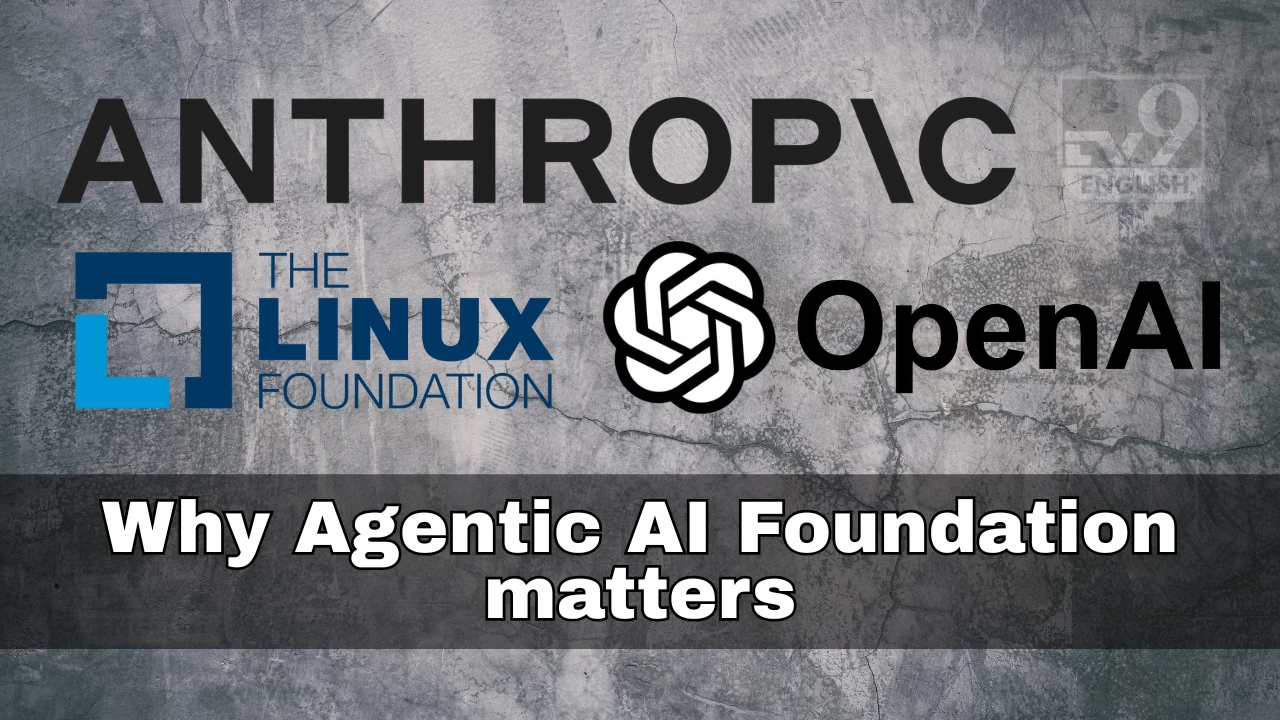
New Delhi: Big tech rivals rarely sit at the same table. This week they did, and they did it under the
Linux Foundation logo.
OpenAI,
Anthropic and Block have joined hands to launch the Agentic AI Foundation, or AAIF, a new home for standards that tell AI agents how to talk to tools, code and each other.
For anyone who has watched AI move from “chat with a bot” to “let this thing book my tickets or fix my code,” this feels like the moment the ecosystem starts taking plumbing seriously.
New foundation under the Linux Foundation umbrella
AAIF sits as a directed fund under the Linux Foundation, the long running non profit that already looks after projects like Linux, Kubernetes, Node.js and PyTorch. (Wikipedia)
OpenAI, Anthropic and Block are the co founders. Platinum members include Amazon Web Services, Bloomberg, Cloudflare, Google and Microsoft. Gold and silver members range from Cisco and IBM to Hugging Face, Uber and Zapier, signalling that this is not just a Silicon Valley club project. (Linux Foundation)
Linux Foundation executive director Jim Zemlin called it a phase shift where “conversational systems shift to autonomous agents that can work together,” and said MCP, AGENTS.md and goose have already become “essential tools” for developers building these systems. (Linux Foundation)
Three core projects at the centre
At launch, AAIF becomes the neutral home for three widely used pieces of agent infrastructure.
- Model Context Protocol (MCP) from Anthropic
- goose from Block
- AGENTS.md from OpenAI
Anthropic introduced MCP in 2024 as a standard way for AI models to connect to tools, data and applications. In one year, it has grown to more than 10,000 public MCP servers, and is already used by platforms like Claude, ChatGPT, Microsoft Copilot, Gemini and VS Code. (Anthropic)
Block’s goose is a local first, open source framework for building and running agents that use language models plus tools to carry out workflows on a machine. It is tightly built around MCP, so bringing both into the same foundation is a natural step. (Linux Foundation)
AGENTS.md started inside OpenAI as a simple Markdown file that sits next to README.md in a repository. It gives AI coding agents clear, project specific instructions like coding style, build steps or deployment rules. Since August 2025, more than 60,000 open source projects and tools such as Cursor, GitHub Copilot, Gemini CLI and VS Code have adopted it. (OpenAI)
OpenAI’s Nick Cooper said donating AGENTS.md is about building “open, transparent practices that make AI agent development more predictable and interoperable” so that developers and enterprises get “trustworthy infrastructure and accessible tools to build on.” (Linux Foundation)
Why open standards for agents matter now
Agentic AI is the industry’s term for systems that do things for you, not just talk. Coding copilots that open pull requests, finance bots that move through multiple APIs, customer support agents that pull data from different CRMs.
OpenAI’s own blog sets the tone by warning that as more agents handle “real work in business and consumer settings,” fragmentation across platforms raises the cost of doing things safely and at scale. The company argues that open standards make agents “safer, easier to build, and more portable across tools and platforms.”
From an Indian lens, this is not abstract. A BFSI player wiring agents to core banking APIs, or a SaaS startup in Bengaluru building workflow bots on top of cloud CRMs, wants standards that work across OpenAI, Anthropic or any future model from a domestic AI lab. MCP style connectors and AGENTS.md files are the kind of boring details that decide integration cost over five years.
Manik Surtani, who leads open source at Block, framed the choice sharply. He said AI “can either remain closed and proprietary for the benefit of few, or be driven by open standards, open protocols, and open access for the benefit of all,” and that contributing goose means agentic AI stays “shaped by the community and driven by merit.” (Linux Foundation)
Governance and what comes next
AAIF’s pitch is simple. Put these standards in a vendor neutral home, let a broad community participate, and keep the specs evolving in public. Anthropic stressed that MCP will remain open source and “community driven and vendor neutral,” even as it becomes what many see as critical infrastructure.
The next few months will show whether developers in India and elsewhere actually rally around its specs, or keep experimenting with their own.