Sign In
By signing in or creating an account, you agree with Associated Broadcasting Company's Terms & Conditions and Privacy Policy.
By signing in or creating an account, you agree with Associated Broadcasting Company's Terms & Conditions and Privacy Policy.
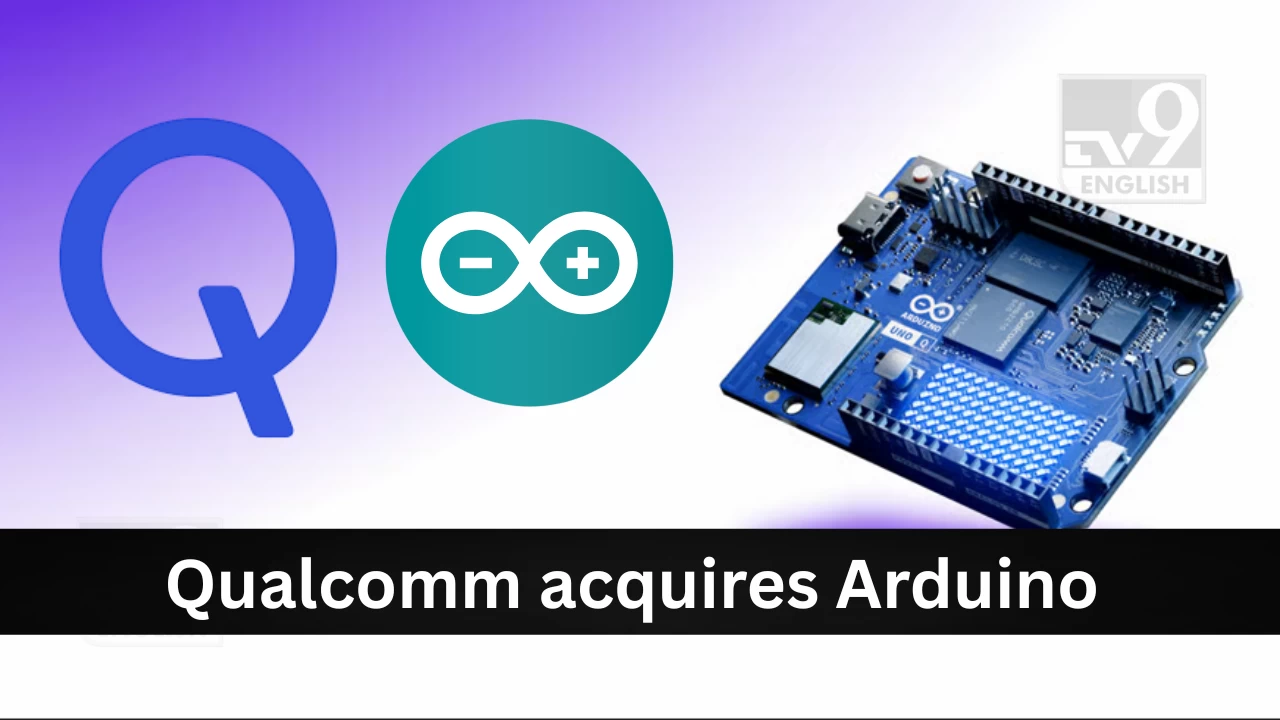


New Delhi: In a move that could reshape the open-source hardware space, Qualcomm Technologies has confirmed plans to acquire Arduino, the company behind one of the most widely used microcontroller platforms in the world. The agreement, announced today, still needs regulatory approvals before closing.
The deal is more about combining Qualcomm’s advanced processors, graphics and AI capabilities with Arduino’s simple and affordable hardware that is popular with students, hobbyists and professionals alike. Together, they are promising a stronger set of tools for the 33 million developers who make up the Arduino community.
Qualcomm has been busy building an edge-to-cloud stack for developers. Over the last few years it brought in Edge Impulse and Foundries.io. Adding Arduino to the list gives it a platform that is familiar to classrooms and maker spaces across the world.
Nakul Duggal, Group General Manager at Qualcomm, explained the company’s vision clearly. “With our acquisitions of Foundries.io, Edge Impulse, and now Arduino, we are accelerating our vision to democratize access to our leading-edge AI and computing products for the global developer community,” he said.
Arduino will continue to keep its independent brand, tools and mission. It will still support a wide range of chips from different semiconductor companies. That point is important for its community, which values open ecosystems.
One of the first products in this new chapter is the Arduino UNO Q. It is described as a “dual brain” board, running both a Linux Debian-capable microprocessor and a real-time microcontroller. The board uses Qualcomm’s Dragonwing QRB2210 processor and is meant for building AI-powered vision and sound systems.
That can mean anything from smart home gadgets that react to voice or movement, to industrial systems that need real-time control with high performance computing. Fabio Violante, CEO of Arduino, said, “The launch of UNO Q is just the beginning— we’re excited to empower our global community with powerful tools that make AI development intuitive, scalable, and open to everyone.”
Another addition is Arduino App Lab, an integrated environment that connects real-time OS, Linux, Python and AI flows. The idea is to let developers ideate, prototype and scale solutions faster. App Lab is also linked with Edge Impulse, so building and tuning AI models with real-world data should be smoother.
From tasks like human detection and image classification to ambient sound recognition, these capabilities are being positioned as easier to use for students and professionals. Massimo Banzi, co-founder of Arduino, added, “By joining Qualcomm Technologies, we’ll bring cutting-edge AI tools to our community while staying true to what has always mattered most to us.”
The announcement stressed that Arduino’s open approach and community focus will continue. Qualcomm believes combining its technology stack with Arduino’s global reach could give makers and businesses a faster way to go from ideas to commercialization.