Sign In
By signing in or creating an account, you agree with Associated Broadcasting Company's Terms & Conditions and Privacy Policy.
By signing in or creating an account, you agree with Associated Broadcasting Company's Terms & Conditions and Privacy Policy.
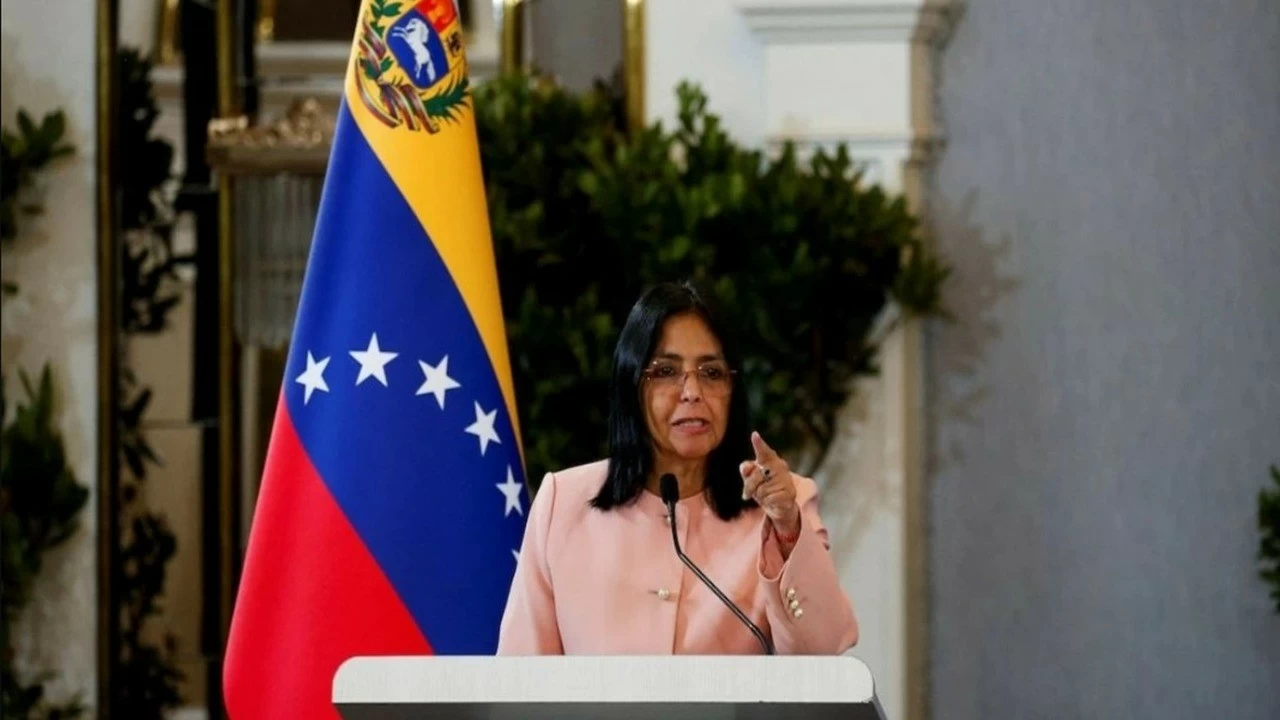


New Delhi: After the capture of president Nicolas Maduro in a US military operation, Venezuela's Supreme Court has ordered Vice President Delcy Rodriguez to take over the role of acting president of the country. The Constitutional Chamber of the Supreme Court said the 56-year-old Rodriguez would assume the presidency to ensure "administrative continuity and the comprehensive defence of the nation", adding that it would deliberate further to determine the legal framework governing the president's "forced absence".
While the decision to appoint Delcy Rodriguez to take over the role of acting president Venezuela came as a surprise to many, reports are now coming in that it was part of a well thought decision.
The finding, first reported by the Wall Street Journal, has said that an assessment by the US Central Intelligence Agency had concluded that senior figures loyal to ousted President Nicolas Maduro are the most capable of keeping the country stable if he loses power. This reportedly influenced President Donald Trump on his decision as to who would be best to lead the country as it transitions to a change in power.
The CIA reportedly shared the assessment with Trump and a select group of senior national security officials, who were briefed in recent weeks. The analysis reportedly stated that long-time Maduro allies, particularly Vice President Delcy Rodríguez, wield significant influence within Venezuela’s military and government institutions and in this respect would be a better and more stable choice than the country’s opposition leaders.
Delcy Rodríguez has been a central figure in Venezuela’s political system for over a decade and a known loyalist of now-deposed President Nicolas Maduro. She served as minister for communication and information from 2013 to 2014, followed by a term as foreign minister between 2014 and 2017. In 2017, she was appointed head of the pro-government Constituent Assembly, an institution that significantly expanded executive power while marginalising the opposition-controlled National Assembly. In June 2018, Rodríguez became vice president, with Maduro portraying her as a battle-tested and dependable figure within the ruling establishment.
Donald Trump’s reported decision to back Rodríguez as a potential replacement for Maduro signals a pragmatic, stability-oriented shift in US policy toward Venezuela. It is unlike the methods that the US usually prefers when dealing with regime changes in foreign nations.
While the White House has not formally confirmed the details of the CIA assessment, officials have defended the administration’s current approach by saying it aligns Venezuela with long-term US strategic interests and would eventually help to restore governance stability in the country. By supporting a regime insider rather than opposition figures, the Trump administration looks to promote alternative leadership slowly without upsetting the current order of things in the country. Critics however abound, arguing that by replacing the ousted President with another loyalist would only enforce the pre-existing power structure responsible for Venezuela’s current woes and would not be much effective on ground.