Sign In
By signing in or creating an account, you agree with Associated Broadcasting Company's Terms & Conditions and Privacy Policy.
By signing in or creating an account, you agree with Associated Broadcasting Company's Terms & Conditions and Privacy Policy.
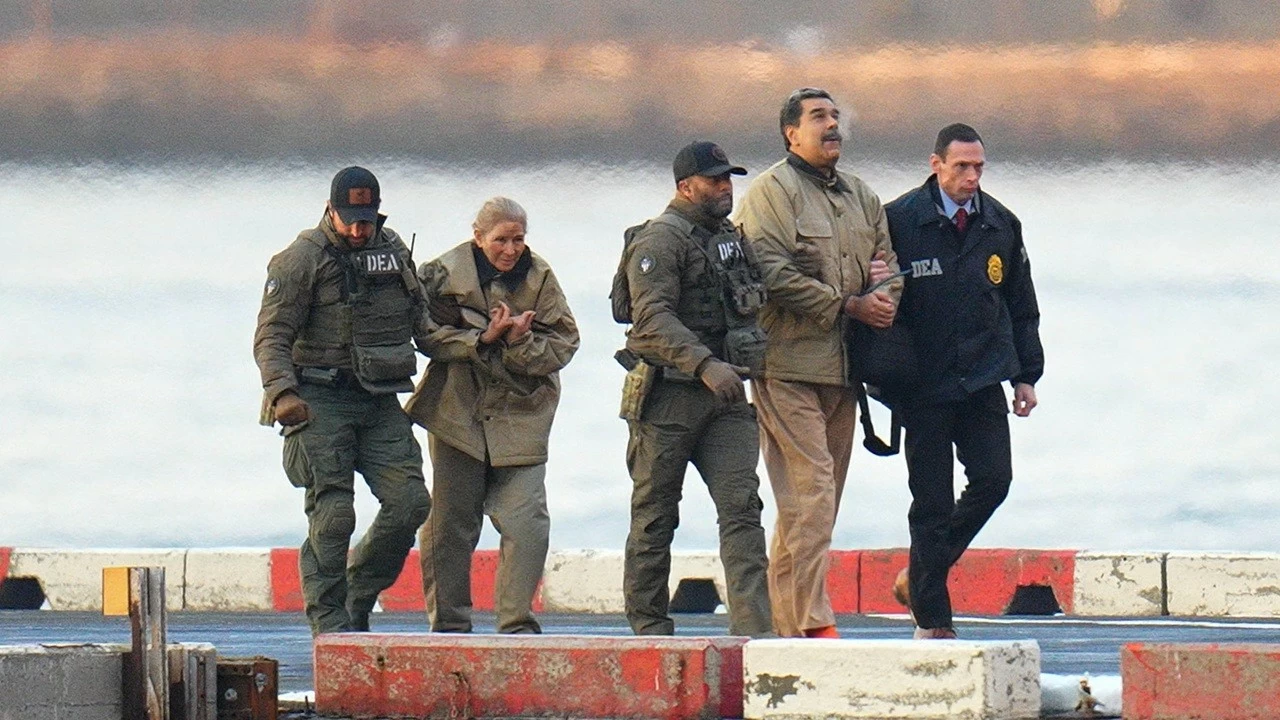


New Delhi: The US military action that led to the arrest of Venezuelan leader Nicolas Maduro is being seen divisively the world around. While many claim that it is a gross violation of international law, the US has stuck to its claim that the operation was enacted to curb drug trade and was against the authoritarian rule in Venezuela.
Another justification that US President Donald Trump has given pertains to the Monroe Doctrine, something that has shaped American foreign policy for two centuries. Originally flouted by President James Monroe, it was aimed at opposing European meddling in the Western Hemisphere. It has since been invoked repeatedly by subsequent presidents to justify US intervention around the world, particularly in Latin America.
Trump invoking the Monroe Doctrine is now being looked at with much interest by commentators, especially with the US President’s assertion that he intends to “run” Venezuela until a suitable replacement for Maduro is found.
Trump’s comments came during a press conference on Saturday as he accused Venezuela of engaging in anti-US operations with drug cartels. He explained how, “All of these actions were in gross violation of the core principles of American foreign policy dating back more than two centuries to the Monroe doctrine.” Trump then took the comparison further, associating it with his own saying that how many now called it “the Don-roe Doctrine."
Originally expounded in 1823 by then US President James Monroe, the Monroe Doctrine emerged as a foundational pillar of US foreign policy aimed at reshaping power dynamics in the Western Hemisphere.
It was brought about at a time when several Latin American nations had recently gained independence from European colonial rule. As a result of such situations, the doctrine warned European powers against further colonization or political intervention in the Americas. In return, the United States pledged non-interference in European conflicts. This was brought about to ensure a reciprocal geopolitical truce between major Western powers.
Initially the doctrine was more declaratory than enforceable, famously most European powers did not pay much attention to it. It was only as time progressed that the doctrine came to signify that any foreign intervention in the hemisphere would be viewed as a hostile act against the US. This eventually led to assigning the role of the US from a regional actor to a self-appointed hemispheric guardian.
Since then the Monroe Doctrine has been used as a tool for justification of active US intervention in Latin America. Its first major test occurred in the 1860s, when the US pressured France to withdraw after installing Emperor Maximilian in Mexico. In 1904, President Theodore Roosevelt expanded its scope through the Roosevelt Corollary, asserting the US right to intervene in Latin American countries deemed unstable, a rationale used in cases such as Panama’s secession from Colombia to secure control over the Panama Canal.
Although Secretary of State John Kerry declared in 2013 that the “era of the Monroe Doctrine is over,” its legacy continues to shape perceptions of US power and intervention globally, particularly in the Latin American nations like currently in the case of Venezuela.