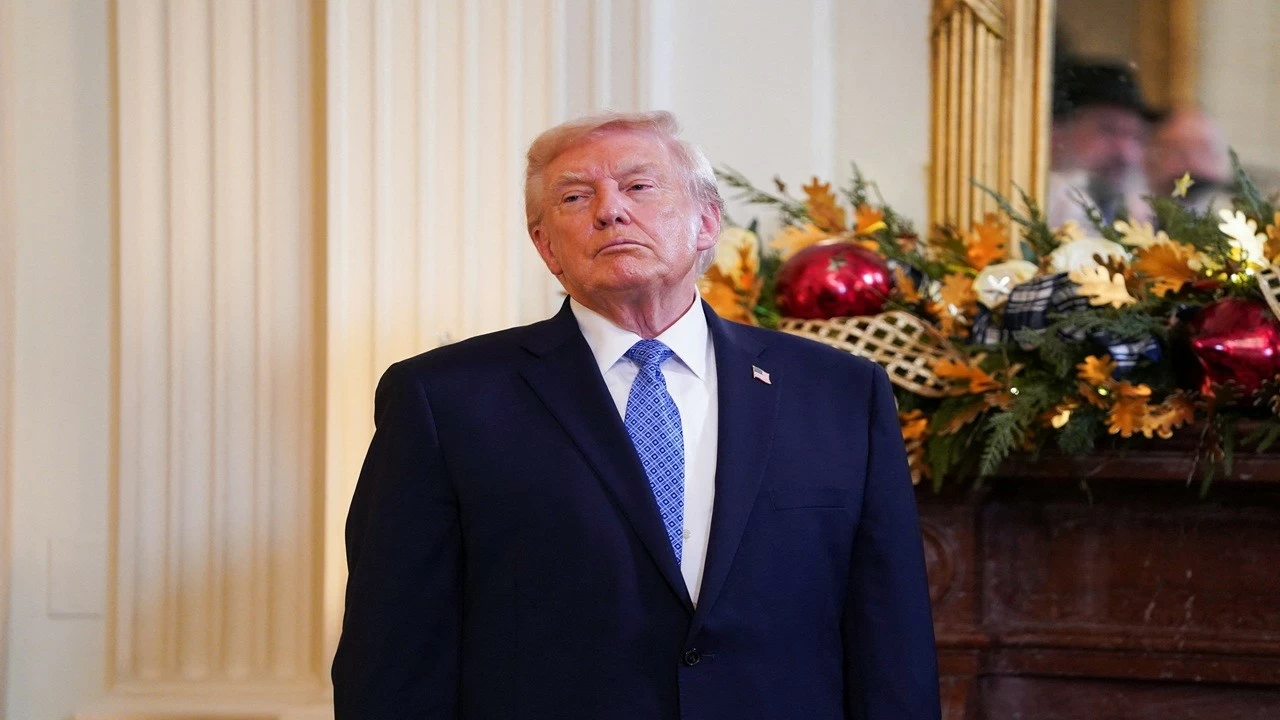
New Delhi: US President Donald Trump is not one to shy away from stating his intentions, however they may be perceived. As one who had earlier said that "The US will once again consider itself a growing nation" and pledged to increase American wealth and expand "our territory", his current actions should not come as much of a surprise.
The military action that the US has committed in
Venezuela is thus not an isolated act of aggression but can be seen as a part of a particular strain of US foreign policy, that is known to sometimes lay on the other side of international law, and can use various methods to get what it want; be it foreign trade, resources or regime change.
The Venezuela operation
In a move that was expected for some time, if not in intensity, was last week’s military intervention carried out by the US in Venezuela. By launching a tightly coordinated military and law-enforcement operation that resulted in the capture of President Nicolas Maduro, US President Donlad Trump has stood good on his word to take action against the
Latin American nation.
Justifying it not as a
military invasion but as a drug-enforcement operation linked to long-standing criminal indictments against Maduro in US courts, Trump’s action has rattled the region and the larger international community. The US meanwhile insists that the action is related to charges related to drug trafficking, corruption and disposing of an authoritative regime in the country.
The event though has since triggered intense international debate about the legitimacy of using military power to arrest a sitting head of a sovereign state, however justifiable the reasons may be. Many see the action as the US returning to an older, interventionist approach.
US legacy of expansion
The strain of imperialism that the US has had since its formation refuses to die away. It has been present in the discourse of the country’s current President Donald Trump ever since he came to power for his second term in the White House. ‘
Since the start Trump has been vocal of his
expansionistic intentions, be it renaming the name of the Gulf of Mexico to the ‘Gulf of America’ or talks of taking back the Panama Canal. The President has also often talked about his intention to acquire Greenland from Denmark. Then Trump has taken the case of Canada, at one stage even suggesting making Canada the 51st state of the United States. With all this Trump’s expansionist views are clear, he has himself said how "The US will once again consider itself a growing nation."
However, Trump’s action continues the trend of US politics which has often carried the legacy of imperialism forward. What we identify as the United States of America today was built by expansionism, be it done through military or economic ways.
The initial formation of the country is proof enough of that, and that process continues today in some form or the other, and the current military action in Venezuela can be traced to that early history. The United States of America was formed after thirteen British colonies in North America declared independence from the British Empire in 1776.
After this, the state began a campaign of acquiring land to build the new country. The first significant expansion came with the Louisiana Purchase of 1803, when the US bought the territory of Louisiana from France for $15 million in 1803. The southeastern border with Spanish Florida was a bone of contention for some time, until that and Spanish claims to Oregon Country were ceded to the US in 1821.
Thus, the US program of expansion continued, be it the accession of the Republic of Texas in 1845 or subsequent gain of more land from Mexico. The annexation of Hawaii in 1898 and the purchase of Alaska from Russia in 1867 further cemented this process. Trump’s current actions, or even other similar ones that the US has committed in the recent past around the world, including in Latin America are thus part of this process. While today more agency is given to even smaller nations states and international laws surrounding unwarranted military action are stricter, the US with its might has been able to often forgo these stipulations to act in unprecedented ways, its latest military action in Venezuela is only the latest example of this.