Sign In
By signing in or creating an account, you agree with Associated Broadcasting Company's Terms & Conditions and Privacy Policy.
By signing in or creating an account, you agree with Associated Broadcasting Company's Terms & Conditions and Privacy Policy.
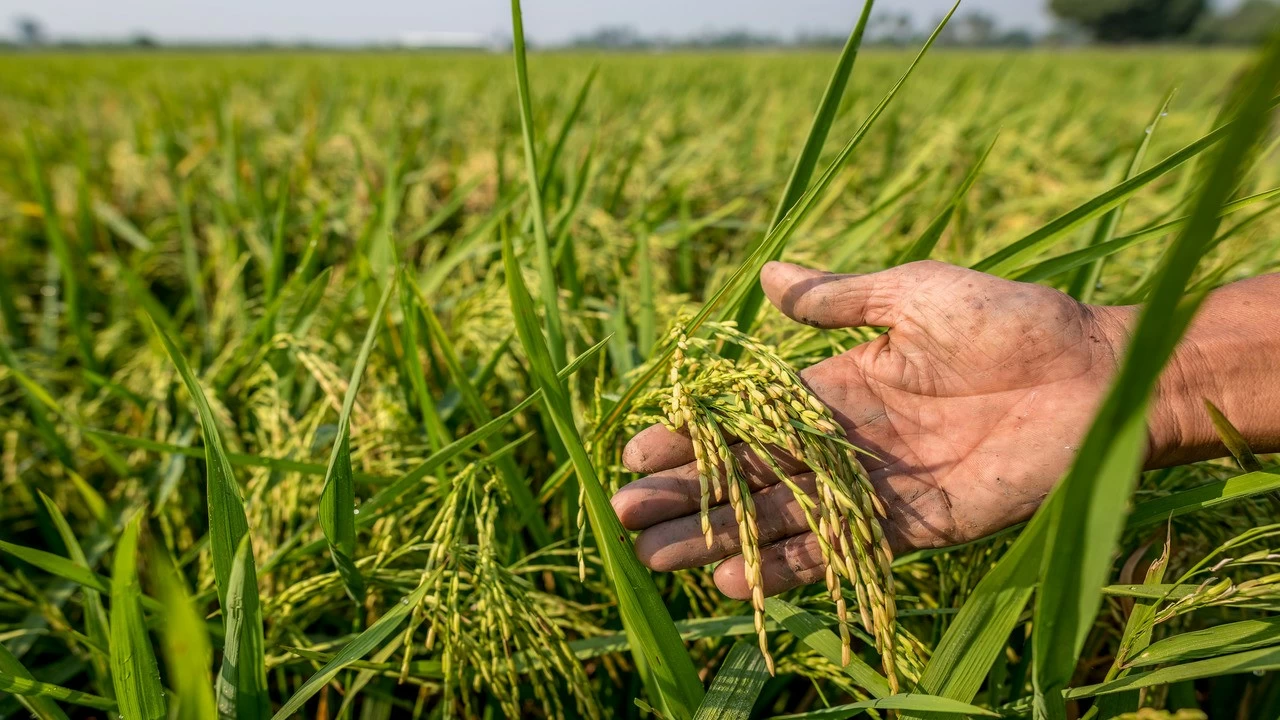


New Delhi: In the latest move of announcing tariffs, US President Donald Trump on Monday said that he might impose tariffs on Indian rice. Trump made these comments during a meeting at the White House where he expressed his wish to introduce new tariffs on agricultural imports, particularly Indian rice and fertiliser from Canada.
Trump made these comments while unveiling a fresh $12 billion aid to American farmers. This was seen as a result of domestic complaints that American farmers had against cheaper foreign imports and how they were diluting competition in US markets.
“Why is India allowed to do that (dumping rice into the US)? They have to pay tariffs. Do they have an exemption on rice,” the US President asked Treasury Secretary Scott Bessent. To this, Bessent replied, “No, sir. We're still working on their trade deal.”
Trump’s ideas of imposing fresh tariffs on Indian rice exports were swiftly countered by India. The Indian Rice Exporters Federation (IREF) in response said that the impact of US tariffs on rice imports from India is likely to be passed on to American consumers, not to Indian producers.
The Federation said that "While the U.S. is an important destination, India's rice exports are well-diversified across global markets. The Federation, in close coordination with the Government of India, continues to deepen existing trade partnerships and open new markets for Indian rice..... Evidence from retail markets indicates that most of the tariff burden has been passed on to U.S. consumers."
Responding to Trump’s remarks, the Indian Rice Exporters Federation also tried to placate Indian rice producers. “The Indian rice export industry is resilient and globally competitive," said Dev Garg, Vice President, Indian Rice Exporters Federation. "While the US is an important destination, India's rice exports are well-diversified across global markets. The Federation, in close coordination with the Government of India, continues to deepen existing trade partnerships and open new markets for Indian rice," he further added.
Thus, it does not look like India would be losing too much even if Trump goes ahead with his tariff threats on Indian rice exports. According to the Indian Rice Exporters Federation, during the financial year 2024-2025, India exported Basmati rice worth USD 337.10 million to the US, totaling 274,213.14 metric tonnes (MT), making the country the fourth largest market for Indian basmati. In terms of non-basmati rice, the exports valued at USD 54.64, making the US the twenty fourth largest market for non-basmati rice.
Essentially the US is one of the biggest Indian export markets for basmati rice, which is largely consumed by communities belonging to Gulf and South Asian regions in the US. This is specifically for dishes such as biryani, whose popularity in the US has grown recently and in which basmati rice is a prime ingredient.
What also helps is that the rice grown in the US is not a direct substitute for Indian basmati rice. Finally, even if tariffs are brought on, as they were recently, it would affect consumers in the US, who would see retail prices increase, not rice producers in India.