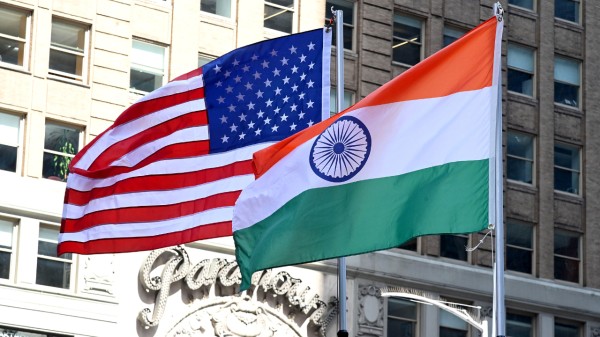
Kolkata: The US tariff on Indian goods stand at 50% now -- 25% for punitive action and another 25% for buying cheap crude oil from Russia going against the diktat of Washington. While the additional 25% was ostensibly to curb resources to Russia which, Trump alleged, was being used to fund the conflict in Ukraine, many think the steep 50% wall is to use it as a bargaining tool to gain access in the big Indian market for agriculture and dairy market. Negotiations for a bilateral trade deal between the US and India are continuing and the high tariffs are construed as a drag on both exports, economic growth -- which could have been even higher -- and the equity markets and the value of the rupee in general.
While the impact of the high tariffs by the world's biggest economy has been an
impediment, a recent report has outlined a few businesses that have successfully weathered the storm. The report has been compiled after watching the outcome for 100 days. It was quite predictable that India's exports would suffer and especially the labour-intensive sectors such as textile, gems and jewellery, leather, marine exports would come under pressure and trade deficit figures would suffer. The report said that India was quite successful in weathering what could have been a debilitating blow by exploring new markets and policy support.
Indian goods most taxed globally
A recent report by Brickwork Ratings has mentioned how in the first 100 days Indian industry suffered the first blow and slowed as a result. The immediate outcome: employment suffered and investment stalled. Trade balance also became more adverse. Global Trade Research Initiative or GTRI, a Delhi-based think tank, mentioned that Indian trade shipments dropped from $8.83 billion in May to $6.31 billion in October 2025, thereby shrinking 28.5% in just five months.
What stood out as a sore thumb is the US slapped the highest import tariff on Indian goods. While it hit 50% against India, the tariffs against China was 30% and that against Japan 15%. The agency listed out that smartphones, pharmaceuticals and petroleum -- categories that were exempted from tariffs -- suffered 25.8% dip in exports from $3.42 billion in May to $2.54 billion in October.
Labour-intensive sectors, MSMEs sector under pressure
The US tariffs put the MSMEs under a lot of pressure, which were already under pressure from rising costs and financing. The sudden increase in tariffs created a situation where Indian products overnight became uncompetitive in the US market, where economies such as Vietnam and Bangladesh were quickly moving forward, thanks to the lower tariffs. On the other hand, demand from US domestic sector weakened a little and added to the stress. It was reported that exports from Vietnam and other ASEAN countries turned 20-30% cheaper compared to Indian exports.
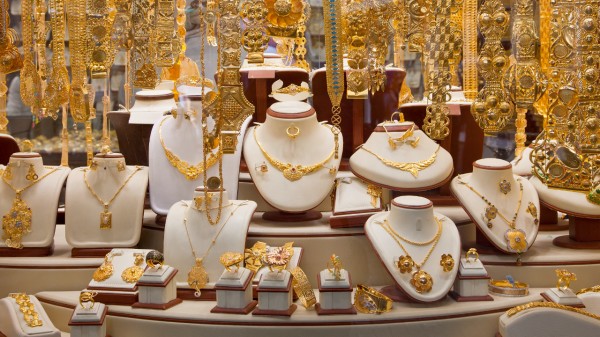
The biggest adverse impact of the steep tariff was felt in sectors such as textiles, readymade garments, gems and jewellery, frozen shrimp, leather and processed food. Incidentally, these are sectors where millions and millions of Indians are employed. These sectors have been traditionally significantly dependent on demand from US consumers. As an immediate outcome, many businesses were forced to reduce production and some had to resort to layoffs.
Three categories of exports
Following the US tariffs, the report has categorised exports from India into three categories -- sectors free from tariffs, sectors with uniform global tariffs and sectors with 50% tariffs. Significantly, all three categories suffered declines in recent months.
Tariff-free products
Smartphones: Exports dipped from $2.29 billion in May 2025 to $884.6 million in September 2025
Pharmaceuticals: Declined from $745.6 million in May 2025 to $628.3 million in September 2025
These sectors are benefiting from the PLI (production-linked incentive scheme)
Sectors with uniform tariff
Metals, auto parts, aluminum, iron and steel, copper are some of these
Export value declined from $0.6 billion in May 2025 to $0.5 billion in September 2025 -- by 16.7%
Key reason: US industrial slowdown
Products with 50% tariff
Gems and jewellery, solar panels, textiles and garments, chemicals, seafood, agriculture and processed food are some sectors.
Export crashed from $4.8 billion in May 2025 to $3.2 billion in September 2025 -- by 33%
India explores new markets
While Indian exporters tried to cope up with the sudden adverse circumstances, India began to earnestly seek out new markets. There was some success in some product lines in the first 100 days too. For example, export of cotton garment rose to countries such as the UAE, France, and Japan. China, Vietnam, and Thailand also gave 60% more orders for marine products, a huge share of which was traditionally directed to the US.
The sum total of these alternative markets were quite interesting -- the country's total exports reached $36.38 billion in September this year which marked a rise of 6.7% compared to the figure achieved in September 2024. It proved beyond doubt that India managed to find out new markets to reduce its dependence on the biggest economy pf the world.
Relief for tea, coffee, spices etc
On November 12, something interesting happened. Washington withdrew tariffs on more than 200 products which included tea, coffee, spices, cocoa, fruits, juices, bananas and even processed foods. It came as a relief to many agricultural sectors and in value terms it amounted to about $1 billion a year. In other words, they constituted about 40% of total Indian agricultural exports to the US. Therefore, a huge number of products will be back at the shelves of supermarket chains, boosting the markets for these businesses and a reprieve for many workers.
Exports of some major commodities
Tea: $82.90 mn (Oct 24)
$78.51 (Oct 25)
Rice: $1050.76 mn (Oct 24)
$877.24 (Oct 25)
Tobacco: $203.52 (Oct 24)
$163.26 (Oct 25)
Spices: $381.37 mn (Oct 24)
$321.07 (Oct 25)
Despite this relief, India's trade deficit reached $41.7 billion in October 2025, which researchers said was a record high. However, it was attributed to record rise in gold imports at very high prices from the global markets. The value of gold imports trebled to reach $14.72 billion. During the same period, tariffs and globally weak demand drove down Indian exports to the US by 8.7% to $6.3 billion, thereby accentuating the impact. Services exports was a relief since it rose about 12% to $38.5 billion. But it could not compensate for the dip in goods export.
New markets bring relief
To counter the US tariffs, Indian policymakers took strategic steps. The chambers of commerce too emphasised that this crisis should be used to create windows of opportunity. Schemes such as interest subsidies and emergency credit for MSMEs were fast tracked. India stepped up the exploration of
new trade opportunities with nearly 50 countries. Free trade agreements such as the
India-UK CEPA and India-EFTA were pushed. Discussions on reaching a Indo-US bilateral trade deal are also going on. SBI research has said that it expects the deal to be concluded by the end of the current financial year.