Sign In
By signing in or creating an account, you agree with Associated Broadcasting Company's Terms & Conditions and Privacy Policy.
By signing in or creating an account, you agree with Associated Broadcasting Company's Terms & Conditions and Privacy Policy.
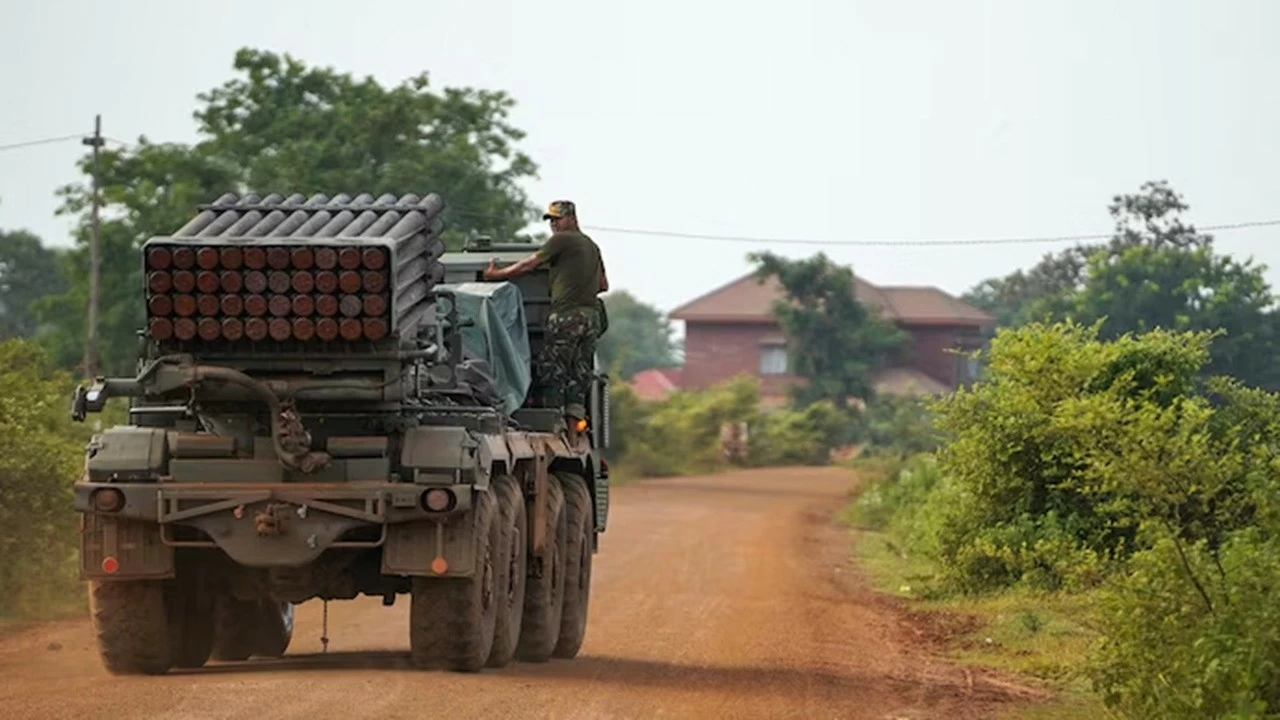


Southeast Asia: The volatile border between Thailand and Cambodia has erupted into its fourth consecutive day of fierce fighting. Both countries are trading heavy artillery fire, airstrikes, and acrid accusations of violating international law.
As the bloodshed mounts and half a million civilians flee their homes, eyes are turning to Washington, where United States President Donald Trump is planning to intervene with a promised phone call aimed at de-escalation of the war. This renewed war between the two countries shattered a fragile ceasefire painstakingly brokered by Trump just two months ago.
Escalation and mutual recriminations
Cambodia's Ministry of Defence launched a scathing indictment on Thursday morning, detailing what it described as a barrage of Thai military attacks deep within its territory. According to Phnom Penh, Thai forces deployed tanks and artillery in numerous early morning strikes targeting provinces including Pursat, Banteay Meanchey, and Oddar Meanchey.
“Cambodia urges that Thailand immediately stop all hostile activities and withdraw its forces from Cambodia’s territorial integrity, and avoid acts of aggression that threaten peace and stability in the region,” the Defence Ministry said.
The Cambodian Ministry of the Interior further alleged "intensified shelling and F-16 air strikes targeting villages and civilian population centres up to 30km inside Cambodian territory."
Among the most grievous accusations, Cambodia claims Thai soldiers violated international humanitarian law by directly firing on civilians in Prey Chan village in Banteay Meanchey province.
Cambodia accuses Thai forces of shelling heritage and religious sites
Additionally, Thai forces are accused of shelling "into Khnar Temple area" and "O’Smach area," with Cambodian officials lamenting extensive damage to homes, schools, roads, Buddhist pagodas, and ancient temples. The Ministry of the Interior particularly highlighted the destruction of Ta Krabey and Preah Vihear temples, describing them as "highly sacred cultural sites of Cambodia and the world cultural heritage."
As of Wednesday, the human cost on the Cambodian side was reported to be dire. According to the official figures, 10 civilians, including an infant, were killed, and 60 others were injured. Phnom Penh urgently called for Thailand to "immediately stop all hostile activities and withdraw its forces from Cambodia’s territorial integrity, and avoid acts of aggression that threaten peace and stability in the region."
Thai army asserts that Cambodia "intentionally" use historical sites as "military bases"
Thailand, in turn, vehemently rejected the accusations, counter-claiming that Cambodia was itself in violation of international law. The Thai army asserted that Cambodia had "intentionally" used historical sites as "military bases of operations" from which to launch attacks against Thailand, thereby "deliberately undermining the protection of the ancient site." Thailand maintained its actions were solely "retaliation as necessary." On the Thai side, the fighting has claimed the lives of eight soldiers and left 80 wounded this week.
Roots of the resurgence
This latest confrontation is rooted in deep-seated territorial disputes spanning the approximately 817-kilometre shared border between the two nations. Tensions, which simmered for decades, had flared significantly in May 2025 following the killing of a Cambodian soldier in a brief exchange of gunfire, initiating a series of escalating confrontations that have now boiled over into full-scale war.
The current violence comes despite a highly publicised ceasefire signed on October 26 in Kuala Lumpur, Malaysia, which was personally presided over by President Donald Trump and brokered with Malaysian Prime Minister Anwar Ibrahim. At the time, Trump hailed the agreement as achieving "something that a lot of people said couldn’t be done."
Trump's renewed intervention and regional concern
Now, with that hard-won peace shattered, President Trump is once again preparing to step into the diplomatic fray. Speaking to reporters on Wednesday, he expressed optimism, stating, "I think I can get them to stop fighting," and confirmed, "I think I’m scheduled to speak to them tomorrow." The international community watches closely to see if Trump can successfully broker a second peace deal between the two hostile countries.
Meanwhile, the humanitarian crisis along the border is worsening, with more than 500,000 Thai and Cambodian civilians forced to abandon their homes and livelihoods due to the relentless fighting.
Indian Embassy in Thailand issues travel advisory
Adding to the regional concern, the Indian Embassy in Thailand issued a travel advisory on Thursday. Indian nationals planning to visit areas near the Thailand–Cambodia border have been urged to "closely monitor updates from Thai official sources, including TAT Newsroom," before travelling.
“In view of the situation near the Thailand–Cambodia border, Indian travellers who plan to visit these areas are advised to check updates from Thai official sources, including TAT Newsroom," the Embassy said in a post on X.