Sign In
By signing in or creating an account, you agree with Associated Broadcasting Company's Terms & Conditions and Privacy Policy.
By signing in or creating an account, you agree with Associated Broadcasting Company's Terms & Conditions and Privacy Policy.
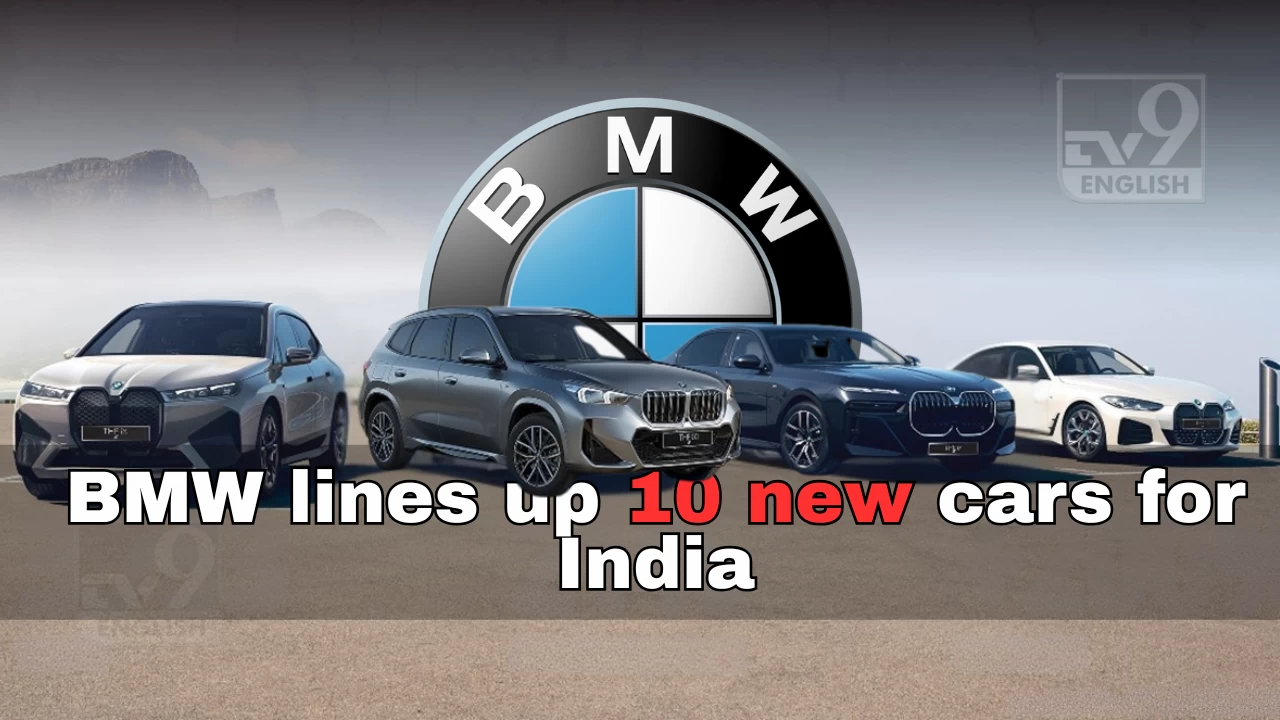

New Delhi: BMW is lining up one of its busiest years in India, even as the luxury car market remains a small slice of the country’s overall auto sales. The German carmaker plans to launch 10 new cars in 2026, covering electric vehicles and models from its MINI brand, while also pushing harder on local sourcing to control costs.
Luxury cars still account for just about 1 percent of India’s total car market. BMW knows that simply fighting within this narrow space will not be enough, and its India strategy now reflects that reality.
BMW Group India confirmed it will introduce 10 new cars in India this year, along with 17 product upgrades. The plan includes electric vehicles and models from the MINI lineup, with more than one-third of the launches coming under the MINI badge.
The announcement follows a strong 2025 for BMW in India. The company sold around 18,000 cars last year, a 14 percent rise compared to the year before. This performance helped BMW close the gap with market leader Mercedes-Benz in the Indian luxury space.
Despite the growth, BMW’s India CEO Hardeep Brar made it clear that the bigger challenge lies outside brand rivalry. Luxury cars still make up only 1 percent of India’s more than 4 million annual car sales, mainly due to high import duties that push prices up.
To deal with pricing pressure, BMW is looking beyond just new launches. The company is working to increase local sourcing of parts for cars assembled in India. At present, around 50 percent of components are sourced locally. These include seats, engines, axles, and tyres.
The plan is to push this number higher, though exact targets have not been shared yet. From an industry point of view, this matters. Higher localisation can soften the impact of import taxes and make premium cars slightly more accessible.
Electric vehicles have moved quickly from niche to meaningful for BMW in India. EVs now account for 21 percent of the company’s total sales, up from about 8 percent in 2024.
A key moment came last year when BMW began local assembly of the iX1 electric SUV. It was the brand’s first locally assembled EV in India. That move allowed BMW to price the car closer to petrol models, which helped drive EV sales growth of 200 percent.
BMW is now evaluating whether EV components like motors can also be sourced locally. These discussions are still at an early stage, but the intent is clear. Lower costs could help sustain EV momentum.
Even with growing demand, BMW believes policy support is critical. Electric vehicles in India currently attract a 5 percent tax rate, compared to 40 percent or more for petrol and diesel cars.
Brar said that luxury EV penetration in India is already around 10 percent, higher than the overall EV penetration of about 4 percent. To keep investments flowing and product pipelines expanding, he stressed the need to maintain the lower tax rate for a longer period.
For enthusiasts and buyers, 2026 could be a busy year. Ten new launches, multiple updates, more MINI options, and a stronger EV push mean more choice across body styles and price points.
BMW is not pretending the market is easy. Instead, it is betting on volume through variety, and cost control through localisation. Whether that helps expand the luxury market beyond its current 1 percent share will be the real story to watch.