Sign In
By signing in or creating an account, you agree with Associated Broadcasting Company's Terms & Conditions and Privacy Policy.
By signing in or creating an account, you agree with Associated Broadcasting Company's Terms & Conditions and Privacy Policy.
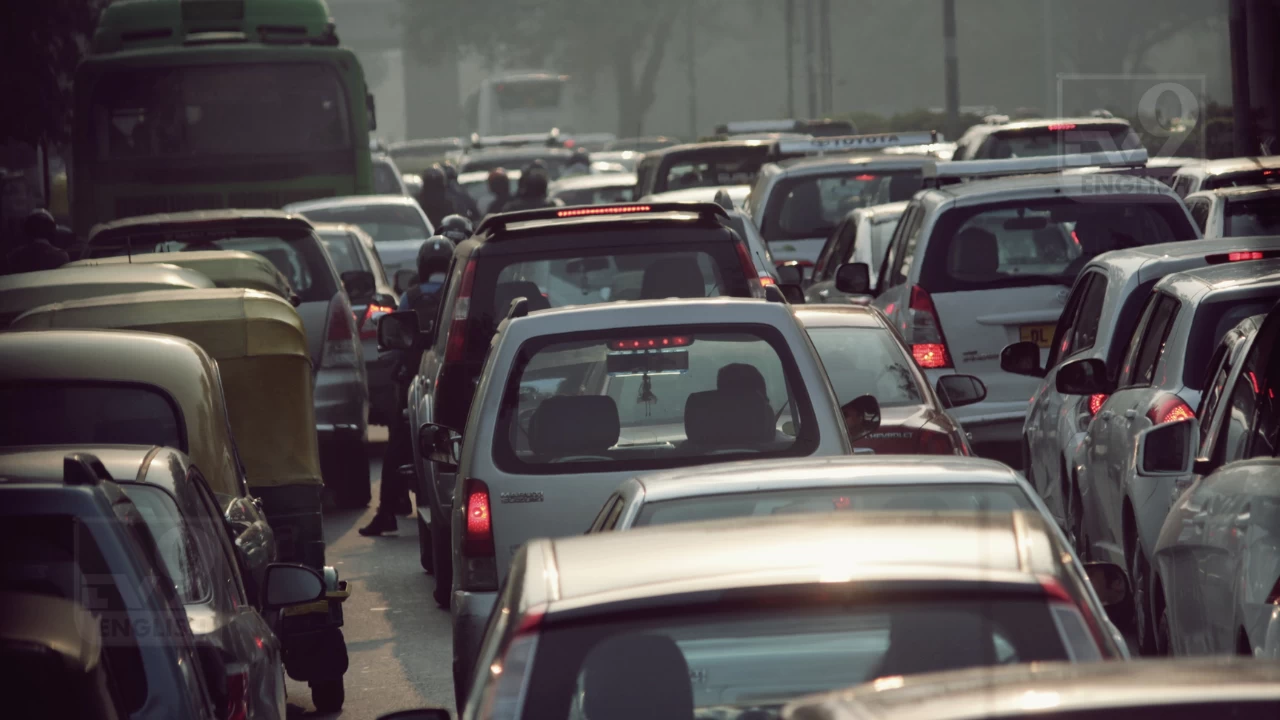


New Delhi: India’s automobile industry has been facing mixed signals. On one side, sales numbers for the first quarter of FY26 show a dip across most categories. On the other, Prime Minister Narendra Modi has called the sector a key driver of the economy and an important part of the country’s self-reliance story. His comments came through a written message shared during the 65th Annual Convention of the Society of Indian Automobile Manufacturers (SIAM).
Passenger vehicles, two-wheelers, and commercial vehicles all registered declines between April and June, while three-wheelers managed to hold ground. The numbers highlight the challenges of demand in a year where the government is banking on mobility and manufacturing to play a bigger role in economic growth.
According to SIAM, passenger vehicle volumes dropped 1.4 percent year-on-year to 10,11,882 units in the first quarter. Commercial vehicles were down 0.6 percent at 2,23,215 units. Two-wheelers, which form the bulk of the Indian market, saw the sharpest fall at 6.2 percent with 46,74,562 units sold. Three-wheelers stayed flat at 1,65,211 units.
These figures show how sensitive India’s automobile market is to changing consumer behaviour and wider economic trends. A fall in two-wheeler sales, in particular, often reflects pressures in rural demand.
In his message read by SIAM president Shailesh Chandra, the Prime Minister described the auto industry as a torchbearer of Make-in-India. He said the sector has boosted global confidence in Indian manufacturing and contributed to positioning the country as a hub of automotive excellence. He added that strong policies and reforms are helping build a future-ready transportation ecosystem, combining modern technology with new infrastructure.
The PM also said the industry is adopting sustainability by focusing on green technologies and EVs. He noted that startups working on energy storage are creating new opportunities across design, production, and deployment.
Despite the optimism, electric vehicles remain a small portion of the market. At present, EVs account for around 5 percent of passenger vehicle sales, less than 2 percent of commercial vehicles, nearly 8 percent of two-wheelers, and over 62 percent of three-wheelers. This imbalance shows how adoption is concentrated in some segments but still lagging in others.
The Prime Minister stated that as India moves towards its vision of Viksit Bharat, collaboration between government and industry will be critical. He urged that true self-reliance across the automobile value chain should be the goal.
For the industry, this means balancing short-term sales pressures with long-term investment in EVs, clean energy, and infrastructure. For buyers, it suggests that the coming years will bring more choices, but also more pressure on affordability as companies try to meet both global and domestic goals.
India remains the world’s third-largest passenger vehicle market and the largest two-wheeler market. Even with temporary slowdowns, its role in shaping global automotive trends is growing. And as the Prime Minister’s message indicated, the industry is expected to carry more of the weight in India’s manufacturing ambitions.