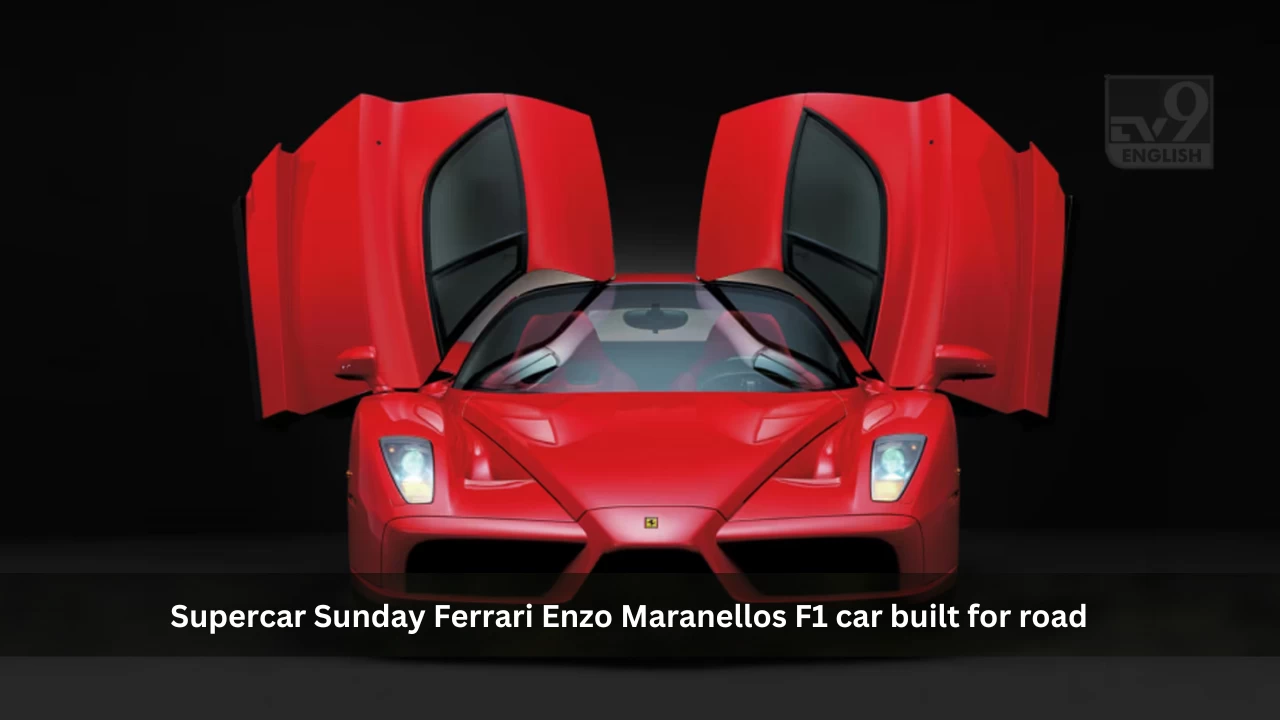
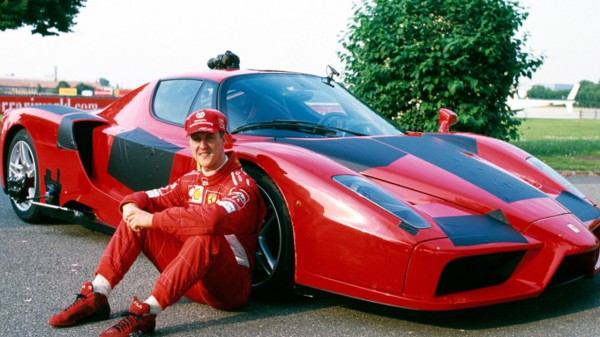
New Delhi: Imagine this, it is the early parts of the 21st century, and the Maranello is loudly thumping and cheering every other race. Ferrari’s Formula One driver is at the peak of his career, and the brand comes out with the Ferrari Enzo, a
supercar they had been creating since the late 1990s.
The Ferrari Enzo was revealed in 2002 as a limited-production flagship named after their brand’s founder, Enzo Ferrari. Made using technology from Ferrari’s dominant F1 programme, it was a successor to the F40 and F50 as the brand’s ultimate road car and production was limited to just 400 specimens. The Enzo was the start of the brand mixing race-derived electronics and aerodynamics with a naturally aspirated V12, paving the way for future Ferrari hypercars.
While its predecessors were raw and more mechanical, the Enzo brought advanced aerodynamics, carbon-fibre construction and electronic systems from F1. This wasn’t just a fast car; it had a technological advancement ahead of its time.
Ferrari Enzo powertrain
The Ferrari Enzo was powered by a 6.0-litre naturally aspirated V12 engine, mounted longitudinally, sitting right behind the driver. It made 660 bhp and had a peak torque of 657 Nm, making it the most powerful naturally aspirated Ferrari road car back in the day. The engine was made to rev freely and respond instantly, giving a performance that was exclusive to high-revving Ferrari V12s.
The Enzo came with a six-speed automated manual transmission, featuring paddle shifters, technology lifted straight from Ferrari’s F1 cars. Gear shifts were exceptionally quick for the time period and were built more for performance than smoothness. Power went to the back wheels, and even though there was traction control, the driver had to be exceptionally skilled to operate something like this.
In terms of performance, you did 0-100kph in 3.6 seconds, and the Enzo had a top speed of 350 kph, making it amongst the fastest road cars and in the league of rivals like the Porsche Carrera GT and McLaren F1.
Ferrari Enzo exterior and interior
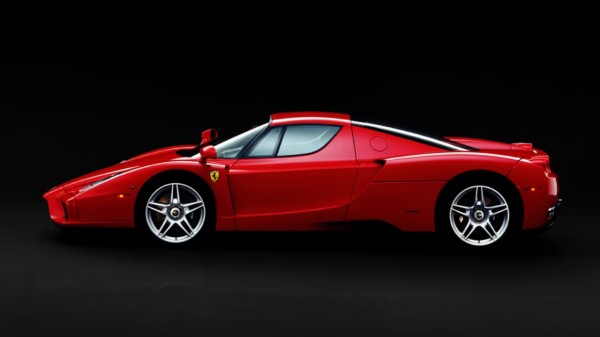
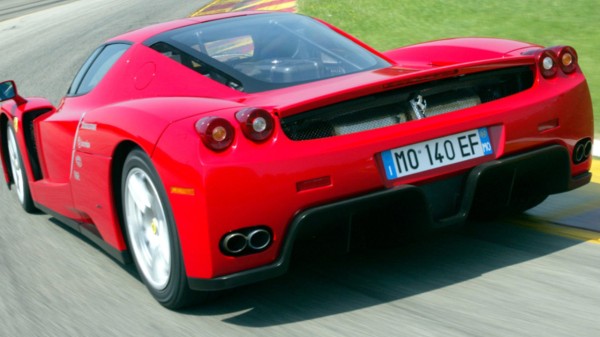
The Ferrari Enzo’s design was almost entirely about aerodynamics. It came with a sharp nose, sculpted sides and a large rear diffuser were all inspired by Ferrari’s F1 cars of the early 2000s. The active aerodynamics adjusted automatically in order to balance downforce and drag, giving amazing stability at extreme speeds.
It was built around a carbon-fibre monocoque chassis; the Enzo was both lightweight and quite rigid. Its dramatic proportions, exposed carbon-fibre elements and centre-mounted exhausts made it feel like a race car, showing clear signs as to why it was made.
Step inside, the Enzo was stripped to basics, and everything was purposeful. Carbon fibre dominated even the cabin, with minimal sound insulation and very thinly padded seats fixed directly to the chassis. The steering wheel came with integrated controls, a F1-derived feature, while the instrument cluster focused more or less just on performance. This was a driver-focused car and meant for driving pleasure, not comfort or luxury.
The Enzo was a departure for Ferrari as it was Ferrari’s last flagship powered by just a naturally aspirated V12 without hybrid assistance. It set the mood for future Ferrari hypercars with a direct influence over the likes of LaFerrari.