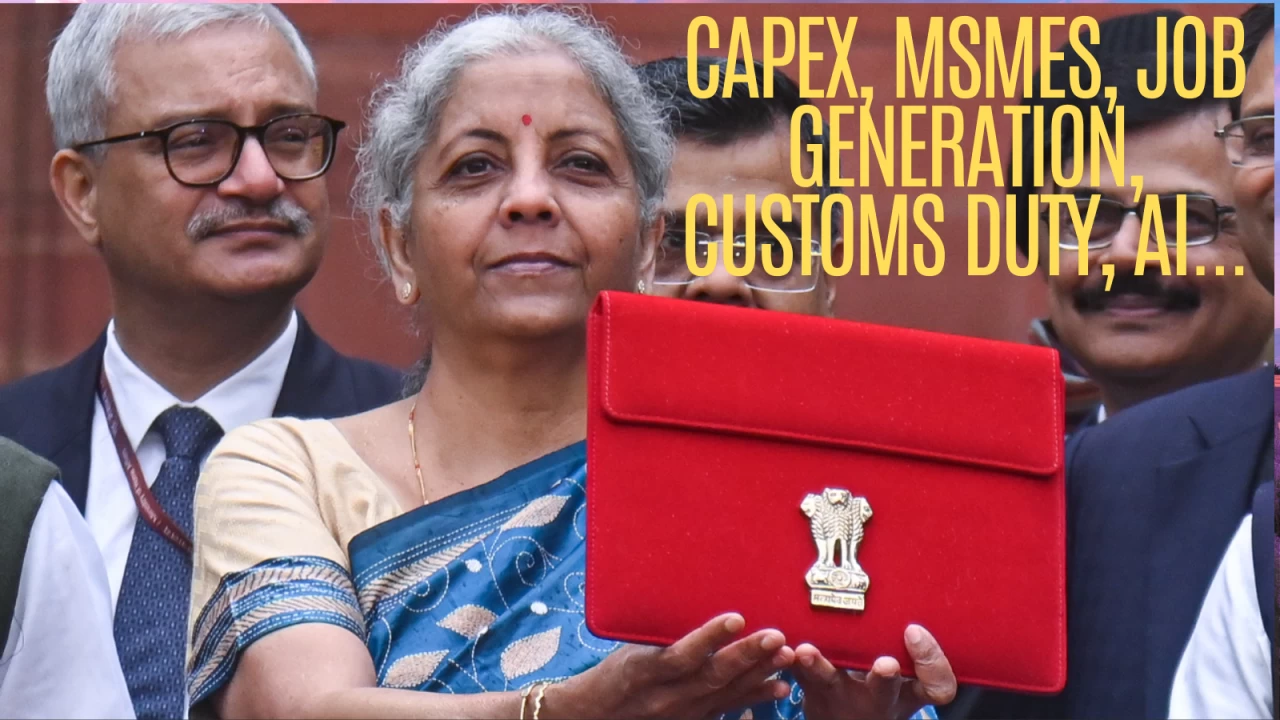
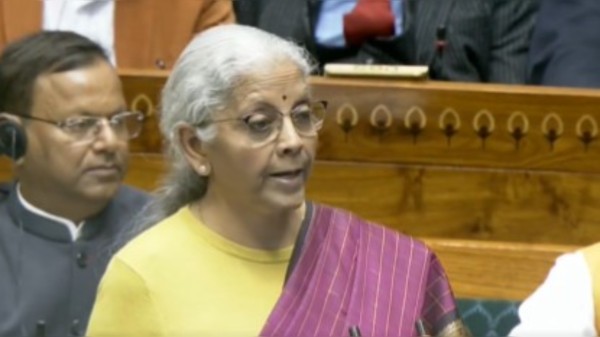
Kolkata: In a sense the Union Budget 2026 that finance minister Nirmala Sitharaman will be presenting on Sunday, Feb 1 will be almost a continuation of the efforts of the government to boost consumption that it launched in 2025. From the government's side this consisted of two major steps -- significant
income tax relief and indirect tax reforms in the form of GST rejig. Furthermore, the government could also press full steam ahead on the capital expenditure front for continuing its work of improving physical infrastructure as well as to generate jobs.
Possible focus areas
Analysts and economists think that the government could focus on the following areas in the Budget -- fiscal and policy support to infrastructure and growth, MSMEs, defence, railways and transition to a green economy.
Railways will continue to be a major focus area, thinks ICRA. Rail Bhavan could shift the emphasis towards easing congestion and expanding capacity through with the help of new lines and doubling of tracks the rating major. Work on dedicated freight corridors could also be expedited.
The MSME factor
Union Minister Shobha Karandlaje has recently said that MSMEs will have a crucial role in making India a developed nation by 2047. She also mentioned that this sector is the second-biggest source of employment after agriculture. This is quite indicative of what sort of priorities the government can have for the MSME sector, which can boost jobs and entrepreneurship. Karandlaje said more than 7.5 crore MSME entrepreneurs have registered on the Udyam portal and across the country more than 30 crore are employed in this sector, she claimed.
The PHD Chamber of Commerce and Industry has urged the government to help the MSMEs by improving access to finance, cutting compliance costs and reducing regulatory hassles. This way Indian MSMEs can try to attain competitiveness at a global level, it said.
Consumption push
Private consumption is said to comprise 60% of the Indian GDP. In FY26, the government went all out to boost listless consumption by providing significant
income tax relief and reducing GST on more than 91% goods and services. While the matter of indirect taxes belongs to the GST Council, the FM could think of a small relief on the income tax front to further push consumption. However, it remains to be seen how much elbow room does she have after announcing the high relief that she provided in the 2025 budget. Throughout 2025, RBI joined the consumption boosting efforts by reducing the Repo rate by 125 basis points between February and December to reduce the cost of borrowings.
According to the relief provided in 2025, income up to Rs 12 lakh was exempt from tax and it rises to Rs 12.75 lakh a year for salaried taxpayers after the standard deduction.
Policy stability
The budget expectations articulated by EY said that businesses want the government to focus on tax certainty and reduce litigation. These two would pave the way significantly for investment in emerging technology and manufacturing-led sectors. On its part, CII has urged the government for clarity on tax treatment of gratuity, leave encashment and terminal benefits. Ambiguity in current provisions often leads to disputes when an employee retires.
With discussions and speculations around AI thick in the air, Deloitte has urged the government to come out with fiscal backing for data centres. The consultancy major has suggested various means such as conditional tax holidays, full GST input tax credits on capital-intensive assets, customs duty waivers on critical imports etc.