
Sign In
By signing in or creating an account, you agree with Associated Broadcasting Company's Terms & Conditions and Privacy Policy.
By signing in or creating an account, you agree with Associated Broadcasting Company's Terms & Conditions and Privacy Policy.


Kolkata: The wide and increasing gap in wealth between the top few and a vast majority of the population at the base of the economic pyramid is a concern in many economies. The World Inequality Report 2026 has said that the top 1% of the population in India earns 22.6% of national income, the highest since 1922. It has also mentioned that the 10% of the country's population own about two-thirds of the wealth of the country.
Economic inequality in India is among the highest in the world, and it has changed little in recent times. The World Inequality Report 2026 has stated that that the top 1% of the country's population earns 22.6% of the national income, which is the highest level in the past 103 years for which the colonial administration has maintained records. The report is titled "Towards Tax Justice and Wealth Redistribution in India" has said that current data show that India's richest 1% now owns 40.1% of the country's total wealth. This share is also the highest since 1961.
The report also mentioend that billionaires' share of national income is 3%, which is the second highest in the world after Russia. The report has been composed by economists Nitin Kumar Bharti, Lucas Chancel, Thomas Piketty and Anmol Somanchi. It has undeersocred the need for a comprehensive wealth tax and a super tax that should be imposed on the very wealthy. The rpeort has also emphasised on an inheritance tax, which it says can be a way to address this extreme inequality. The authors said India has become one of the most unequal countries in the world. Predictably, the degree of inequality has accentuated since the inauguration of the economic liberalisation.
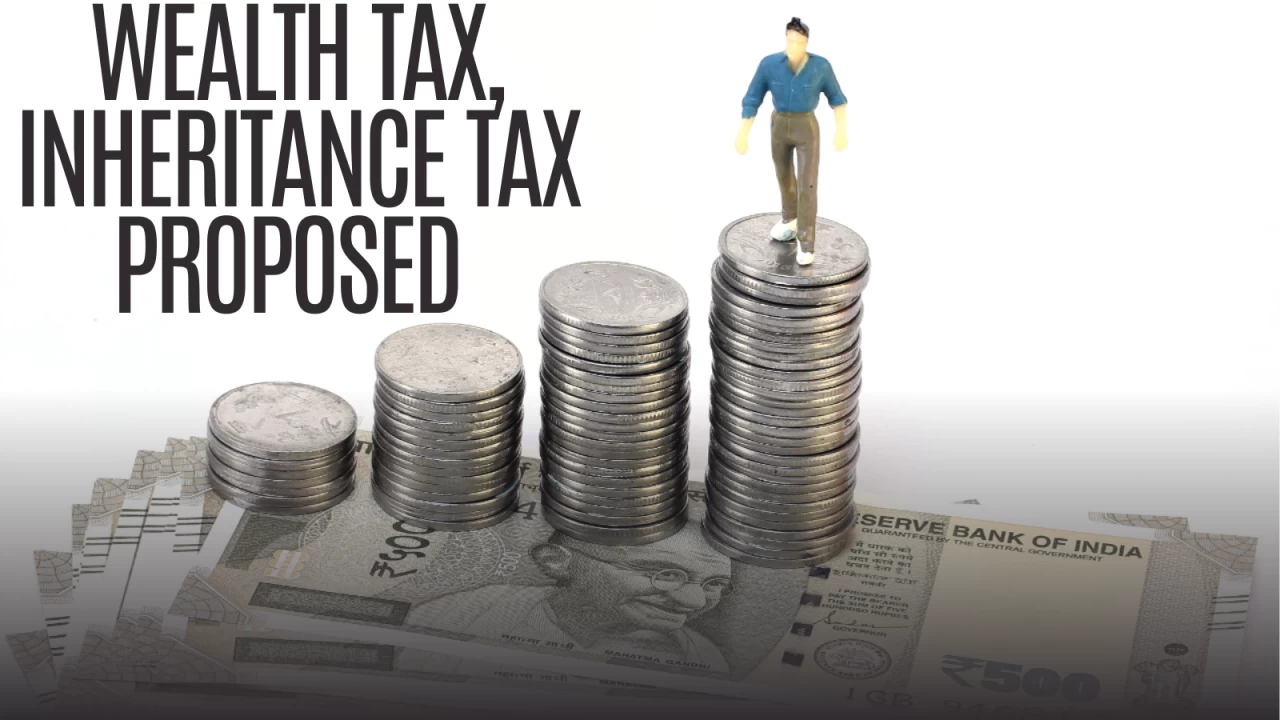
Besides highlighting the rising inequality, the report proposes a 2% annual wealth tax on net worth exceeding Rs 10 crore and 33% inheritance tax on assets exceeding Rs 10 crore. These taxes, it mentions, will help in generating revenue for spending on health, education and the social sector. In short, it suggested ways for redistributing wealth in the soceity by the government.
The report also stated that the average annual per capita income in the country stands at approximately 6,200 euros (PPP) and the average wealth is approximately 28,000 euros (PPP). The women's labor force participation remains low at 15.7% and has not improved over the past 10 years. Overall, inequality in India remains ingrained across income, wealth, and gender, reflecting persistent structural divisions within the economy, the report highlighted.