Sign In
By signing in or creating an account, you agree with Associated Broadcasting Company's Terms & Conditions and Privacy Policy.
By signing in or creating an account, you agree with Associated Broadcasting Company's Terms & Conditions and Privacy Policy.
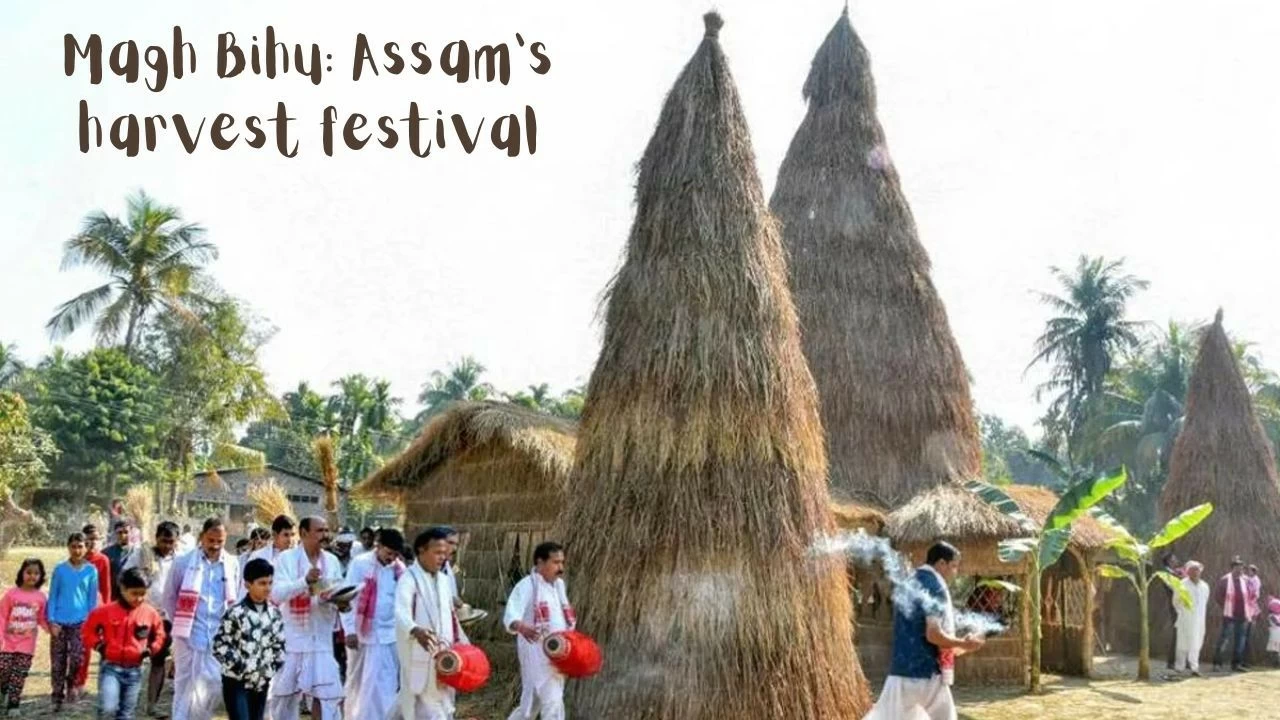


New Delhi: Magh Bihu 2026 will be celebrated on Thursday, January 15, marking one of Assam’s most joyful harvest festivals. Also known as Bhogali Bihu and Maghar Domahi, the festival signals the completion of the harvesting season and the beginning of a new agricultural cycle. Closely linked with Makar Sankranti, Magh Bihu reflects gratitude for nature’s bounty, warmth during winter, and the deep bond between farming life, food, and community traditions across Assam.
Unlike many Sankranti celebrations focused on the Sun God, Magh Bihu is centred around Agni Dev, the fire deity. The festival brings together ritual bonfires, community meals, folk music, and traditional games. From Uruka night feasts to the symbolic burning of Meji huts, Magh Bihu celebrates abundance, unity, and cultural pride rooted in Assamese rural life.
1. Magh Bihu timings 2026
Magh Bihu will be observed on Thursday, January 15, 2026.
The Sankranti moment falls at 3:13 pm on Wednesday, January 14, 2026, as per traditional calendars and Panjika references.
1. Harvest and gratitude
Magh Bihu marks the official end of the harvest season. It welcomes prosperity after months of agricultural labour and celebrates the warmth that follows winter’s peak.
2. Bhogali tradition
The name Bhogali comes from “bhog,” meaning food and enjoyment. Feasting remains central, highlighting freshly harvested rice and seasonal produce.
3. Worship of fire
Agni Dev is honoured during Magh Bihu through bonfires, symbolising strength, protection, and purification. Fire becomes a reminder of renewal and balance with nature. People offer things like rice, black gram, sesame seeds, and jaggery to the fire deity.
1. Building Meji and Bhelaghar
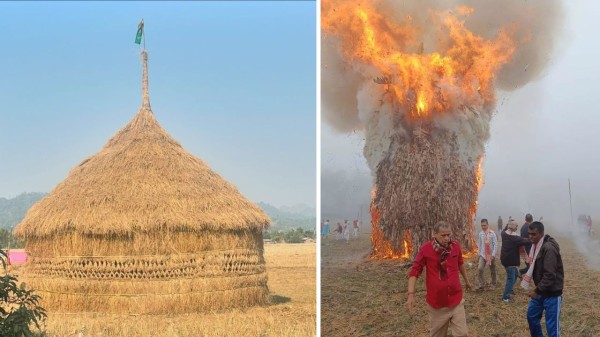
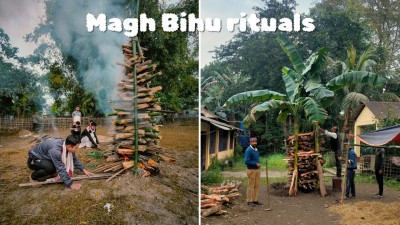
Celebrations begin on Uruka, the eve of Magh Bihu. Communities build temporary huts and bonfire structures using bamboo, hay, leaves, and thatch.
2. Community feasts
Families and neighbours gather inside the Bhelaghar for shared meals. Songs, laughter, and traditional preparations turn the night into a celebration of togetherness.
3. Cultural bonding
Uruka reflects unity and pride, as people set aside daily routines to celebrate food, friendship, and shared heritage.
1. Sacred bonfire ritual
At dawn on Magh Bihu, the Meji is set ablaze. Offerings are made to Agni Dev, seeking protection, good health, and prosperity.
2. Ashes for fertile fields
The ashes from the Meji are scattered over farmlands. This act symbolises blessings for fertile soil and future harvests.
1. Music and dance
Bihu dance performances, rhythmic dhol beats, and folk songs fill villages and open spaces, often performed around the bonfire.
2. Traditional games
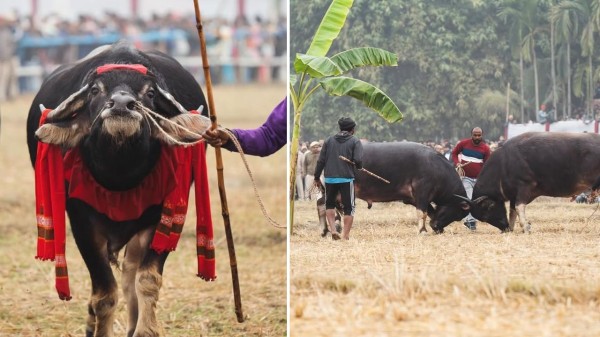
Games such as buffalo fighting, cockfighting, bulbul fighting and koni juj add excitement, reflecting rural sporting traditions passed through generations.
3. Festive food
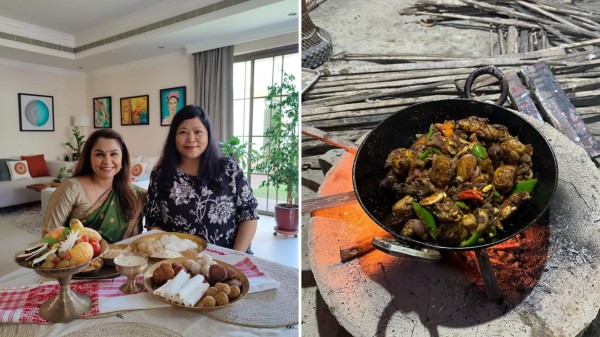
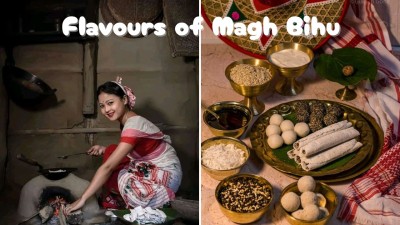
Special dishes like pithas, larus, and jolpan prepared from rice dominate Magh Bihu meals, reinforcing the festival’s food-centric spirit.
Magh Bihu stands as a celebration of gratitude, warmth, and renewal. Through fire rituals, shared meals, and cultural expression, the festival preserves Assam’s deep connection with agriculture, nature, and community life, making it one of the most meaningful harvest celebrations in eastern India.